Europe Engulfed: Wildfires Scorch Southern Flank Amid Escalating Climate Crisis
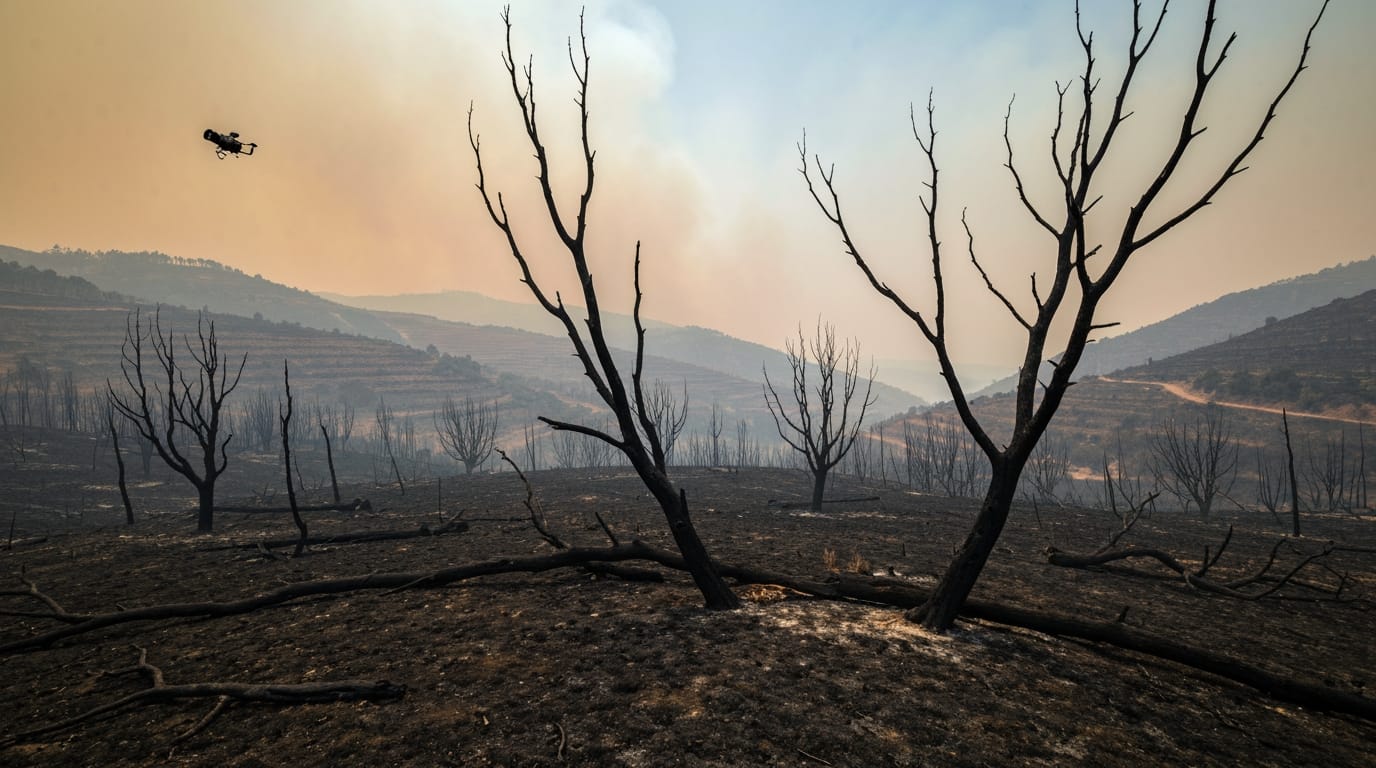
Wildfires continue to rip through vast swathes of Southern Europe, transforming ancient forests and vital agricultural lands into scorched earth across Portugal, Greece, Spain, and France. The recurrent and increasingly intense blazes displace thousands, claim lives, and inflict billions in economic damage, underscoring a perilous new reality shaped by persistent drought, extreme heat, and human activity. As communities grapple with immediate devastation, the long-term ecological and societal implications of these annual infernos are coming into sharper focus, prompting urgent calls for enhanced prevention and international cooperation.
The Blazing Frontlines: A Region in Crisis
The Mediterranean region, a cradle of European civilization and biodiversity, has become a critical hotspot for increasingly destructive wildfires. In 2023, the European Union experienced one of its worst wildfire seasons on record, with over half a million hectares burned across the bloc. Greece was particularly hard hit, registering the largest single wildfire in Europe since the 1980s, which consumed over 96,000 hectares near Alexandroupolis. The 2023 Greek fires resulted in at least 28 fatalities and 75 injuries, necessitating the evacuation of more than 20,000 people from affected areas, including tourist hubs like Rhodes. Thousands of homes, hotels, and infrastructure were either damaged or destroyed.
Portugal has also faced relentless assault. In September 2024, a series of more than 1,000 wildfires devastated over 135,000 hectares across central and northern regions, leading to at least nine deaths, including four firefighters. By August 2025, provisional data indicated that 172,000 hectares had already burned in Portugal, surpassing the total for the entirety of 2023. Spain, battling its own widespread fires, especially in regions like Catalonia and Asturias, saw more than 158,000 hectares consumed by August 2025. France, too, has experienced significant early-season fires, with thousands of hectares burned, prompting early concern from authorities about the severity of the annual wildfire season. The collective impact by July 2025 saw nearly 240,000 hectares burned across the EU, representing a substantial increase compared to the previous year.
The Human Toll and Environmental Scars
Beyond the immediate destruction, the human and environmental costs of these wildfires are profound and long-lasting. Displaced populations often face an uncertain future, with homes and livelihoods lost. The psychological toll on communities repeatedly exposed to these events is immeasurable. Health concerns also escalate, as toxic smoke from blazes, such as those near Thessaloniki in Greece, prompts authorities to advise residents to stay indoors and keep windows shut. The economic burden is staggering, with wildfires costing Europe an estimated €2.5 billion annually between 2000 and 2022, peaking at €10 billion in 2017. Greece alone faced an estimated €1.8 billion in damages from its 2023 fires, while the total cost for Europe was nearly €4.8 billion in the same year. This includes losses in timber, recreation, and tourism, significantly impacting local economies.
Ecologically, the fires incinerate crucial habitats, diminish biodiversity, and release vast quantities of carbon dioxide into the atmosphere. In 2023, wildfires generated approximately 20 megatonnes of CO2 emissions, equivalent to nearly a third of all annual emissions from international aviation in the EU. By August 2025, EU wildfires had released 38.37 million tonnes of CO2 emissions, surpassing Sweden's annual total. The loss of vegetation and damage to soil structure following a fire also render burnt areas up to 10°C hotter for nearly a year and highly susceptible to erosion, soil loss, and devastating floods. The recovery of these ecosystems can take decades, perpetuating a cycle of environmental degradation. Alarmingly, a significant portion of the burned areas often includes protected sites, such as the Natura 2000 network, further compromising Europe's biodiversity reservoirs.
A Converging Crisis: Climate Change and Human Factors
The increasing frequency and intensity of European wildfires are not solely natural phenomena but are exacerbated by a complex interplay of climate change and human actions. Climate change has led to warmer temperatures, prolonged droughts, and unpredictable weather patterns, creating ideal conditions for ignition and rapid spread of fires. The fire season has extended beyond traditional summer months, now spanning from early spring to late autumn in many Mediterranean areas. NASA reported in January 2024 that climate change is intensifying wildfire conditions, with the frequency of extreme wildfires more than doubling over the past two decades.
While extreme weather sets the stage, human activity remains the predominant trigger for most wildfires. The European Environment Agency estimates that 96% of wildfires in the EU are human-caused, often due to negligence (such as discarded cigarettes or poorly managed campfires) or deliberate arson. Socio-economic factors also play a critical role; rural depopulation has led to the abandonment of agricultural lands and decreased forest maintenance, resulting in an accumulation of dry vegetation that serves as highly flammable fuel. A reduction in local firefighting efforts due to rural exodus further complicates early containment of small fires before they escalate. The motivations behind deliberate ignitions can range from land-use change and pasture activities to acts of revenge.
Mobilizing a Response and Charting a Resilient Future
In response to the escalating crisis, the European Union is bolstering its collective defense mechanisms. For the summer of 2026, the EU is deploying its largest-ever coordinated wildfire response, pre-positioning 777 firefighters from 14 European countries in high-risk areas across Greece, Italy, France, Spain, and Portugal. This initiative is supported by a fleet of 22 firefighting airplanes and five helicopters from the EU's rescEU program, which provides additional support during large-scale crises. A new regional firefighting station in Cyprus is also being established to strengthen preparedness and response capacities across Europe and the South Mediterranean region.
Beyond immediate emergency response, the EU is emphasizing an integrated wildfire risk management strategy that encompasses prevention, preparedness, response, and recovery. This approach advocates for sustainable land and forest management, improved wildfire risk assessments, early warning systems, and strengthened community preparedness. The deployment of technology, such as drones and camera systems for early detection, has shown promise in countries like Greece, contributing to a reduction in burned areas in 2024 compared to the previous year. However, experts underscore that mitigation alone is insufficient; adaptation strategies are critically needed to enhance social-ecological resilience to wildfires. Addressing the challenge requires a concerted effort that combines scientific research, practical management strategies, and strong community engagement, recognizing that emerging risks posed by exceptional fire-weather conditions may progressively exceed current suppression capabilities.
Conclusion: A Continent on the Brink
The relentless wildfires sweeping across Portugal, Greece, France, and Spain serve as a stark reminder of Europe's vulnerability to a changing climate and the complex interaction of human factors. The increasing intensity and duration of fire seasons, coupled with the devastating human, economic, and environmental costs, demand a shift from reactive firefighting to comprehensive, proactive strategies. While enhanced international cooperation and advanced firefighting resources are vital for immediate crisis management, the long-term solution lies in addressing the root causes: mitigating climate change, implementing sustainable land management practices, and fostering responsible human behavior. Europe faces a critical juncture, where concerted action today will determine the resilience of its landscapes and communities against the fires of tomorrow.


