Nigeria Condemns Deaths of Two Nationals Amid Escalating South Africa Protests, Warns of International Action
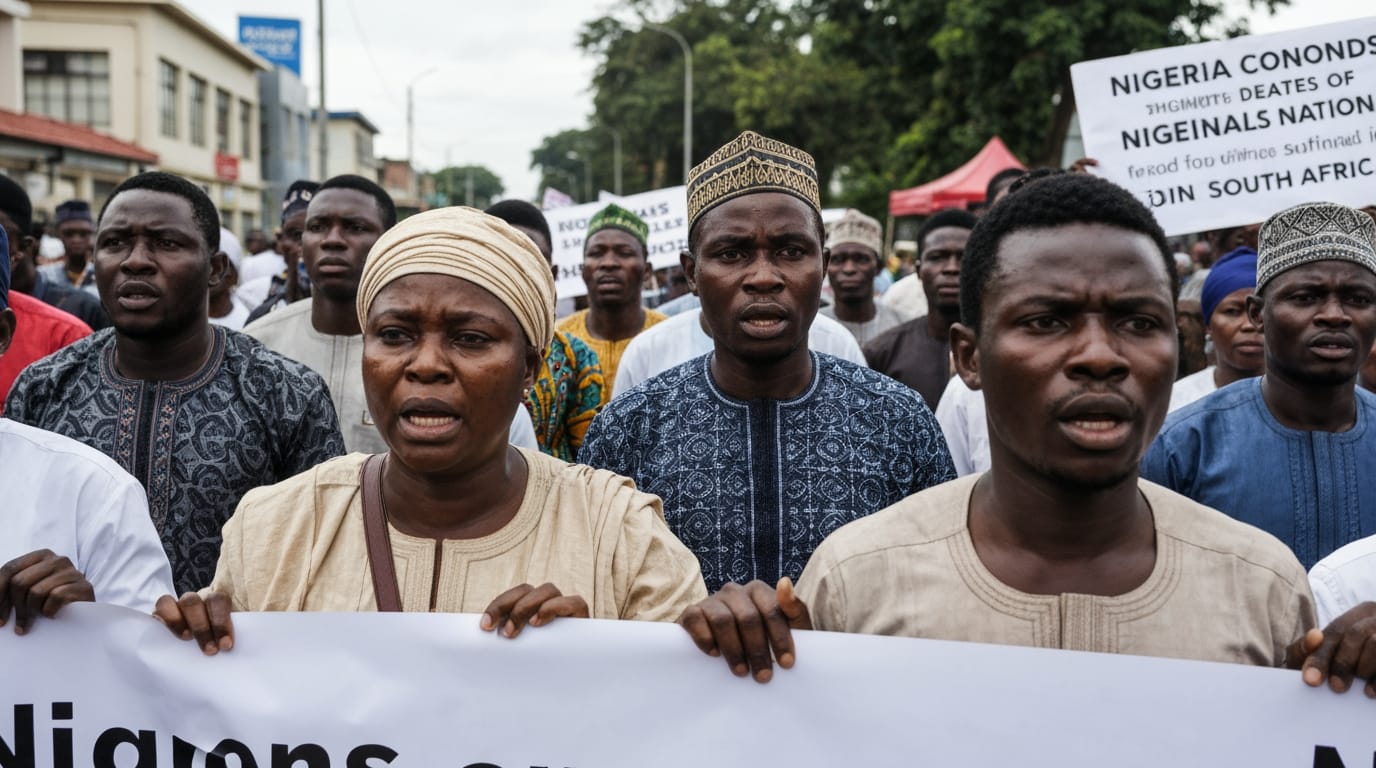
Abuja, Nigeria – The Nigerian government has expressed profound condemnation and grave concern following the deaths of two of its nationals in South Africa, incidents occurring amidst a fresh wave of intense anti-foreigner protests. These tragic deaths, detailed in a strong statement from Abuja, have reignited diplomatic tensions between the two African powerhouses and cast a stark light on South Africa's persistent challenge with xenophobia, raising fears for the safety of foreign residents across the nation.
The Federal Government, through its Ministry of Foreign Affairs, confirmed on Sunday, July 5, 2026, the passing of Emeka Charles Iroegbu and Musa Yunana Joe, known affectionately as "Big Joe." The circumstances surrounding their deaths, just days before an unofficial deadline set by anti-immigrant groups for foreign nationals to vacate the country, have prompted Nigeria to warn that "all options remain on the table" if the systematic targeting of its citizens continues. This assertive stance underscores Nigeria's growing impatience with the recurring cycle of violence and impunity that has characterized xenophobic incidents in its regional counterpart.
The Tragic Incidents and Abuja's Forceful Rebuke
According to official statements from the Nigerian Ministry of Foreign Affairs, Emeka Charles Iroegbu died on June 28, 2026, in Sunnyside, Pretoria, allegedly at the hands of officers from the Tshwane Metro Police during what was described as a "gruesome interrogation." Disturbingly, the same police officers are implicated in the extra-judicial killing of another Nigerian, Nnaemeka Mathew Andrew Ekpenyong, on April 20, 2026. Despite the identities of the four officers allegedly involved being known to the South African Police Service, no arrests have been made in Ekpenyong's case, fueling accusations of complicity and inaction by law enforcement.
The second victim, Musa Yunana Joe, was reportedly shot and killed on the same day, June 28, 2026, in front of his shop in Witbank, Mpumalanga, by unidentified assailants. The government noted that the pattern of such incidents "is clearly evidence of complicity on the part of security operatives," directly questioning South Africa's state responsibility under international law.
Kimiebi Ebienfa, spokesperson for the Ministry of Foreign Affairs, articulated Nigeria's outrage, emphasizing that "such derogatory, unprofessional and uncensored generalised public statements by highly placed government officials constitute hate speech that influences and incites negative and criminal actions against members of the Nigerian community." This statement was a direct response to a South African government spokesperson who reportedly asked Nigerians leaving the country due to xenophobic protests to disclose locations where they might be hiding illegal drugs. The Nigerian government unequivocally demanded urgent investigations into these killings and other pending cases involving Nigerian nationals, insisting that perpetrators be brought to justice without delay.
Roots of the Unrest: A Deep-Seated History of Xenophobia
These latest fatalities unfold against a backdrop of intensifying anti-foreigner sentiment and widespread protests across South Africa. Organized by groups such as "March and March" and "Operation Dudula," these demonstrations culminated around an unofficial June 30 deadline, demanding that undocumented immigrants leave the country. Protesters often chant "Abahambe!" (They must go!), blaming foreign nationals for South Africa's high unemployment rates, rising crime, and strain on public services.
This narrative, while prevalent among segments of the South African population, is often challenged by human rights organizations who contend that migrants are frequently scapegoated for the government's shortcomings in managing economic and social challenges. A 2018 Pew Research poll indicated that 62% of South Africans held negative views about foreign nationals living and working in the country, believing they burden society and contribute to crime. However, there is no factual evidence to substantiate the notion that immigrants are the main culprits of criminal activity in South Africa, even though the claim is incorrectly made sometimes by politicians and public figures.
The history of xenophobic violence in post-apartheid South Africa is long and troubled, marked by significant outbreaks in 2008, 2015, and 2019. According to Witwatersrand University's Xenowatch, between 1994 and March 2024, such attacks led to 669 deaths, 5,310 looted shops, and 127,572 displacements. The current wave of protests has also claimed the lives of other African nationals, including five Ethiopians in May 2026, and other Mozambican and Malawian citizens. Over 900 people were arrested during the nationwide anti-migrant demonstrations in late June 2026, highlighting the scale of the unrest.
Diplomatic Fallout and the Call for Accountability
Nigeria's forceful response signals a deepening strain in relations with South Africa. The Nigerian government has explicitly warned of activating various measures, including regional and international actions, if the targeting of its nationals does not cease. This includes holding "gang leaders of groups such as March on March and Operation Dudula, who incite violence and hate against fellow Africans," accountable under regional and international criminal liability.
In light of the escalating violence, Nigeria has advised its citizens residing in South Africa to exercise extreme caution, relocate to safer neighborhoods, and avoid areas prone to violent activities. The ongoing evacuation process for registered Nigerians further underscores the severity of the situation and the perceived threat to their safety. Nigeria also starkly contrasted the hostile environment faced by its citizens in South Africa with the free and unmolested operation of South African nationals and businesses within Nigeria, calling on Pretoria to uphold its international obligations to protect all foreigners within its borders.
The renewed tensions have prompted similar concerns and actions from other African nations. Uganda, Malawi, and Kenya have also initiated evacuation processes for their citizens, underscoring a broader regional alarm over the escalating anti-foreigner sentiment in South Africa.
A Lingering Crisis and the Path Forward
The tragic deaths of Emeka Charles Iroegbu and Musa Yunana Joe represent a critical juncture in the ongoing challenge of xenophobia in South Africa. While the South African government has on occasion condemned the violence and attempted to address the underlying issues, the persistent recurrence of these attacks highlights the deep-seated nature of the problem. For Nigeria, and indeed for the broader African continent, the protection of their citizens abroad is paramount, and the recent events in South Africa test the very fabric of African unity and solidarity.
The path forward demands a multi-faceted approach. South Africa must not only ensure swift and impartial justice for the victims and hold those responsible, including any complicit state actors, accountable, but also address the socio-economic grievances that are often manipulated to fuel xenophobic sentiment. Concurrently, regional bodies and nations like Nigeria must continue to exert diplomatic pressure, advocate for the safety of their citizens, and support initiatives that foster integration and understanding rather than division. The lives lost and the fear engendered by these attacks serve as a stark reminder of the urgent need for tangible, lasting solutions to stem the tide of xenophobia and uphold the dignity and rights of all individuals within South Africa's borders.


