Europe Mobilizes for Justice: Special Tribunal for Russia's Aggression Against Ukraine Gains Widespread Support
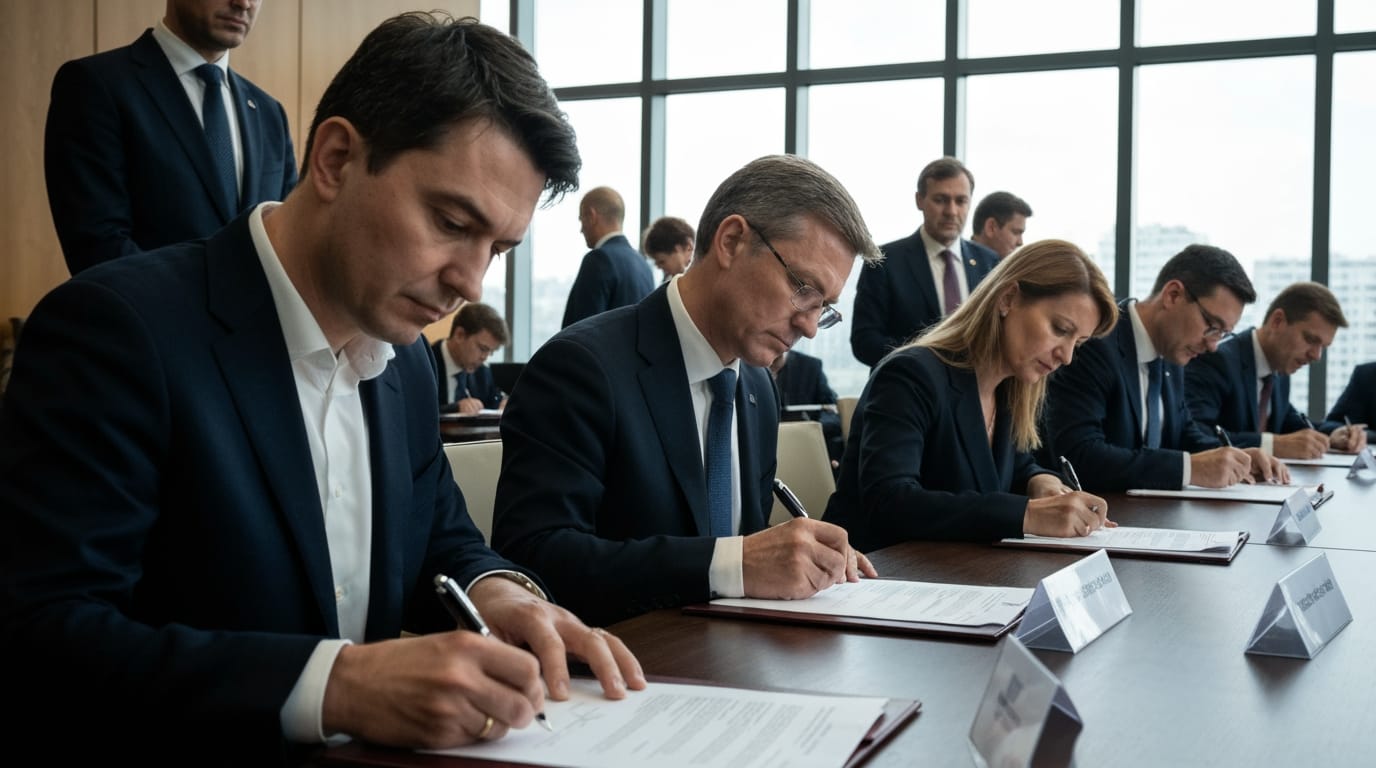
Strasbourg, France – In a landmark move poised to reshape the landscape of international justice, dozens of European nations, alongside key global partners, have formally expressed their intent to establish a special tribunal dedicated to prosecuting Russia for the crime of aggression against Ukraine. This significant development, spearheaded by the Council of Europe, marks a unified and determined effort to hold Moscow accountable for its 2022 invasion, filling a critical void in existing international legal frameworks. The broad coalition underscores a deep international commitment to upholding the rule of law and ensuring that those responsible for initiating conflict face justice.
The initiative, which has seen thirty-four European states, plus Australia, Costa Rica, and the European Union as an institution, signal their participation, represents a robust political and legal front. This commitment aims to bring to justice the senior political and military leadership in Russia for the unprovoked invasion that commenced in February 2022. The Secretary-General of the Council of Europe, Alain Berset, emphasized the urgency and moral imperative of this undertaking, stating that "The time for Russia to be held to account for its aggression is fast approaching" and that "The special tribunal represents justice and hope."
A Unified Front for Accountability
The genesis of this tribunal traces back to a 2025 accord signed between Ukrainian President Volodymyr Zelensky and the Council of Europe, establishing the groundwork for a dedicated legal body to prosecute the "crime of aggression." This accord laid the foundation for the resolution approved on May 15 by the Council of Ministers, an assembly comprising foreign ministers from the Council of Europe's 46 member states. This approval signifies a decisive step towards the actual creation of the tribunal and a collective recognition of responsibility for the aggression against Ukraine.
The extensive list of countries signaling their participation includes many of the European Union's 27 member states, as well as significant non-EU European nations such as Turkey and Britain. The involvement of countries like Australia and Costa Rica further highlights the global resonance of the call for justice and the perceived need for a new legal mechanism to address state-led aggression. While the support is broad, some Council of Europe members, including Hungary, Slovakia, Bulgaria, and Malta, have yet to join the agreement, indicating potential complexities or differing perspectives within the wider European body.
Bridging the Legal Gap: The Crime of Aggression
A primary driver behind the push for a special tribunal is the inherent limitations of existing international legal bodies, particularly the International Criminal Court (ICC), when it comes to prosecuting the "crime of aggression." The ICC has demonstrated its capacity to address war crimes, crimes against humanity, and genocide, even issuing arrest warrants for Russian President Vladimir Putin and four of his top commanders for alleged war crimes, specifically the abduction of Ukrainian children and targeting civilians. However, the ICC's jurisdiction over the crime of aggression is circumscribed. Neither Russia nor Ukraine are full state parties to the Rome Statute that governs the ICC, and Russia does not recognize the court's jurisdiction. This jurisdictional gap means that the ICC cannot prosecute individuals for the fundamental decision to launch the invasion itself, leaving a critical lacuna in the pursuit of comprehensive justice.
The proposed special tribunal is specifically designed to fill this void, focusing exclusively on the crime of aggression. This distinct legal focus underscores the international community's recognition that the very act of launching an unprovoked war is a grave international offense that demands accountability. The tribunal's work will draw upon legal principles articulated in Article 8 bis of the Rome Statute and provisions of UN General Assembly Resolution No. 3314, establishing a robust legal framework for its mandate. The commitment to addressing the crime of aggression separately from other atrocities reflects a global determination to prevent similar acts in the future by establishing a clear precedent that such actions will not go unpunished.
Mechanics, Challenges, and Implications
The planned tribunal is expected to be based in The Hague, a city synonymous with international justice. While the political commitment is now firm, significant logistical and financial hurdles remain. Secretary-General Berset has urged participating states to swiftly complete all necessary national procedures to formally join the tribunal and to secure its functioning and funding. These steps are crucial for transforming the expressed intention into a fully operational judicial body. The tribunal, initially intended to commence work in 2026, aims to investigate, prosecute, and try those bearing primary responsibility for the crime of aggression against Ukraine.
A significant aspect of the tribunal's potential reach is its ability to target senior figures, theoretically extending to Russian President Vladimir Putin and other high-ranking political and military leaders. Furthermore, reports suggest the court might be able to issue rulings even in the absence of the accused, a mechanism that could circumvent potential non-cooperation from Russia and deliver a form of justice despite physical absence. This could also potentially extend to officials from Belarus and North Korea, should their leadership be implicated in the crime of aggression. The establishment of this tribunal also forms part of a broader compensation mechanism for damages incurred by Russia's war, working in conjunction with an International Claims Commission for Ukraine. This comprehensive approach aims to address both individual accountability and state responsibility for the conflict's devastating consequences.
A New Chapter in International Law
The widespread support for a special tribunal to prosecute the crime of aggression against Ukraine marks a pivotal moment in international law and geopolitics. It sends an unequivocal message that initiating an unprovoked war of aggression will incur severe legal consequences, regardless of a nation's status or power. Ukrainian Foreign Minister Andrii Sybiha articulated this sentiment, stating that "The moral foundation of Europe and the world will only be restored when the crime of aggression against Ukraine is punished. It is not a matter of the past. It is a matter of the future. A matter of restoring a common space of truth, justice, and trust."
This concerted international effort reflects a growing consensus that the principles of territorial integrity and national sovereignty must be protected through actionable legal mechanisms. By creating a dedicated court to address the crime of aggression, the international community is not only responding to the current crisis in Ukraine but also attempting to establish a stronger deterrent against future acts of state-led aggression worldwide. The journey to actual prosecutions and convictions will be complex and challenging, yet the unified commitment shown by dozens of nations signals a resolute determination to pursue justice and reinforce the bedrock principles of a rules-based international order.


