European Allies Bolster Greenland Presence Amid Heightened Arctic Tensions
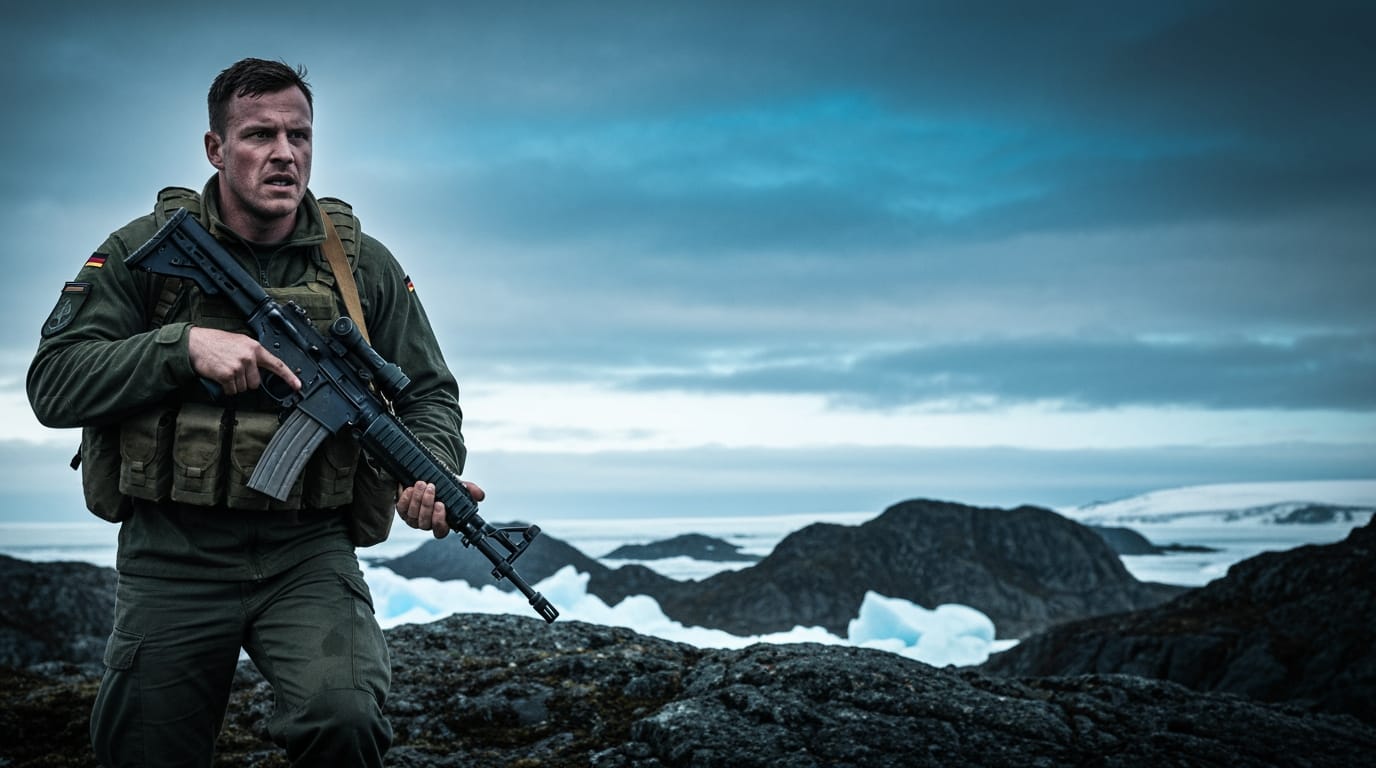
NUUK, Greenland – In a significant display of European solidarity and increasing focus on Arctic security, a German military reconnaissance team is set to arrive in Greenland today, January 15, 2026. This deployment marks a coordinated effort by several European NATO member states to reinforce Denmark's sovereignty over the strategically vital Arctic territory and assess potential military contributions to the region's evolving security landscape. The mission unfolds against a backdrop of escalating geopolitical competition in the High North and persistent rhetoric from the United States regarding its interests in acquiring Greenland.
Reconnaissance Mission Underway
The German contingent, comprising 13 Bundeswehr personnel, will arrive in Nuuk, the capital of Greenland, aboard an Airbus A400M transport aircraft. The reconnaissance mission, requested by Denmark, is scheduled to run from Thursday, January 15, through Saturday or Sunday, January 17. Its primary objective is to evaluate the framework conditions for potential military support to Denmark in safeguarding regional security. This includes exploring possible military roles such as maritime surveillance capabilities.
Germany's deployment is part of a broader multinational initiative. Sweden and Norway have also dispatched military personnel to Greenland, signaling a unified European response to the growing concerns in the Arctic. French military personnel have also arrived, with units from the Netherlands and Canada reportedly participating in the wider exercise activities. These allied efforts are integrated with Denmark's own commitment to increasing its military presence and exercise activities in and around Greenland. The Danish Ministry of Defense stated that the enhanced presence aims to strengthen the alliance's footprint in the Arctic and train forces to operate under the unique Arctic conditions, benefiting both European and transatlantic security.
Geopolitical Chessboard: Greenland's Strategic Significance
Greenland, an autonomous territory within the Kingdom of Denmark, has long held undeniable strategic importance due to its Arctic location. The vast island serves as a critical vantage point for monitoring civil and military developments across air, sea, and space. Historically, the United States has maintained a significant military presence on the island, notably at Pituffik Space Base (formerly Thule Air Base), which plays a crucial role in missile warning and space surveillance.
The island's strategic relevance has only intensified with the accelerating effects of climate change. The melting Arctic ice cap is opening new shipping routes, such as the Northeast and Northwest Passages, and exposing vast untapped reserves of critical minerals and natural resources. This environmental transformation has redefined the Arctic from a remote frontier into a theater of strategic competition, drawing increased attention from global powers. Furthermore, Greenland anchors the Greenland-Iceland-United Kingdom (GIUK) Gap, a vital maritime chokepoint in the North Atlantic. This gap is critical for monitoring naval activities and is considered essential for transatlantic security, particularly in a potential conflict scenario where adversaries might seek to isolate North America from Europe.
A United European Front
The current surge in European military presence comes amid growing tensions fueled by repeated statements from former U.S. President Donald Trump, who has asserted Greenland's critical importance to U.S. security interests and a desire for its acquisition. These pronouncements have strained relations with European allies and prompted a robust, coordinated response to affirm Denmark's territorial integrity and the self-determination of the Greenlandic people.
European leaders, including German Chancellor Friedrich Merz and Defence Minister Boris Pistorius, have emphasized the need for a stronger European and NATO role in Arctic security. Germany's updated Arctic policy guidelines, published in September 2025, highlight fostering security and stability in the region, upholding international law, and enhancing Germany's active role within NATO and the EU. Minister Pistorius has openly supported the idea of a joint NATO mission, potentially named "Arctic Sentry," to conduct surveillance and patrols in Arctic waters, including the GIUK Gap, to monitor activity above, on, and below the surface. Such an initiative aims to demonstrate collective presence, gather intelligence, and deter potential threats, particularly from Russia and China, both of whom have increased their military activities and strategic interests in the Arctic.
Upholding Sovereignty and International Order
The deployment underscores Europe's commitment to a rules-based international order and collective defense within NATO. While the U.S. has a long-standing defense agreement with Denmark concerning Greenland, European allies are actively demonstrating their capacity and resolve to contribute directly to the region's security. Danish officials, including Foreign Minister Lars Løkke Rasmussen and Greenland's Foreign Minister Vivian Motzfeldt, have consistently rejected any notions of a sale or transfer of sovereignty, asserting that Greenland's long-term security is best ensured within its current framework under the Kingdom of Denmark and NATO.
The presence of European forces serves not only to enhance operational capabilities in the Arctic but also to send a clear political message regarding the inviolability of allied sovereignty and the importance of multilateral cooperation in addressing shared security challenges. This collective action aims to mitigate potential destabilization and ensure that the future of Greenland, with its rich culture and aspirations for greater autonomy, remains firmly rooted in international law and the principles of self-determination. As the Arctic continues to transform, the coordinated efforts of Denmark and its European allies will be crucial in maintaining regional stability and safeguarding their collective interests in this increasingly critical geopolitical arena.


