European Commission Urges U.S. to Uphold Trade Commitments Amid New Tariff Turmoil
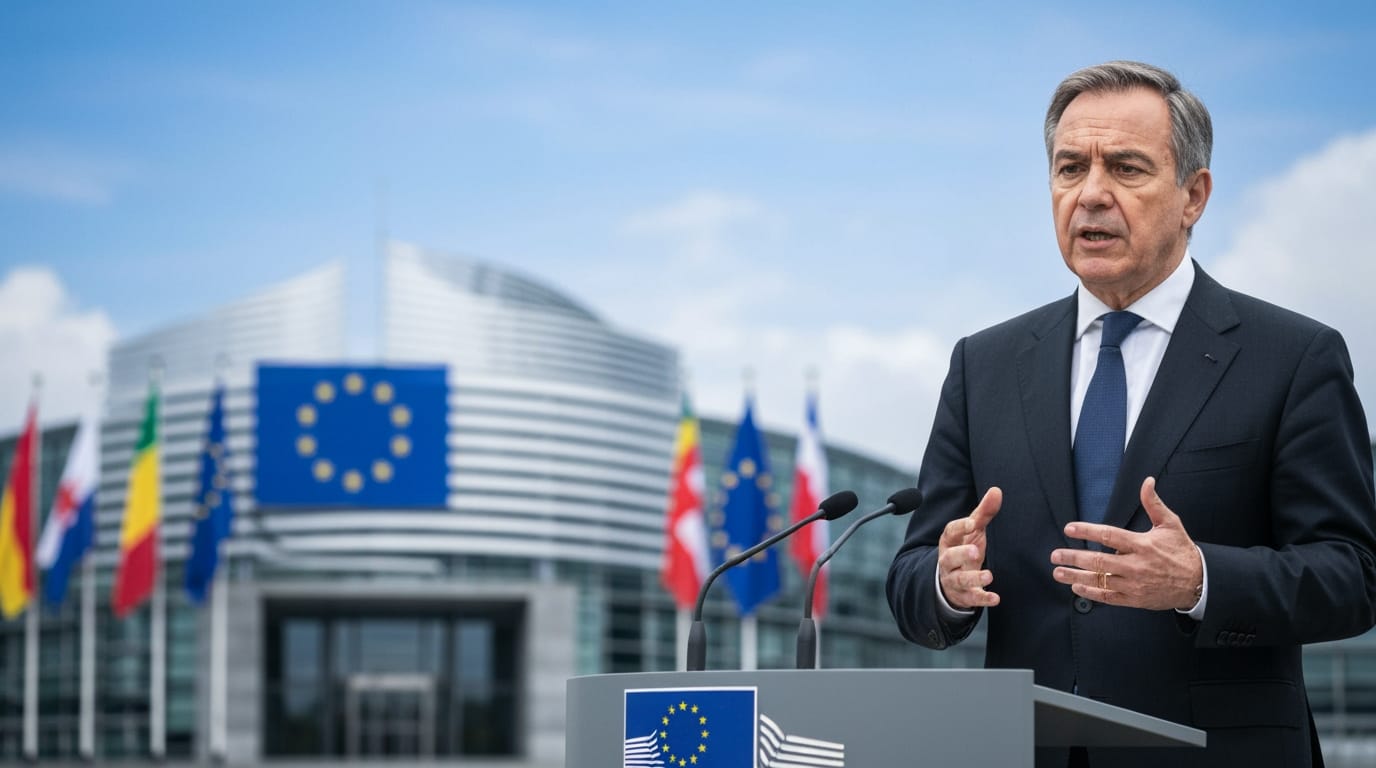
Brussels/Washington D.C. – The European Commission has issued a forceful call for the United States to honor existing trade commitments, emphasizing that "a deal is a deal," following a recent U.S. Supreme Court ruling that disrupted the landscape of transatlantic tariffs. The plea comes as a dramatic court decision on February 20, 2026, struck down certain sweeping tariffs imposed by the U.S. government, only to be met by an immediate proposal for new global tariffs from President Donald Trump, casting a shadow of uncertainty over a hard-won trade agreement from last year.
Businesses and policymakers on both sides of the Atlantic are now grappling with the implications of this renewed volatility, which threatens to undermine the stability of the world's largest trade relationship. The European Union, Washington's primary trading partner, is demanding clarity and adherence to the terms of a July 2025 agreement that sought to de-escalate previous trade hostilities.
Supreme Court Rocks Tariff Landscape, Trump Responds with New Levies
The catalyst for the current transatlantic friction arrived on Friday, February 20, 2026, when the U.S. Supreme Court delivered a landmark ruling. The Court declared that certain broad tariffs, previously imposed by President Donald Trump under the International Emergency Economic Powers Act (IEEPA), exceeded his legal authority. This 6-3 decision asserted that the power to impose such taxes rests exclusively with Congress under Article I of the Constitution.
While the ruling was hailed by some as a reassertion of constitutional checks and balances on presidential power, its immediate aftermath introduced fresh unpredictability into global trade. Crucially, the Supreme Court's decision did not affect tariffs imposed under Section 232 of the Trade Expansion Act of 1962, which includes ongoing duties on steel, aluminum, lumber, and automotives.
President Trump, responding swiftly to the judicial setback, reacted by proposing a new 15% global tariff on a wide array of imported goods. This move, following an initial announcement of 10%, has sent ripples of concern throughout international markets, particularly in Europe, where a specific trade arrangement with the U.S. is now under intense scrutiny. The White House has indicated it will end tariff actions ruled unlawful by the court, but the new tariff proposals suggest a recalibration rather than a cessation of protectionist inclinations.
"A Deal Is a Deal": Europe's Demand for Predictability
In the wake of these developments, the European Commission, the EU's executive arm, has unequivocally stressed the importance of respecting previous agreements. "A deal is a deal," stated the Commission, signaling its expectation that Washington will uphold the terms of its trade arrangements with the European Union. The EC highlighted that the current situation is "not conducive to delivering 'fair, balanced, and mutually beneficial' transatlantic trade and investment," as enshrined in the Joint EU-US Statement of August 2025.
This statement refers to a significant trade deal reached in July 2025, which aimed to avert a full-scale transatlantic trade war that had been brewing. Under that agreement, the EU conceded to a 15% tariff rate on most of its exports to the U.S., with exceptions for sectoral tariffs like steel and zero tariffs on aircraft and spare parts. In return, the EU committed to removing import duties on numerous U.S. goods and withdrew previous threats of retaliatory levies.
However, the ratification process for this 2025 agreement had been paused by EU lawmakers, reportedly after President Trump threatened to annex Greenland. This pre-existing pause, combined with the new Supreme Court ruling and President Trump's subsequent tariff proposals, has plunged the future of the deal into significant uncertainty. European officials warned that unpredictable tariff actions risk creating considerable instability for businesses and critical supply chains. EU Trade Commissioner Maros Sefcovic has already engaged in discussions with U.S. Trade Representative Jamieson Greer and Commerce Secretary Howard Lutnick to address the mounting concerns. Furthermore, Bernd Lange, chair of the European Parliament's international trade committee, characterized the situation as "pure tariff chaos" and suggested pausing the ratification process of the agreement entirely.
Enduring Friction: Steel, Green Subsidies, and Market Shifts
Beyond the immediate tariff dispute, the transatlantic trade relationship continues to navigate several points of contention. The Section 232 tariffs on steel and aluminum, which were not impacted by the Supreme Court ruling, remain a significant source of friction. The U.S. has even raised some of these tariffs to 50%, leading to a substantial 30% drop in EU steel exports to the U.S. in the latter half of 2025 compared to the previous year. The European Steel Association (EUROFER) has expressed alarm, warning that the European market faces an influx of diverted steel and emphasizing the urgent need for a new "highly effective trade measure" from the European Commission, particularly as the EU's current steel safeguard measures are set to expire in June 2026.
Another persistent challenge is the U.S. Inflation Reduction Act (IRA), enacted in August 2022, whose "Buy American" provisions and generous green subsidies have raised concerns in Europe. European policymakers fear that these incentives could draw critical green technology industries and investments away from the EU to the U.S. In response, the European Union has developed its own Green Deal Industrial Plan, aiming to bolster its domestic green tech sector and offset the IRA's competitive effects, while also considering World Trade Organization (WTO) remedies against discriminatory subsidies.
High Stakes for Global Commerce and Geopolitical Stability
The ongoing trade disputes carry substantial economic weight. The EU and the U.S. represent the world's two largest economies and are each other's largest trading partners, with total bilateral trade in goods and services reaching an impressive €1.6 trillion in 2023. Any disruption to this relationship has cascading effects on global supply chains, industries, and employment. The uncertainty generated by shifting tariff policies and legal challenges adds significant costs and planning difficulties for businesses operating across the Atlantic.
Furthermore, the stability of transatlantic trade is intrinsically linked to broader geopolitical considerations. While facing shared challenges such as competition with China and the geopolitical implications of Russia's actions in Ukraine, a fracturing of economic cooperation between the EU and the U.S. could weaken their collective influence and ability to address these global issues.
The European Parliament's trade committee is slated to vote on the EU's trade deal with the U.S. on February 24, 2026, making the coming days critical for the future of transatlantic economic relations. The EU's message is clear: stability, predictability, and the honoring of commitments are paramount to maintaining a fair and mutually beneficial trading partnership. The coming weeks will reveal whether Washington heeds this call and whether the transatlantic trade relationship can navigate these turbulent waters without succumbing to an escalating tariff war.


