Trump Questions Iran's Enduring Defiance Amid Mounting Pressure
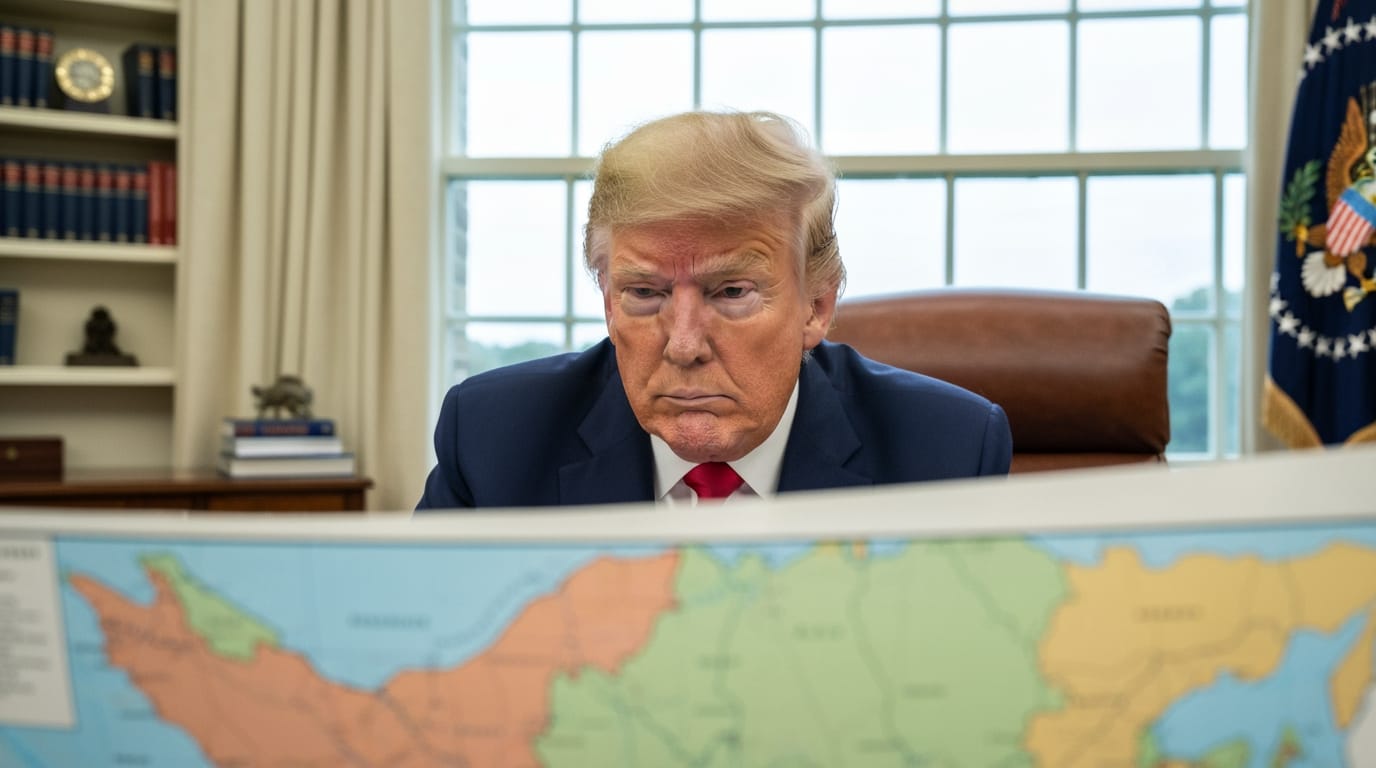
Washington, D.C. — In a candid assessment that underscores the persistent stalemate in U.S.-Iran relations, former President Donald Trump has expressed "curiosity" as to why Tehran has not "capitulated" in the face of extensive American pressure and a robust military buildup in the Middle East. The remarks, conveyed by Special Envoy Steve Witkoff, highlight the enduring challenge of compelling Iran to alter its nuclear ambitions and regional policies through sanctions and strategic posturing. This sentiment emerges amidst renewed, yet fraught, diplomatic efforts to address Iran's escalating nuclear program and pervasive regional tensions, revealing the deep-seated complexities defining one of the world's most volatile geopolitical standoffs.
The Unyielding Stance: Trump's 'Curiosity' and Nuclear Brinkmanship
Special Envoy Steve Witkoff recently conveyed President Trump's contemplation during an interview, noting the former president's inquisitive, rather than "frustrated," outlook on Iran's unwavering position. "He's curious as to why they haven't... I don't want to use the word 'capitulated,' but why they haven't capitulated," Witkoff stated, questioning why Iran has not approached the U.S. to offer concessions despite significant naval and military deployments in the region.
This observation comes at a critical juncture, with ongoing, Oman-mediated talks in Geneva attempting to bridge significant divides between Washington and Tehran. The backdrop to these discussions includes stark warnings from U.S. officials, including Witkoff, that Iran's uranium enrichment, reportedly at 60% fissile purity, brings it perilously close – potentially "a week away" – from possessing industrial-grade material for a nuclear bomb. Such an advancement moves Iran significantly beyond the limits stipulated by the 2015 Joint Comprehensive Plan of Action (JCPOA), from which the U.S. withdrew in 2018.
Tehran, however, has consistently maintained that its nuclear program is exclusively peaceful, rejecting any demands to link nuclear concessions with its ballistic missile development or its network of regional alliances. Iranian President Masoud Pezeshkian explicitly stated that Iran "would never bow and we will not surrender," reaffirming the nation's resolve against external pressure while emphasizing domestic reform and unity. This defiant posture underscores the intricate interplay of national pride, strategic autonomy, and perceived threats that shape Iran's foreign policy.
The Architect of Pressure: A Campaign Reexamined
The "maximum pressure" campaign, a hallmark of the Trump administration's foreign policy toward Iran, was reinstituted following the U.S. withdrawal from the JCPOA in May 2018. This strategy was designed with explicit goals: to compel Iran back to the negotiating table for a "better deal" that would impose stricter curbs on its nuclear program and expand the agreement to encompass its ballistic missile capabilities and regional activities.
To achieve these aims, the U.S. reimposed and intensified a sweeping array of economic sanctions, targeting critical pillars of the Iranian economy. These measures aimed to cripple Iran's vital oil exports, cut off its access to international financial systems, and isolate key economic entities and individuals linked to the Iranian government. A core objective was to drive Iran's oil exports "to zero," thereby severely constraining the regime's revenue streams. The Trump administration also designated Iran's Islamic Revolutionary Guard Corps (IRGC) as a terrorist organization in April 2019, further ratcheting up pressure.
This comprehensive approach sought to leverage economic pain to force political concessions. The intention was to disrupt Iran's ability to fund its regional proxies and its nuclear program, ultimately leading to a more compliant Tehran.
Iran's Enduring Resolve: Economic Pain, Political Defiance
Despite the immense economic strain inflicted by the "maximum pressure" campaign, Iran has not "capitulated" in the manner the U.S. administration seemingly anticipated. The sanctions have indeed taken a heavy toll on the Iranian populace and its economy. Reports indicate a collapse in oil production and GDP growth, significant currency depreciation, and surging inflation and unemployment. Iran's oil exports plummeted by over 60% after sanctions were reimposed in 2018, leading to tens of billions of dollars in lost annual revenue. The country's GDP per capita saw a dramatic decline, falling from over $8,000 in 2012 to approximately $5,000 by 2024, and the Iranian rial's value has collapsed. Such economic hardship has fueled domestic unrest, including widespread protests that began in late 2025, sparked by rising prices and a plummeting currency.
In response to the economic pressure, Iran adopted a "counter-pressure" policy. This included a phased reduction of its commitments under the JCPOA, beginning in mid-2019, as Tehran argued it was not receiving the economic benefits it was promised by the deal's remaining signatories. This involved increasing uranium enrichment levels beyond the agreed-upon limits, actions that have significantly heightened international concerns about its nuclear program.
While U.S. officials frequently attribute Iran's economic woes primarily to sanctions, a significant internal Iranian narrative suggests that domestic mismanagement also plays a crucial role. This internal perspective can complicate external efforts to leverage economic hardship for political change, as the regime can deflect blame or portray its resilience as a victory against foreign aggression.
A World Divided: International Reactions and Regional Volatility
The aggressive U.S. posture and its unilateral withdrawal from the JCPOA sparked diverse reactions across the international community. While some U.S. allies acknowledged the threat posed by Iran's nuclear program, many nations, including European powers, expressed "grave concern" over the escalation of tensions and urged a return to diplomacy and de-escalation. The United Nations Secretary-General António Guterres repeatedly voiced alarm over the use of force and the potential for a "spiral of chaos" in an already volatile region. Countries like Saudi Arabia and Qatar, while having their own complex relationships with Iran, also called for restraint and diplomatic solutions. Russia and China condemned U.S. strikes and actions as violations of international law.
Throughout this period, the Middle East has experienced heightened volatility. Incidents such as attacks on oil tankers in the Gulf, U.S. troop deployments, and Iranian threats to close the Strait of Hormuz underscored the ever-present risk of direct military confrontation. The conflict has evolved to include direct exchanges of strikes between Israel and Iran in 2024, further destabilizing the region and weakening Iran's "axis of resistance."
Despite the military saber-rattling, diplomatic channels have remained open, albeit with significant hurdles. Talks continue to grapple with fundamental disagreements, particularly regarding the scope and sequence of sanctions relief and the extent of Iran's permissible uranium enrichment.
Conclusion: The Enduring Paradox of Pressure
Donald Trump's "curiosity" about Iran's failure to "capitulate" encapsulates the paradox of the "maximum pressure" campaign. While the policy undeniably inflicted severe economic damage and significantly constrained Iran's financial capabilities, it did not achieve its stated goal of forcing a comprehensive surrender or a swift renegotiation on Washington's terms. Instead, Iran responded with defiance, increasing its nuclear activities and intensifying its regional strategies, albeit under considerable internal and external stress.
The dynamic between the U.S. and Iran remains a complex tapestry of economic warfare, military posturing, and intermittent diplomatic overtures. Tehran's resilience, rooted in a blend of ideological commitment, strategic patience, and a willingness to absorb profound economic hardship, has confounded predictions of an easy capitulation. As talks continue amidst an omnipresent military shadow, the question of how to reconcile Iran's unyielding stance with international demands for nuclear transparency and regional stability persists, leaving the future of the Middle East teetering on the edge of uncertainty.


