Germany's Streets Erupt: Tens of Thousands Rally Against Far-Right AfD in Dortmund, Düsseldorf and Across the Nation
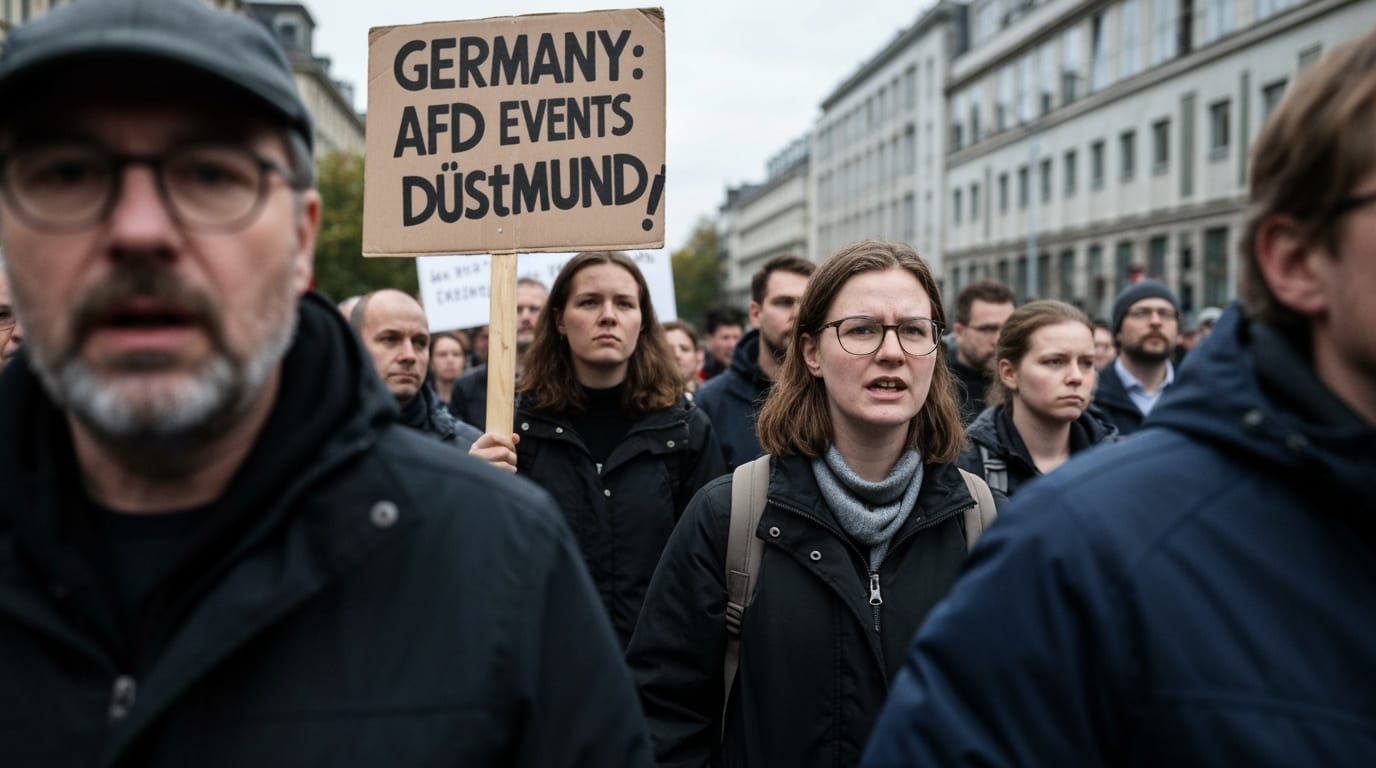
DORTMUND/DÜSSELDORF, Germany – In an unprecedented display of civic engagement, hundreds of thousands of Germans took to the streets in early 2024, including significant mobilizations in cities like Dortmund and Düsseldorf, to protest against the far-right Alternative for Germany (AfD) party. This nationwide wave of demonstrations was ignited by revelations of a secret meeting where senior AfD members discussed plans for the mass deportation of millions of foreign-born residents, including those with German citizenship, a concept they termed "remigration." The protests represent the largest civil society movement in post-war Germany, signaling a robust defense of democratic values against what many perceive as a growing threat of right-wing extremism.
The Incendiary Spark: "Remigration" Plans Unveiled
The widespread public outcry began in mid-January 2024 following a report by the investigative journalism outlet Correctiv. The report detailed a clandestine meeting in Potsdam in November 2023, attended by AfD members, individuals from the extremist Identitarian Movement, and other right-wing figures. Central to the discussions was a "masterplan" for "remigration," which involved forcibly removing asylum seekers, non-Germans with citizenship, and even "non-assimilated" German citizens from the country. Martin Sellner, a prominent figure of Austria's Identitarian Movement, reportedly presented this vision, which aligns with the "great replacement" conspiracy theory – a belief that non-white migrants are seeking to supplant Europe's "native" white population.
The chilling echoes of Germany's darkest historical chapter were immediate and profound. Interior Minister Nancy Faeser likened the gathering to the Wannsee Conference of 1942, where Nazis notoriously planned the extermination of European Jews. Chancellor Olaf Scholz also condemned the plans as "an attack against our democracy, and in turn, on all of us," underscoring the gravity of the discussions. The revelations served as a catalyst, transforming simmering concerns about the AfD's growing popularity and rhetoric into a powerful, collective act of resistance.
Mobilization Across the Rhine and Ruhr
The protests quickly spread across Germany, with citizens pouring into public squares and streets in major cities and smaller towns alike. In the western city of Dortmund, a significant demonstration saw approximately 30,000 people gather to voice their opposition to the AfD and its extremist ideologies. This substantial turnout in Dortmund, a major urban center in the Ruhr region, highlighted the depth of concern within industrial heartlands. The demonstrations were not isolated events but rather part of a broader national awakening.
While specific protests directly targeting AfD events in Düsseldorf in early 2024 were not as prominently documented as some other cities, Düsseldorf, as the capital of North Rhine-Westphalia and a vital urban hub in the Rhine-Ruhr metropolitan region, undoubtedly contributed to and was part of this extensive protest movement. The broader context indicates that the demonstrations aimed at the AfD were diffuse and widespread, with general anti-AfD rallies occurring concurrently in many locations. Reports of "false reports" circulating about anti-AfD demonstrations in Dortmund further confirm the reality and intensity of these local movements. The spirit of opposition against the far-right permeated throughout the region, with thousands participating to express their commitment to democratic principles and rejection of exclusionist policies.
A United Front: Diverse Voices Against Extremism
The demonstrations were characterized by their broad appeal and diverse participation, cutting across traditional political and social divides. From Berlin to Hamburg, Munich to Cologne, and down to Dortmund, people from all walks of life marched under banners proclaiming "Nazis, no thank you," "It feels like 1933, AfD ban now," and "We are the Firewall." Organizers included a wide array of groups, encompassing civil society organizations, sports clubs, cultural institutions, and trade unions.
The participation of high-ranking political figures further underscored the cross-party consensus against the AfD's extremist leanings. Chancellor Olaf Scholz and Foreign Minister Annalena Baerbock joined spontaneous gatherings, lending their voices to the chorus of disapproval. Bundesliga coaches, church representatives, and even some businesses openly urged people to stand up against the AfD, reflecting a societal rejection that transcended partisan politics. This collective stance aimed to defend the German constitution and democratic order against what many view as an existential threat posed by the far-right party.
Implications and the Road Ahead
The sheer scale of the protests – with initial estimates suggesting over a million participants across Germany, and some individual city turnouts exceeding expectations, like Hamburg's revised count of 180,000 and Berlin's 150,000-300,000 – marked a significant moment in German political discourse. These demonstrations were described as the "largest civil society protest movement of the postwar period."
In the immediate aftermath of the revelations and protests, opinion polls indicated a slight dip in support for the AfD, which had previously been consistently riding high, often ranking as the second most popular party nationally. While the AfD publicly distanced itself from the "remigration" proposals as official party policy, co-leader Tino Chrupalla dismissed the protests as a distraction from the country's "actual problems." However, the widespread public rejection has intensified calls for the party to be investigated by the Federal Office for the Protection of the Constitution, with some even advocating for a complete ban.
The sustained pressure from these protests is likely to influence the political landscape as Germany approaches crucial European elections in June and three state elections in eastern Germany in September. The AfD has historically performed strongly in these eastern states, and the current wave of civic action could test the limits of their appeal. The protests have invigorated a public debate about the nature of German democracy and the vigilance required to protect it.
A Resounding Affirmation of Democracy
The mass protests in Dortmund, Düsseldorf, and countless other German cities signify a powerful and unambiguous affirmation of democratic principles and pluralism. Triggered by extremist "remigration" plans, these demonstrations brought together a diverse cross-section of German society united in their rejection of far-right ideologies and their commitment to a democratic, inclusive future. The collective voice of hundreds of thousands served as a potent reminder that, despite the AfD's electoral gains, a significant portion of the populace remains steadfast in its defense of the fundamental values upon which modern Germany is built. The long-term impact on the AfD's political trajectory and on Germany's democratic resilience remains to be seen, but the events of early 2024 have undoubtedly etched a critical moment in the nation's contemporary history.


