European Jet Project Collapse Exposes Deep Cracks in Continent's Defense Ambitions
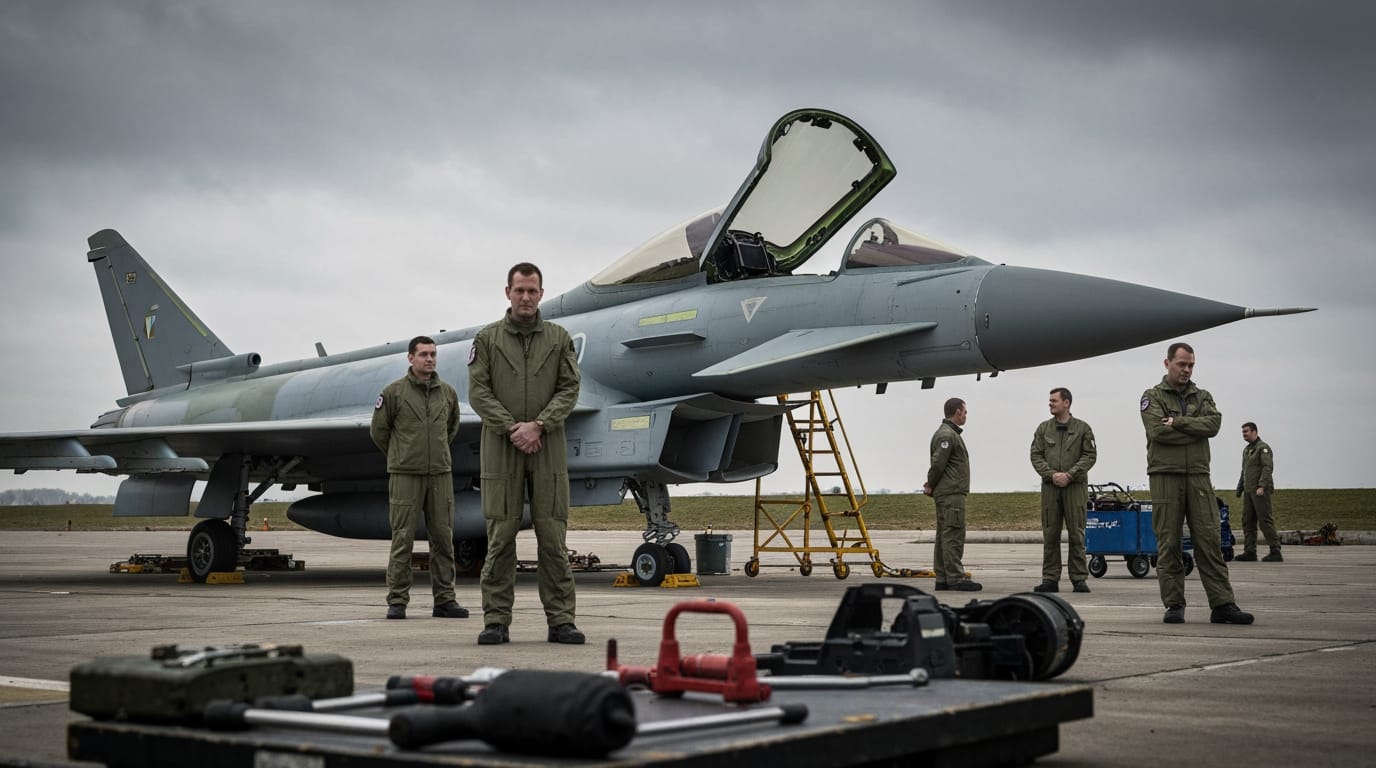
Brussels, Belgium – Europe's ambitious quest for a unified, cutting-edge defense capability has suffered a significant blow with the recent collapse of the Future Combat Air System (FCAS) fighter jet component, a cornerstone project intended to forge a new era of European strategic autonomy. The Franco-German-Spanish endeavor, conceived to deliver a sixth-generation fighter by the mid-21st century, has effectively grounded its most critical element due to intractable disputes over industrial leadership, intellectual property, and diverging national military requirements. This high-profile failure, confirmed by statements from Paris and Berlin, highlights the persistent fragmentation plaguing the European defense industry and raises profound questions about the continent's ability to act cohesively in an increasingly volatile global landscape.
The Dream Deferred: FCAS's Troubled Ascent and Sudden Halt
Launched in 2017 with significant fanfare, the Future Combat Air System was envisioned as a monumental step toward strengthening European defense integration and reducing reliance on foreign, particularly American, military hardware. Valued at over €100 billion, the project aimed to replace France's Rafale jets and Germany and Spain's Eurofighter Typhoons with a sophisticated "system of systems" by around 2040, later adjusted to 2045. At its heart was the Next Generation Fighter (NGF), a manned combat aircraft designed to operate alongside unmanned remote carriers and a "Combat Cloud" for real-time data sharing. However, the path to a unified European fighter was fraught with difficulty from its inception. Initial optimism quickly yielded to protracted negotiations and internal strife between the lead industrial partners, France's Dassault Aviation and the German and Spanish contingent led by Airbus.
For years, the project remained mired in disagreements, largely centered on the division of labor and control. Dassault, leveraging its extensive experience as a prime contractor for fighter jets, sought a dominant role, reportedly demanding 80% of the fighter jet project's shares. This stance clashed directly with Airbus's ambitions and the desire of Germany and Spain to secure significant industrial benefits and maintain technological sovereignty. The lack of consensus on these fundamental industrial policies and intellectual property rights proved to be an insurmountable hurdle, ultimately leading to the official dissolution of the manned fighter jet development in June 2026. An estimated €3.2 billion in initial research and development capital was spent without producing any physical, airworthy prototypes for the fighter jet, underscoring the significant financial cost of the program's failure.
Diverging Requirements and National Imperatives
Beyond industrial wrangling, a critical factor contributing to FCAS's demise was the profound divergence in military requirements and strategic priorities among the participating nations. France, as a nuclear power, stipulated that the future aircraft must possess capabilities for nuclear weapon operation and compatibility with aircraft carriers. These requirements were essential for Paris to replace its Rafale jets and maintain its independent nuclear deterrent. Germany and Spain, conversely, lacked nuclear weapons and aircraft carriers, focusing instead on a conventionally armed fighter to replace their Eurofighters and enhance broader European air combat capabilities.
This fundamental disconnect in operational needs made it exceedingly difficult to agree on a common aircraft design and technical specifications. Efforts to accommodate both sets of requirements often led to complex and costly compromises, further exacerbating industrial tensions. German Chancellor Friedrich Merz publicly acknowledged this divide, noting that if these differences could not be reconciled, the project could not continue. The geopolitical shift following Russia's full-scale invasion of Ukraine in 2022 further sharpened these national distinctions, as European nations, including Germany, reassessed their defense spending priorities and sought more immediate and tailored solutions for their security needs.
Europe's Enduring Defense Dilemma: Fragmentation and Strategic Autonomy
The collapse of the FCAS fighter project is not an isolated incident but rather a potent symptom of a deeper, systemic issue: the chronic fragmentation of the European defense industry. Historically characterized by national rather than collective development, the European defense market has struggled with duplicated systems, inefficiencies, and national protectionism. Each member state often prioritizes its domestic industrial base and national security interests over common European objectives, leading to a patchwork of disparate capabilities and a lack of true interoperability.
This fragmentation directly impedes Europe's stated ambition for "strategic autonomy," a concept that aims to enable the continent to act independently in defense and security matters without excessive reliance on external powers, particularly the United States. Despite increased defense spending across EU member states since 2021, and initiatives like the European Defence Industrial Strategy (EDIS), the ability to translate financial commitment into unified industrial output remains a significant challenge. The failure of FCAS highlights how industrial rivalry, budgetary pressures, and national control disputes continue to weaken flagship European defense projects, underscoring the difficulty of achieving scale and efficiency when national governments are unwilling to surrender decisive control.
Looking Ahead: Fragmented Futures and Tentative Collaborations
While the core fighter jet component of FCAS has been terminated, work on other aspects of the Future Combat Air System, such as the "Combat Cloud" (an integrated combat network for real-time data sharing) and associated drones and sensors, is slated to continue. However, the future of Europe's next-generation air combat capabilities appears increasingly bifurcated. Germany is now reportedly exploring alternatives, including potentially joining the Global Combat Air Program (GCAP), a rival sixth-generation fighter project led by the United Kingdom, Italy, and Japan. France, for its part, may pivot towards enhancing its domestic Rafale program, focusing on the Rafale F5 ecosystem to develop a highly survivable, independent combat air network.
The repercussions extend beyond fighter jets. Concerns are mounting that other major Franco-German defense projects, such as the Main Ground Combat System (MGCS) — intended to replace Germany's Leopard 2 and France's Leclerc tanks — could face similar governance and industrial leadership challenges. The ongoing difficulties illustrate that even with a clear need for advanced military capabilities, the fundamental tensions between national sovereignty and collaborative defense development persist, leaving Europe's strategic autonomy goals in a precarious state. The path forward for European defense remains characterized by a complex interplay of national interests, industrial competition, and the perennial challenge of forging unity out of diverse priorities.


