Germany Reflects on 25 Years of Confronting Its Nazi-Era Forced Labor Past
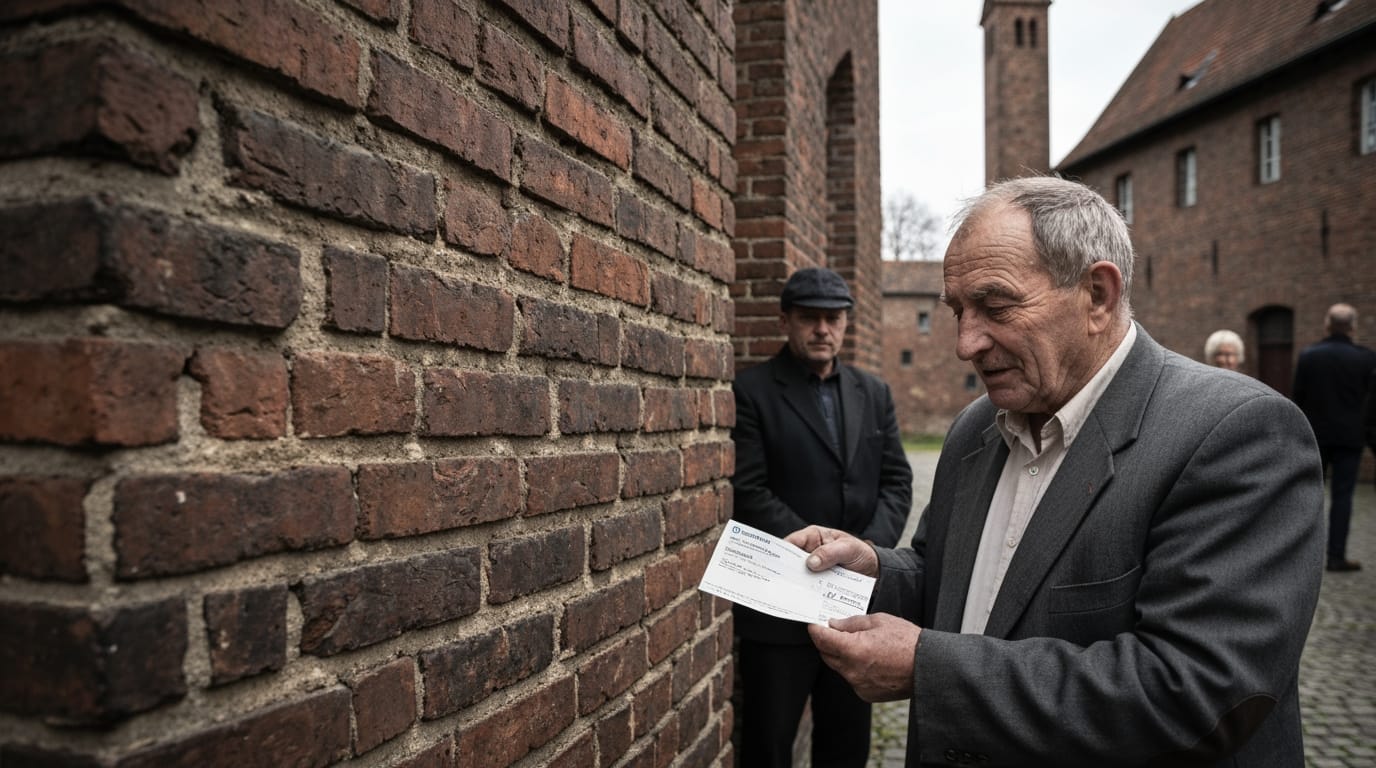
Berlin, Germany – A quarter-century has passed since Germany embarked on a landmark program to provide humanitarian compensation to millions of individuals forced into slave and forced labor under the Nazi regime. The establishment of the "Remembrance, Responsibility and Future" Foundation (Stiftung "Erinnerung, Verantwortung und Zukunft" – EVZ) in 2000 marked a pivotal moment in the nation's efforts to acknowledge and atone for one of the darkest chapters in its history, offering a measure of redress to survivors who had endured unspeakable suffering. As the foundation observes its 25th anniversary between August 2025 and June 2026, the occasion prompts a reflection on the program's profound impact, its inherent challenges, and its enduring legacy in shaping Germany's commitment to historical remembrance and human rights.
A Legacy of Exploitation and Decades of Silence
During World War II, Nazi Germany systematically exploited an estimated 12 million people from nearly 20 European countries, subjecting them to slave and forced labor across a vast network of camps, factories, and farms. This widespread use of forced labor was not merely an economic necessity but a central component of the Nazi regime's ideology of racial persecution and mass extermination, with conditions often characterized by extreme mistreatment, severe malnutrition, and abuse. Millions, including civilians, prisoners of war, and concentration camp inmates, were forced to toil under brutal conditions, contributing to the German war effort at immense human cost.
In the immediate aftermath of the war, initial West German compensation laws, such as the Federal Compensation Act of 1953, largely excluded victims living abroad, particularly those from Eastern Europe who constituted the vast majority of forced laborers, as well as those not persecuted on racial or political grounds. Prisoners of war were also generally overlooked in these early compensation efforts. Decades passed with limited action, leaving countless survivors with unaddressed trauma and unacknowledged suffering. This prolonged period of neglect began to shift dramatically in the late 1990s, fueled by mounting international pressure, including class-action lawsuits filed against German companies in U.S. courts, which forced the issue back onto the global agenda.
The Birth of the EVZ Foundation: A Collective Act of Responsibility
The renewed international focus spurred intense negotiations involving the German, U.S., Israeli, and several Eastern European governments, along with Jewish organizations like the Claims Conference and representatives from German industry. These protracted discussions culminated in the establishment of the EVZ Foundation through a law passed by the German parliament on August 2, 2000.
The foundation was capitalized with DM 10.1 billion (approximately EUR 5.2 billion), contributed equally by the German federal government and German industry, many of whose predecessor companies had directly benefited from forced labor during the war. The aim was to provide one-time humanitarian payments to former forced laborers and other victims of National Socialist injustice, signaling a collective assumption of moral and historical responsibility. A crucial aspect of the agreement was the expectation that German companies would receive legal protection from further lawsuits in exchange for their contributions to the fund. The Claims Conference played a vital role in negotiating and distributing funds to Jewish survivors, while the International Organization for Migration (IOM) managed claims for non-Jewish victims in many countries.
Implementing Compensation: Navigating Complexities and Delivering Aid
Payments from the EVZ Foundation commenced in June 2001, marking the beginning of a six-year disbursement period that concluded in 2007. During this time, the foundation disbursed a total of EUR 4.4 billion to more than 1.66 million individuals across nearly 100 countries. The one-time payments varied, typically ranging from EUR 500 to EUR 7,700, depending on the severity of the victim's suffering and the nature of their forced labor. For instance, those interned in concentration camps or ghettos received the highest amounts, up to EUR 7,669, while forced laborers in industry received up to EUR 2,556.
The implementation of the program, however, was not without significant challenges. Many survivors were already elderly, and the application process, though urgent, was complicated by the difficulty of providing definitive documentation of forced labor decades after the fact. A considerable number of former forced laborers had already passed away by the time the foundation was established, underscoring the "too little, too late" criticism often leveled against the program. Despite these hurdles, the sheer scale of the operation—reaching over 1.6 million survivors—highlighted a monumental effort to provide some form of tangible recognition and humanitarian aid.
Critiques and the Ongoing Pursuit of Justice
While widely praised as a crucial step towards reconciliation, the EVZ Foundation's compensation program also faced criticism. Some argued that the amounts were insufficient to truly compensate for years of stolen life and unimaginable trauma. Furthermore, certain groups, such as Soviet prisoners of war and Italian military internees, were initially excluded from the main program or received only symbolic gestures, leading to continued advocacy for broader recognition. It was not until 2015 that the German parliament approved compensation for the few surviving Soviet prisoners of war, decades after the initial EVZ payments.
Critics also pointed out that the establishment of the fund was partly motivated by German industry's desire for legal certainty and protection against ongoing lawsuits, rather than purely altruistic motives. Nevertheless, the program undeniably represented a significant, albeit imperfect, acknowledgment of responsibility by both the German state and its industries.
A Lasting Commitment to Remembrance and Future
With the conclusion of direct compensation payments in 2007, the EVZ Foundation's mandate shifted. Its remaining endowment is now dedicated to fostering critical examination of history, promoting human rights, and supporting educational initiatives that keep the memory of Nazi injustices alive for future generations. This ongoing work emphasizes that financial compensation, while important, was not a "moral closure" but rather a foundation for sustained engagement with the past.
As the foundation commemorates its 25th anniversary, under the patronage of Federal President Frank-Walter Steinmeier, the events planned between August 2025 and June 2026 serve as a powerful reminder that "remembrance must not fade, responsibility knows no deadline, and the future requires stance". The EVZ Foundation continues to support thousands of projects globally, intertwining the voices of survivors with the perspectives of young people, ensuring that the lessons of history remain relevant in addressing contemporary challenges to human dignity and freedom. The program, born out of belated recognition, has evolved into a vital instrument for Germany's ongoing commitment to confronting its past and building a more just future.


