Europe's Diplomatic Divide: US Dominance Shapes Ukraine Peace Talks as Allies Feel Sidelined
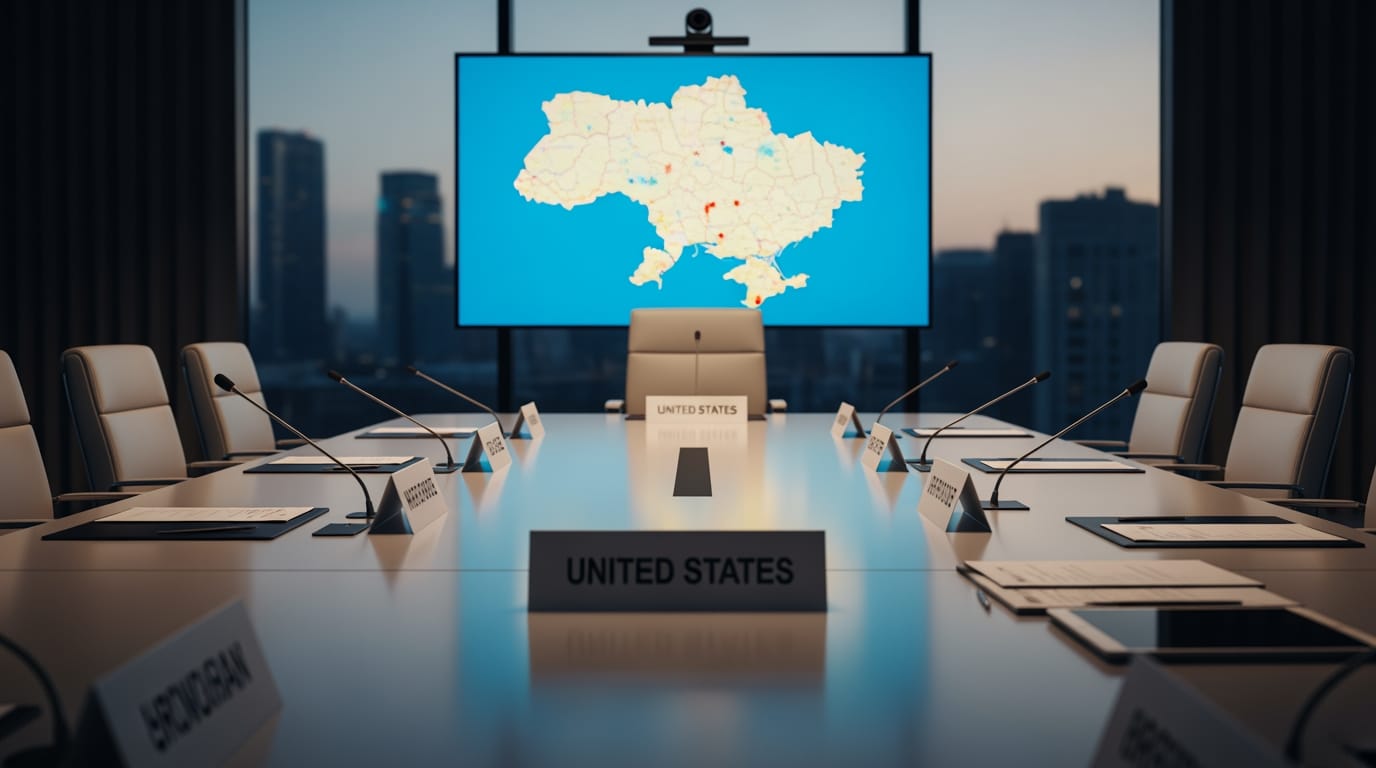
BRUSSELS – As the protracted conflict in Ukraine approaches its fourth year, an urgent diplomatic push led by the United States under President Donald Trump is attempting to broker a peace deal between Kyiv and Moscow. However, this high-stakes negotiation process is unfolding with strikingly limited direct input from European allies, sparking significant concern and frustration across the continent, which fears being presented with an "ugly deal" that could undermine its security architecture. The current diplomatic landscape highlights a growing transatlantic divergence, where Europe's substantial financial and logistical support for Ukraine has yet to translate into meaningful influence at the negotiating table.
The American Diplomatic Offensive Takes Center Stage
President Trump's administration has intensified its efforts to secure a settlement, deploying key envoys, including Steve Witkoff and Jared Kushner, to engage directly with both Ukrainian and Russian leadership. Recent high-level meetings have seen Ukrainian security officials, such as Rustem Umerov, Secretary of Ukraine's National Security and Defense Council, and Andrii Hnatov, Chief of Staff of Ukraine's Armed Forces, in discussions with US officials in Florida. Simultaneously, Witkoff and Kushner have traveled to Moscow for talks with Russian President Vladimir Putin, characterized by the Kremlin as "very useful, constructive, and highly substantive," though no concrete agreement has yet been reached.
These American-led initiatives emerged following the circulation of an initial 28-point peace proposal drafted by the Trump administration. This plan drew immediate and widespread criticism from Kyiv and its European partners, who perceived it as heavily favoring Russian demands. Initial leaked details suggested the plan required Ukraine to cede territory, limit the size of its armed forces, and abandon its aspirations for NATO membership. Despite modifications after pushback, including a revised 20-point plan announced by Ukrainian President Volodymyr Zelenskyy, key sensitive topics such as territorial integrity, the utilization of frozen Russian assets, and security guarantees for Ukraine remain central to the ongoing discussions.
European Allies Decry Exclusion from Critical Negotiations
The conspicuous absence of European representatives from these pivotal US-Russia and US-Ukraine talks has ignited considerable alarm and a sense of marginalization among European leaders. Reports indicate that at recent US-Ukraine meetings in Florida, no European envoys were present. Similarly, US discussions with President Putin in Moscow proceeded without direct European participation, leaving allies to observe from the sidelines. This exclusion is seen by many in Europe as a "humiliation," particularly given that the war is unfolding on European soil and profoundly impacts the continent's stability and future.
Concerns intensified after statements from US officials, including Trump's envoy Keith Kellogg, indicated that Europe would not be directly involved in peace talks. European leaders, including French President Emmanuel Macron and German Chancellor Friedrich Merz, have vocally insisted that any peace deal must include Kyiv and European powers, asserting that there can be "no dictated peace." The European Parliament, in a strongly worded resolution, has even chastised Washington's "political ambivalence," deeming it "detrimental to the goal of lasting peace" and urging the EU to demonstrate leadership. Ukrainian officials have also stressed that "nothing can be discussed on Ukraine without Ukraine," a sentiment echoed by EU foreign policy chief Kaja Kallas, who stated that "Europe must have a central role" for any agreement to succeed.
Some analysts suggest that the US approach reflects a "great-power logic," prioritizing American and Russian interests while potentially viewing European leaders as "reckless actors" or "obstructive" to a swift resolution. Furthermore, Europe's perceived lack of a unified stance and its historical reluctance to engage directly with Russia on such sensitive matters are cited as factors contributing to its diminished role.
Diverging Visions and the Battle Over Terms
The initial US 28-point proposal faced significant European criticism for its perceived pro-Russian bias. For instance, it reportedly included provisions that Ukraine abandon its NATO aspirations and accept limits on its military. In response, European nations, notably France, Germany, and the United Kingdom, collaborated on a "European version" counter-proposal. This alternative plan aimed to mitigate the pro-Russian elements, such as eliminating the requirement for Ukraine to concede more territory, proposing a higher cap on Ukrainian armed forces, and revising provisions concerning frozen Russian funds.
A major point of contention has been the use of frozen Russian assets. The original US plan proposed using $100 billion of these assets for US-led reconstruction efforts in Ukraine, with the US receiving 50% of the profits. It also suggested that Europe add another $100 billion and that the remaining frozen Russian funds be invested in a US-Russian joint venture. European leaders, however, have strongly pushed for a "reparations loan" backed by these frozen assets, primarily to finance Ukraine's war effort and reconstruction, and to give Kyiv a stronger negotiating position. This initiative, spearheaded by the European Commission, aims to raise 90 billion euros to cover two-thirds of Ukraine's financial needs for 2026 and 2027, thereby reducing reliance on Washington and giving Europe greater strategic autonomy. This move signals Europe's determination to maintain its support for Ukraine even if a US-brokered ceasefire leaves Russian forces occupying Ukrainian territory.
Russian President Vladimir Putin, for his part, has accused Kyiv's European allies of "sabotaging" US-led peace efforts. He claims that European countries are introducing "demands that are absolutely unacceptable to Russia," thereby "blocking the entire peace process." This accusation underscores the complex web of distrust and competing interests that characterize the current diplomatic climate.
Strategic Vulnerability and the Quest for European Autonomy
The perceived marginalization of Europe in these critical talks has laid bare the continent's strategic vulnerabilities and intensified calls for greater European defense capabilities and diplomatic leverage. Analysts argue that Europe's inability to meaningfully shape the settlement highlights its precarious position, despite its substantial financial and logistical contributions to Ukraine. Without increased investment in "hard power" and unified strategic action, Europe risks being forced to accept terms primarily shaped by US-Russia negotiations, potentially compromising its long-term security interests.
This situation has spurred renewed discussions within Europe about achieving greater strategic autonomy. The EU's proactive measures, such as the proposed "reparations loan" and efforts to cut off Russian gas imports, are seen as deliberate steps to decouple its support for Ukraine from Washington's diplomatic timeline. These initiatives demonstrate a recognition within Europe that it cannot solely rely on Washington's sustained commitment to Ukraine and must be prepared to safeguard its own security and interests.
An Uncertain Path Forward
The diplomatic efforts surrounding the Ukraine conflict remain fraught with complexity and uncertainty. While the United States continues to lead the charge for a resolution, European leaders are actively striving to assert their relevance and ensure that any peace agreement reflects European security principles and safeguards Ukraine's sovereignty. The differing perspectives on territorial concessions, security guarantees, and the use of frozen assets illustrate the profound challenges in achieving a universally acceptable and lasting peace.
The ongoing discussions in Miami, Moscow, and Brussels underscore a deeply fractured international approach to ending the war. The ultimate outcome will not only determine the future of Ukraine but also profoundly reshape transatlantic relations and the broader European security landscape, demanding a delicate balance between powerful, often conflicting, interests. Europe's capacity to forge a unified, influential voice in these negotiations remains a critical, unresolved question as the war continues.


