Transatlantic Tensions Flare as Trump Threatens Spain Over Defense Spending, Iran Stance
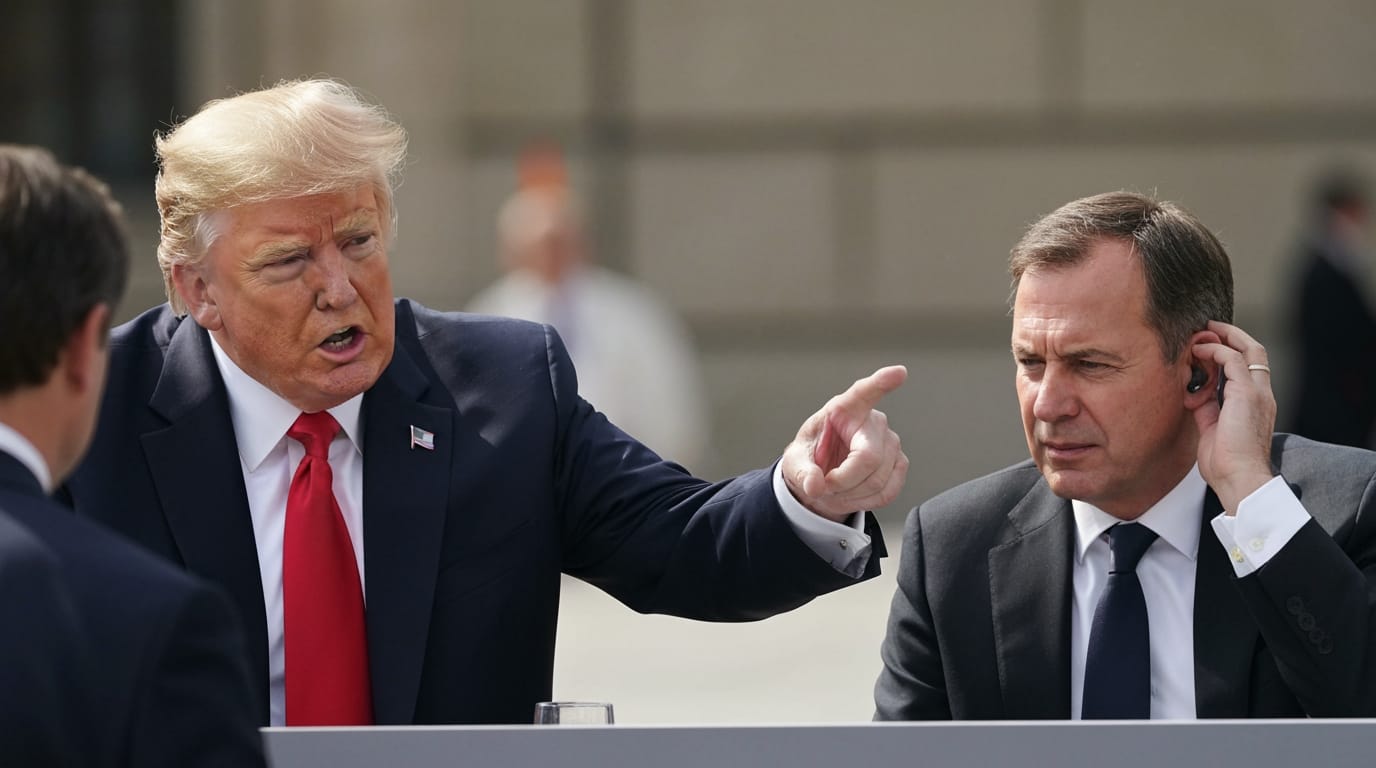
WASHINGTON D.C. - A high-stakes meeting in the Oval Office between U.S. President Donald Trump and German Chancellor Friedrich Merz on Tuesday took an unexpected turn, as President Trump launched a blistering critique against Spain, threatening to cut off all trade with the nation. The remarkable public reprimand, delivered with Chancellor Merz looking on, underscored deep fissures within transatlantic alliances amid escalating global tensions over the U.S.-Israeli military actions against Iran and long-standing disputes over NATO defense contributions.
The encounter, primarily arranged to discuss the ongoing military operations in Iran, trade negotiations, and the conflict in Ukraine, quickly veered into a sharp condemnation of Madrid's policies. President Trump's remarks cast a shadow over efforts for a united Western front, highlighting significant disagreements with key European allies.
A Stern Rebuke in the Oval Office
During a press briefing following his private discussions with Chancellor Merz, President Trump expressed profound dissatisfaction with Spain, citing two primary grievances. First, he criticized Spain's refusal to permit the U.S. military to use jointly operated bases in southern Spain for strikes against Iran that fall outside the purview of the United Nations Charter. This stance led to the relocation of approximately 15 U.S. aircraft, including refueling tankers, from Rota and Morón air bases. "Spain has been very, very uncooperative," Trump stated, asserting that the U.S. "could use their base if we want. We could just fly in and use it. Nobody's going to tell us not to use it," though he added, "we don't have to". He characterized Spain's leadership as lacking, despite acknowledging the quality of its people.
Secondly, President Trump revived his long-standing criticism of NATO members failing to meet defense spending targets. He specifically singled out Spain, claiming it was the "only country" in the alliance that refused to agree to increase defense spending to 5% of its Gross Domestic Product (GDP). Furthermore, he alleged that Spain does not even meet the established 2% target, a claim Madrid disputes, stating it aims for 2.1% to meet its military capabilities.
The Drastic Trade Threat and German Response
In an escalation of rhetoric, President Trump threatened severe economic repercussions for Spain. "We're going to cut off all trade with Spain," Trump declared, adding, "We don't want anything to do with Spain." He indicated that he had instructed U.S. Treasury Secretary Scott Bessent to "cut off all dealings" with Spain, with Bessent reportedly affirming the President's authority to impose an embargo.
German Chancellor Friedrich Merz, whose visit aimed to solidify relations and coordinate on pressing international issues, notably did not directly contradict President Trump's public statements regarding Spain. Instead, Merz appeared to align with Trump on the issue of defense spending, remarking, "We are trying to convince them that this is a part of our common security, that we all have to comply with this." However, later in private discussions, Merz reportedly informed President Trump that Spain's membership in the European Union meant that trade agreements are negotiated collectively by the bloc, suggesting that unilateral trade sanctions against Spain would complicate the broader U.S.-EU economic relationship.
Spain's Defiant Stance and Broader Implications
Spain's government swiftly pushed back against President Trump's threats. Spanish Foreign Minister José Manuel Albares had previously stated that the use of its bases would be restricted to operations covered by the UN Charter, a position reiterated by Prime Minister Pedro Sánchez. Prime Minister Sánchez subsequently delivered an address emphatically stating "no to war" and defending Spain's opposition to the U.S.-Israeli military actions in Iran. Sánchez underscored that Spain would not be "complicit in something that is bad for the world and that is also contrary to our values and interests, simply out of fear of reprisals from some," urging for de-escalation and dialogue.
The Spanish government also highlighted the legal complexities of Trump's trade threat, emphasizing that as an EU member, Spain's trade deals fall under the European Union's jurisdiction. Spain pointed out its significant and mutually beneficial trade relationship with the U.S., with U.S. exports to Spain estimated at $26 billion and imports around $21 billion in 2025.
The public exchange has raised concerns among observers regarding the stability of transatlantic alliances and the potential for a more fractured Western response to global crises. While Germany, under Chancellor Merz, has shown support for the U.S. in the Iran operations, Trump's confrontational approach with Spain and the United Kingdom during the same meeting illustrates persistent challenges in maintaining a unified front.
A Pattern of Disagreement
This is not the first time President Trump has clashed with Spain over defense spending. At a NATO summit in June 2025, Trump criticized Spain for its reluctance to meet the 5% GDP defense spending target, calling Spain "a problem" and "very unfair to the rest of them." Spain, meanwhile, has argued that such an increase is "unreasonable" and has resisted pressure to divert significant funds from social programs to military expenditures.
The episode in the Oval Office underscores a recurring theme in President Trump's foreign policy: a willingness to publicly confront allies over perceived shortcomings, particularly concerning defense contributions and support for U.S. military initiatives. The implications for international cooperation, particularly within NATO and the broader EU, remain a significant point of concern as global geopolitical landscapes continue to shift rapidly.
The strong words exchanged highlight the ongoing tension between national sovereignty and alliance obligations, particularly in an era of heightened international instability. The coming weeks will reveal whether President Trump's trade threats materialize and how the European Union collectively responds to what many perceive as an unprecedented challenge to the cohesion of Western partnerships.


