Legality Under Scrutiny: US-Israel Strikes on Iran Spark International Law Debate
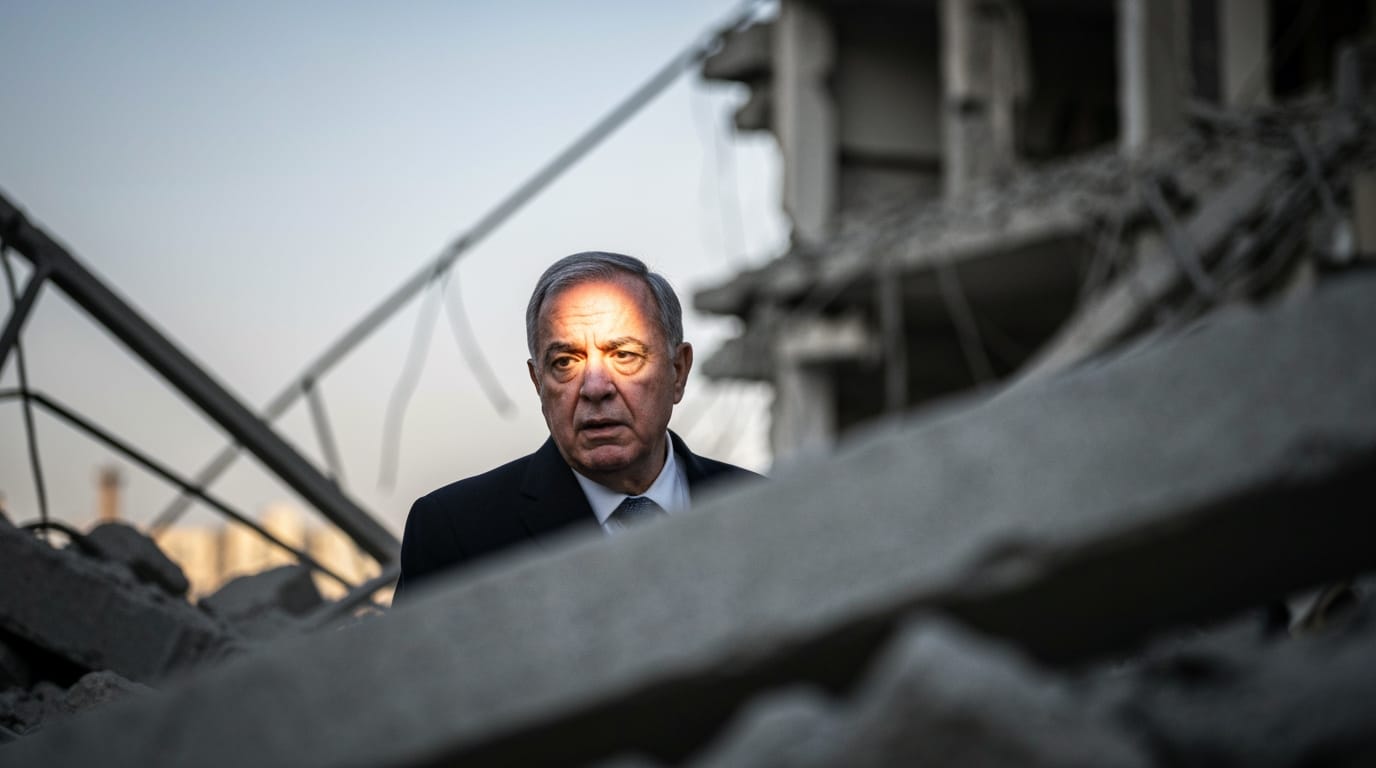
The recent coordinated military strikes by the United States and Israel against Iran have ignited a fierce international debate regarding their legality under global statutes, particularly the foundational principles enshrined in the United Nations Charter. These actions, reportedly targeting key Iranian military installations and nuclear facilities in late February and early March 2026, have been met with immediate condemnation from numerous international legal experts and some world governments, who largely contend that the strikes constitute a clear breach of international law. The US and Israel, however, maintain that their actions were necessary self-defense, aimed at mitigating an existential threat from Iran's nuclear program and its alleged support for regional militant groups.
Escalation and the "Operation Epic Fury"
The precipitating events unfolded with what the United States termed "Operation Epic Fury," a series of joint strikes with Israel commencing around February 28, 2026. These military operations reportedly targeted crucial Iranian military and nuclear sites, leading to significant disruption and reported casualties. Among the most impactful outcomes was the reported death of Iran's Supreme Leader, Ayatollah Ali Khamenei, alongside several other senior government and military officials. Tragically, civilian areas were also impacted, with reports indicating the death of over 140 schoolgirls in one incident.
Israeli Defense Minister Israel Katz publicly characterized the actions as a "pre-emptive strike against Iran to remove threats against the State of Israel." Concurrently, then-President Donald Trump articulated several justifications for the strikes, citing the need to "eliminate imminent threats from the Iranian regime," particularly emphasizing Iran's pursuit of nuclear weapons and its advanced missile program, which he claimed could threaten US allies and even the American homeland. The US also referenced Iran's historical grievances and its support for groups like Hezbollah. The US further informed the UN Security Council that its actions were undertaken pursuant to Article 51 of the UN Charter, claiming self-defense and asserting that Iran had been in violation of multiple UN Security Council resolutions regarding its nuclear activities. These recent events followed a previous US-Israeli military action in June 2025, which President Trump had claimed "totally obliterated" Iranian nuclear sites.
The Cornerstones of International Law: UN Charter Articles 2(4) and 51
At the heart of the legal controversy lies the interpretation and application of two fundamental articles of the United Nations Charter. Article 2(4) unequivocally prohibits the threat or use of force by any state against the territorial integrity or political independence of another state. This principle is considered a cornerstone of the post-World War II international order, designed to prevent aggressive warfare and uphold national sovereignty.
The primary exception to this prohibition is Article 51, which preserves the "inherent right of individual or collective self-defence if an armed attack occurs against a Member of the United Nations." Crucially, Article 51 stipulates that such measures taken in self-defense must be immediately reported to the Security Council and do not affect the Council's authority to take action to maintain international peace and security. A critical aspect of applying Article 51 revolves around defining what constitutes an "armed attack" and, more contentiously, the conditions under which a state can exercise "anticipatory" or "pre-emptive" self-defense against a perceived imminent threat. International legal discourse is deeply divided on the precise scope of "imminence," with stricter interpretations requiring clear evidence of an impending attack and a narrow window for defensive action.
Justifications vs. Legal Scrutiny: A Divided Opinion
The justifications presented by the US and Israel for their strikes—primarily self-defense against Iran's nuclear ambitions and its regional activities—have been met with widespread skepticism and outright rejection by a consensus of international legal experts. Many scholars argue that these justifications do not align with the strict requirements of international law.
Professor Ben Saul, Challis Chair of International Law at the Sydney Law School, stated that the US and Israeli actions "breached the fundamental ban on the use of aggressive force under the United Nations Charter and international law," emphasizing that "there's no conceivable argument under international law that this is self-defence." Marko Milanovic, a professor of public international law at the University of Reading, similarly asserted that "the strikes are clearly illegal, in that they are a breach of the UN Charter, which prohibits unilateral resort to force between states." He contended that the requirements for lawful self-defense were not met, even under the broadest interpretations of an "imminent threat," noting that Iran did not possess a nuclear weapon, nor was there demonstrable intent or immediate capability for an attack against the US or Israel.
Several experts, including Susan Breau and Don Rothwell, echoed this sentiment, highlighting the lack of clear evidence of an imminent threat from Iran that would legally permit pre-emptive strikes. Rothwell, a professor of international law at the Australian National University, specifically noted, "There's no evidence of an armed attack, there's no evidence of Iran preparing to attack Israel or the United States, and there's no evidence that Iran had nuclear weapons capable of launching such an attack." Critics argue that "preventative" strikes, launched against potential future threats rather than immediate ones, are generally considered unlawful under international law. Some legal scholars have gone further, suggesting that the US-Israeli actions could constitute a "crime of aggression," a severe violation under customary international law. The strikes were also broadly characterized as a "blatant violation of Iranian sovereignty." The fact that these actions were undertaken without explicit authorization from the UN Security Council further solidifies arguments against their legality.
Regional Fallout and International Responses
The US-Israeli strikes prompted immediate retaliation from Iran, which launched its own counter-strikes against Israel, US military bases stationed in the region, and targets in various Gulf states including Saudi Arabia, the UAE, Kuwait, Bahrain, and Qatar. Iran's foreign minister stated these actions were also in self-defense. However, this counter-response also drew legal scrutiny, with some experts like Adil Ahmad Haque arguing that Iran's strikes against nations not directly involved in the initial attacks similarly violated international law. Attacks on civilian targets, such as a hotel and airport in Dubai, were also condemned as illegal under international humanitarian law.
The international community's response has been varied. Countries like Norway and Switzerland openly condemned the US-Israeli attacks, urging all parties to respect international law and calling for diplomatic solutions. Colombia also condemned the airstrikes. The European Union, while refraining from directly condemning the initial US-Israeli strikes, issued a statement condemning Iran's retaliatory actions and calling for adherence to international law by all actors. The United Kingdom, a close ally of the US, did not participate directly in the strikes but deployed military assets defensively to intercept Iranian missiles and allowed the US to use its military bases for "specific and limited defensive purposes." This UK position, particularly regarding the provision of defensive support for actions that many deemed unlawful, also faced legal questioning. Other nations, such as Canada, adopted a cautious stance, aligning with allies while emphasizing efforts to prevent Iran from obtaining nuclear weapons.
Eroding Norms and Future Implications
The contentious legality of the US-Israel strikes on Iran underscores a growing challenge to the international rules-based order established post-1945. The overwhelming consensus among international legal scholars suggests that the actions represent a significant departure from the strictures of the UN Charter, particularly concerning the prohibition on the use of force and the narrow exception for self-defense.
The ongoing debate highlights the deep divisions in legal interpretation when national security interests are perceived to be at stake. Critics argue that the repeated disregard for international legal norms risks setting dangerous precedents, eroding the credibility of international law, and potentially encouraging an environment where unilateral use of force becomes more common. As the region grapples with the immediate aftermath and the specter of further escalation, the international community faces the critical task of upholding legal principles to prevent further destabilization and address the profound human cost of continued conflict. The enduring question remains whether the global legal framework can withstand the pressures of geopolitical confrontation without succumbing to the "law of the jungle."


