Eurovision Faces Deep Divide as Israel Secures 2026 Spot Amid Boycotts

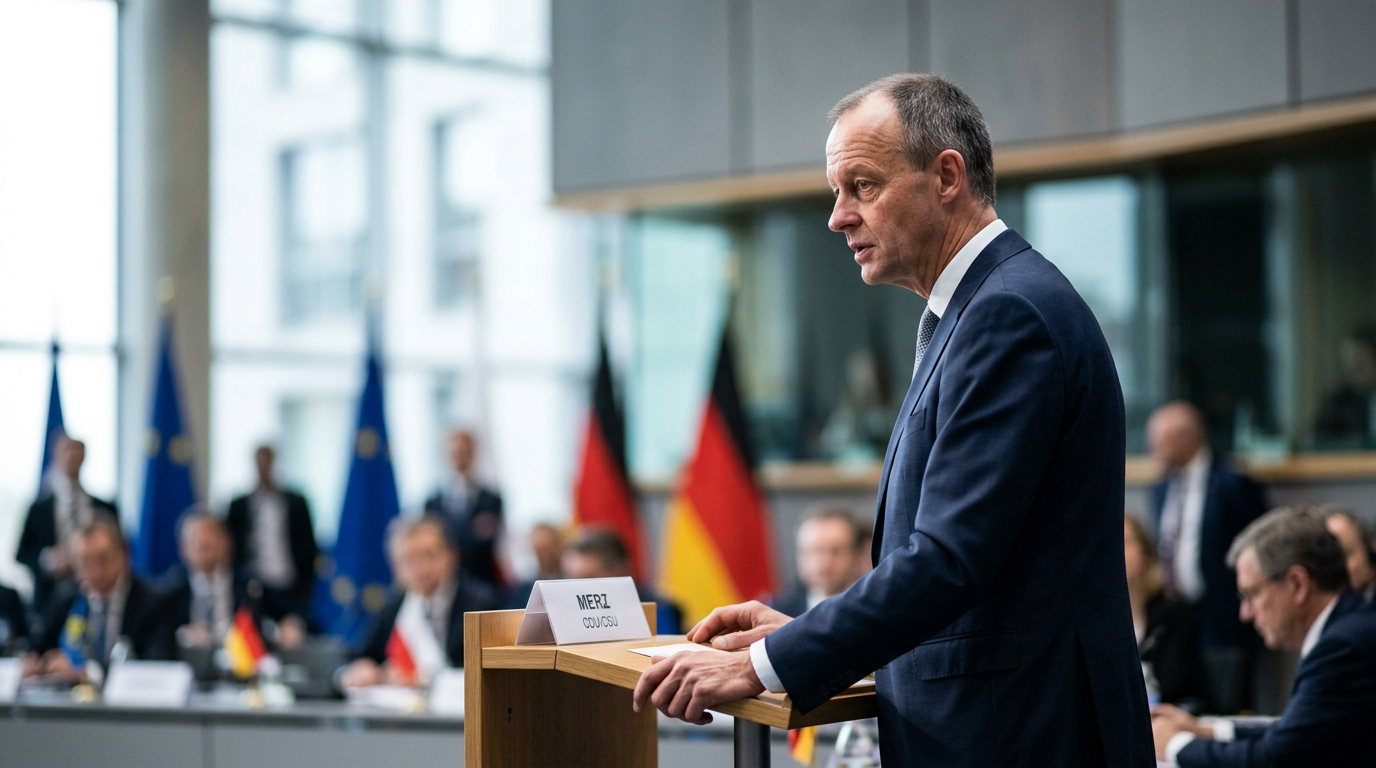
Geneva, Switzerland – The European Broadcasting Union (EBU) has affirmed Israel's participation in the 2026 Eurovision Song Contest, a decision that has immediately triggered a significant schism within the international cultural event. In the wake of the EBU's announcement, public broadcasters from the Netherlands, Spain, Ireland, and Slovenia have declared their withdrawal from the upcoming competition, citing profound concerns over the ongoing humanitarian crisis in Gaza and the perceived politicization of the contest. The move marks a dramatic moment for Eurovision, highlighting the growing tension between its apolitical aspirations and the geopolitical realities faced by its participating nations.
EBU Upholds Israel's Eligibility, Citing Reforms
The contentious decision emerged from a heated General Assembly meeting of the EBU in Geneva, where members debated Israel's role in the popular song contest. Instead of holding a direct vote on Israel's exclusion, the EBU's focus shifted to a package of reforms aimed at bolstering trust, transparency, and neutrality within the competition. A "large majority of members" ultimately backed these new rules, which included measures designed to prevent "disproportionate promotion campaigns" by governments or third parties and adjustments to the voting system, such as limiting public votes to 10 and reinstating juries in the semi-finals. The EBU stated that the adoption of these reforms negated the need for a separate vote on Israel's participation, thereby confirming that all EBU members complying with the updated rules remain eligible to compete in Eurovision 2026, set to be held in Vienna, Austria.
EBU officials expressed that the decision reflects a shared commitment to maintaining the integrity of what they term "the world's largest live music event." Despite acknowledging "widespread protests over Israel's conduct in the war in Gaza and allegations that the Israeli government unfairly influenced the voting at recent contests," the EBU maintained that Israel's national broadcaster, KAN, meets all the necessary requirements for participation. Israel's President Isaac Herzog welcomed the EBU's resolution, emphasizing his belief that "Israel deserves to be represented on every stage around the world" and expressing hope that Eurovision will continue to champion culture, music, and cross-border understanding.
A Wave of Withdrawals: Citing Humanitarian and Ethical Grounds
Immediately following the EBU's announcement, a quartet of European broadcasters confirmed their exit from the 2026 contest. The public broadcasters of the Netherlands (AVROTROS), Spain (RTVE), Ireland (RTE), and Slovenia (RTV Slovenia) each issued statements outlining their reasons for withdrawal, primarily centered on the severe humanitarian situation in Gaza and the ethical implications of participating alongside Israel.
Dutch broadcaster AVROTROS articulated that, "under the current circumstances, participation cannot be reconciled with the public values that are fundamental to our organization," specifically mentioning "humanity and a free press" as non-negotiable values that they believe have been seriously violated. Ireland's RTE declared its participation "unconscionable given the appalling loss of lives in Gaza and the humanitarian crisis there," also expressing concern over the targeted killing of journalists in the region and restrictions on international media access. Similarly, Slovenia's RTV Slovenia made a poignant statement that its withdrawal was made "on behalf of the 20,000 children who died in Gaza," while Spanish broadcaster RTVE criticized Israel's use of Eurovision "for political goals" and expressed increased "distrust of the festival's organization" after its request for a specific vote on Israel's participation was denied. Spain's withdrawal is particularly noteworthy as it is one of the "Big Five" countries, whose broadcasters make significant financial contributions to the EBU.
These broadcasters had previously indicated their willingness to boycott if Israel remained in the competition, highlighting a deep-seated ethical dilemma for many public service media organizations across Europe. The move creates a significant precedent, underscoring the growing pressure on cultural institutions to address geopolitical conflicts.
Geopolitical Undercurrents and the Future of Eurovision
The controversy surrounding Israel's participation and the subsequent boycotts underscore a persistent challenge for the Eurovision Song Contest: its aspiration to remain apolitical in an increasingly interconnected world. While the EBU maintains that the contest is a competition among broadcasters, not governments, the war in Gaza has profoundly impacted public and media sentiment across Europe. The EBU's decision to implement new voting rules was seen by some as an attempt to appease broadcasters critical of Israel's involvement, yet it proved insufficient to deter the boycotting nations.
The debate at the General Assembly was described as "tense" and "moving," with countries like Germany and Ukraine reportedly offering public support for Israel's continued presence, while Belgium and Iceland are still weighing their options. This divergence of opinion reflects a broader European landscape grappling with how to balance cultural exchange with political and humanitarian concerns. The accusations of voting interference in previous contests, particularly regarding Israel's public vote performance, further complicated the EBU's position and fueled calls for greater transparency.
Conclusion: A Fractured Harmony
The confirmation of Israel's participation in the 2026 Eurovision Song Contest, coupled with the withdrawal of four prominent European nations, presents the EBU with a complex and challenging path forward. While the EBU seeks to reinforce the contest's neutrality through rule reforms, the boycotts demonstrate that for some, the humanitarian and ethical considerations of the Gaza conflict outweigh the desire for artistic unity. The decision has not only created a significant divide among member broadcasters but also casts a long shadow over the future of Eurovision, raising questions about its ability to maintain its traditional celebratory spirit in an era of heightened global political and social consciousness. The 70th edition of the world's largest live music event will undoubtedly proceed in Vienna, but it will do so against a backdrop of fractured harmony, reflecting the deeply felt divisions across the continent.
Related Articles

Ratko Mladić, "Butcher of Bosnia" and Convicted War Criminal, Dies at 84
THE HAGUE, Netherlands – Ratko Mladić, the former Bosnian Serb military commander known as the "Butcher of Bosnia" and convicted of genocide, war crimes, and crimes against humanity, has died at the age of 84. Serbian...

Long-Awaited 9/11 Mastermind Trial Set for 2028, Decades After Attacks
GUANTANAMO BAY, Cuba – Nearly a quarter-century after the devastating terror attacks of September 11, 2001, a military judge has finally set a trial date for Khalid Sheikh Mohammed, the alleged mastermind behind the...