Eva Schloss, Holocaust Survivor and Stepsister of Anne Frank, Dies at 96
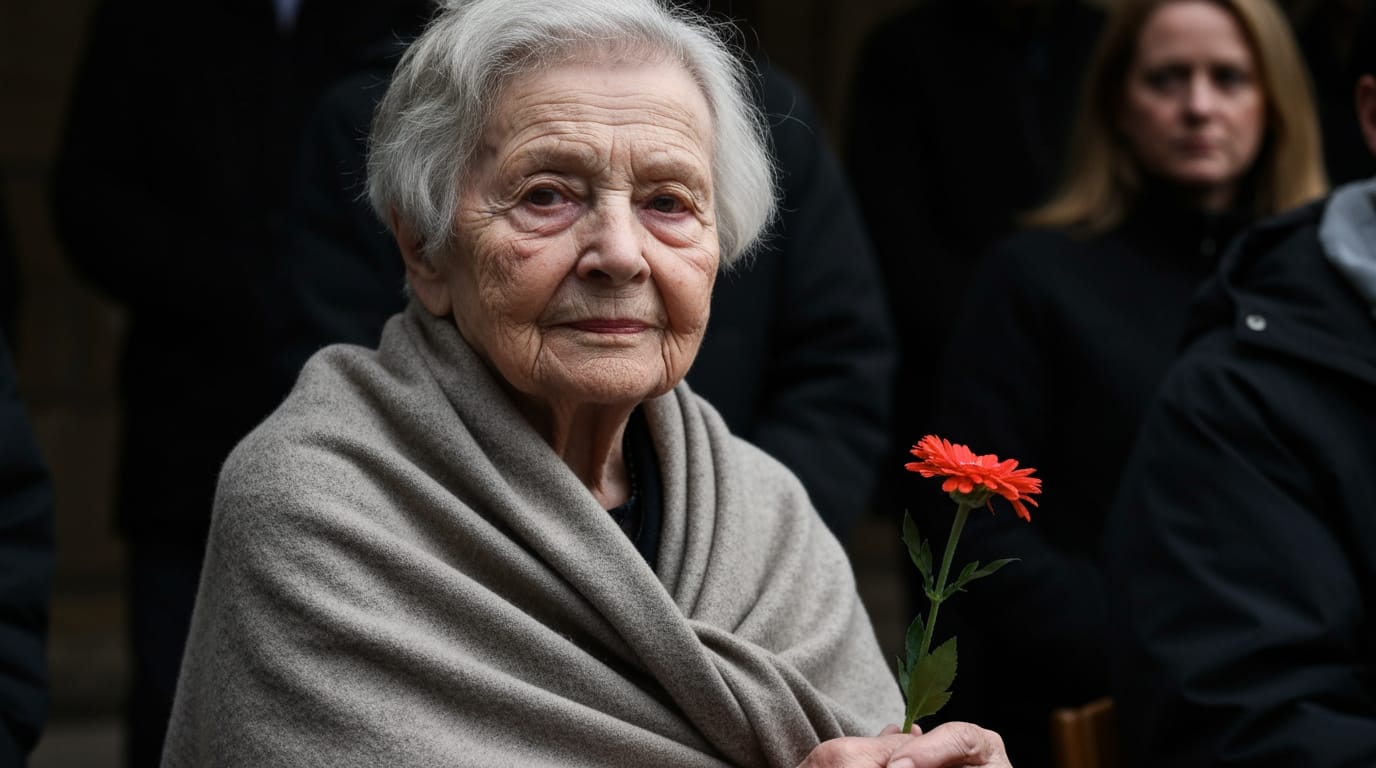
London, England – Eva Schloss, a revered Holocaust survivor, dedicated educator, and posthumous stepsister to Anne Frank, died peacefully in London on January 3, 2026, at the age of 96. Her passing marks the end of an era, as one of the last direct witnesses to the horrors of Auschwitz-Birkenau and a tireless advocate for remembrance and tolerance. Schloss's life, characterized by immense loss and unwavering resilience, profoundly impacted countless individuals through her powerful testimony and commitment to combating prejudice.
Tributes poured in from around the world, recognizing her profound contributions. King Charles III and Queen Camilla expressed deep sorrow, stating they were "privileged and proud to have known her" and "admired her deeply" for her dedication to overcoming hatred. Dan Green, chief executive of the Anne Frank Trust UK, lauded her as a "beacon of hope and resilience," emphasizing her "unwavering commitment to challenging prejudice through Holocaust education." Olivia Marks-Woldman, chief executive of the Holocaust Memorial Day Trust, remembered her for her "quiet and consistent presence" and "steadfast commitment to Holocaust education," noting her unique ability to provide witness testimony not only about her own history but also that of her stepsister, Anne Frank.
A Childhood Interrupted: From Vienna to Amsterdam
Born Eva Geiringer on May 11, 1929, in Vienna, Austria, her early childhood was one of relative peace within an upper-middle-class, non-religious Jewish family. Her father, Erich Geiringer, owned a shoe factory, and Eva enjoyed a close relationship with her older brother, Heinz. However, the serenity of their lives was shattered in March 1938 with the annexation of Austria by Nazi Germany. The family was compelled to flee, first to Belgium and then, in 1940, settling in Amsterdam, Netherlands, seeking refuge from the escalating persecution.
It was in Amsterdam that Eva's path intersected with that of Anne Frank. The Geiringer family lived in the same apartment block as the Frank family, and Eva and Anne, being close in age, occasionally played together. While their childhood interactions were fleeting, the bond forged by proximity and shared heritage would later become a cornerstone of Eva's post-war life and advocacy. As the Nazi occupation of the Netherlands intensified, antisemitic decrees proliferated, and Jewish families faced increasing threats to their lives and freedoms.
The Shadow of War: Hiding and Betrayal
In July 1942, as deportations of Jewish people accelerated, the Geiringer family was forced into hiding, much like the Franks. For two precarious years, they moved frequently between various hiding places to evade capture. During this period of clandestine existence, Eva's brother, Heinz, a talented and sensitive individual, found solace in creative pursuits, writing poetry, composing music, and painting oil canvases, some of which were concealed beneath floorboards.
The family's desperate struggle for survival came to a brutal end on Eva's 15th birthday, May 11, 1944. Betrayed by a Dutch nurse or sympathizer, they were arrested by Nazi forces and subjected to brutal interrogations. From there, they were sent first to the Westerbork transit camp and then, in May 1944, deported in cattle cars to the Auschwitz-Birkenau extermination camp.
At Auschwitz, Eva and her mother, Elfriede, were separated from Erich and Heinz. The conditions in the camp were unimaginable, with starvation, disease, and constant threats to life. Eva and her mother endured horrific experiences, including her mother being saved from the gas chamber through the intervention of a resourceful cousin who utilized her nursing skills to remove Elfriede's name from a list. Tragically, Eva's father and brother did not survive. They perished during a death march to Mauthausen, near Ebensee, just days before the camp's liberation by Allied forces.
Rebuilding a Life: A Voice for the Voiceless
Eva and her mother were among the few who survived Auschwitz, liberated by Soviet forces in January 1945. Following a arduous journey, they returned to Amsterdam, where they reconnected with Otto Frank, the sole surviving member of the Frank family. Otto, having learned of the tragic deaths of his wife and daughters, found a kindred spirit in Elfriede, and they married in 1953, making Eva the posthumous stepsister to Anne Frank. This union fostered a unique bond, linking Eva directly to the legacy of the world's most famous diarist. Eva later moved to London, where she married Zvi Schloss in 1952, a fellow German refugee, and together they raised three daughters. Zvi Schloss died in 2016.
For decades after the war, Eva Schloss remained largely silent about her harrowing experiences, a common reaction among many survivors grappling with unimaginable trauma. However, after Otto Frank's death in 1980, Eva felt a profound responsibility to continue his work of preserving Anne Frank's memory and ensuring the lessons of the Holocaust were never forgotten. In 1985, she began speaking publicly, sharing her testimony at schools and universities around the world.
Her voice became a potent force in Holocaust education. She co-founded the Anne Frank Trust UK in 1990, an organization dedicated to empowering young people to challenge prejudice through the lessons of Anne Frank and the Holocaust. Queen Camilla became the Trust's first Royal Patron in January 2024, further highlighting its importance. Schloss authored three books – Eva's Story, After Auschwitz, and The Promise – detailing her experiences and insights.
A Lasting Legacy: Education in the Digital Age
Recognizing the urgent need to preserve survivor testimonies for future generations, Eva Schloss actively participated in the USC Shoah Foundation's Visual History Archive. She recorded extensive interactive video testimonies, and even engaged in pioneering holographic interviews, allowing museum visitors to pose questions and receive her recorded responses, creating an immersive educational experience. This innovative approach ensured that her story, and the stories of millions like her, would continue to resonate far beyond her lifetime.
Schloss was a recipient of numerous accolades for her tireless advocacy. She was awarded an MBE in 2013, an honorary doctorate from Northumbria University in 2001, and the Medal for Services to the Republic of Austria in 2021. The latter was particularly poignant, as she reclaimed her Austrian citizenship in 2021 as an act of reconciliation with her country of birth, embodying her enduring message of healing and moving beyond hatred. She frequently engaged directly with youth, including an instance in March 2019 where she met with students who had controversially given Nazi salutes, using her personal story to educate them on the devastating implications of such imagery.
Eva Schloss’s journey from a young girl fleeing persecution to a global icon of remembrance underscored her unwavering belief in humanity's capacity for empathy and understanding. Her life was a powerful testament to the importance of speaking out against injustice and fostering a world free from hatred and discrimination.
Conclusion
Eva Schloss's passing marks the diminishing number of those who can offer direct testimony to the Holocaust, making her contributions all the more invaluable. Her commitment to education, born from unimaginable suffering, transformed her into a vital bridge between the past and the present. Through her lectures, books, and pioneering holographic testimonies, she ensured that the voices of the victims, and the lessons of history, would continue to resonate. Her legacy, woven into the fabric of Holocaust remembrance and anti-prejudice initiatives worldwide, will continue to inspire and challenge generations to come, reinforcing the critical message that while the perpetrators of genocide sought to erase their victims, the memory of those like Eva Schloss will forever endure.


