FBI Deputy Director Dan Bongino to Depart After Less Than a Year
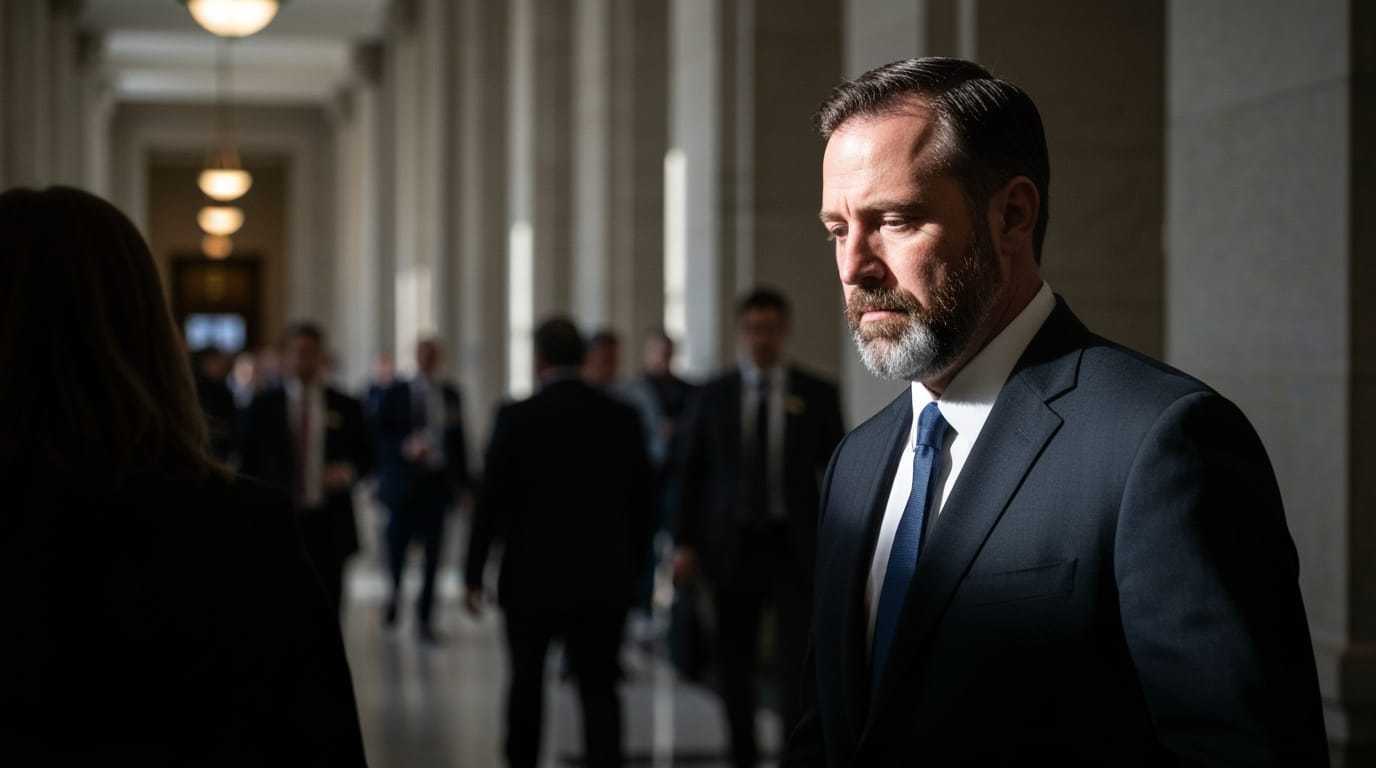
WASHINGTON D.C. — Dan Bongino, the Trump appointee who assumed the role of Federal Bureau of Investigation Deputy Director less than ten months ago, has announced his intention to step down from the position in January 2026. The abrupt departure marks the end of a brief and often tumultuous tenure for the conservative commentator and former law enforcement officer, who was an unconventional choice for the bureau's second-highest post. His exit raises fresh questions about stability and direction within the nation's premier federal law enforcement agency.
Bongino, 50, confirmed his impending resignation via a social media post on December 17, 2025, just hours after President Donald Trump publicly suggested that Bongino desired a return to his prominent media career. "Dan did a great job. I think he wants to go back to his show," Trump told reporters, alluding to Bongino's popular right-wing podcast and television appearances that defined his public persona before joining the FBI. The announcement concludes a period characterized by internal scrutiny and external controversy, further emphasizing the politicization concerns that have shadowed the FBI in recent years.
An Unconventional Path to High Office
Bongino's appointment as Deputy Director of the FBI on February 23, 2025, by President Trump, and his subsequent swearing-in on March 17, 2025, sent ripples through Washington and law enforcement circles. Unlike the vast majority of his predecessors, Bongino did not rise through the ranks of the FBI as a career agent. His law enforcement background included serving as an officer with the New York City Police Department from 1995 to 1999, followed by a distinguished twelve-year career as a U.S. Secret Service agent from 1999 to 2011. During his time with the Secret Service, he gained significant experience, notably serving in the Presidential Protective Division for both Presidents George W. Bush and Barack Obama.
However, after leaving the Secret Service in 2011 to pursue a career in politics—which included three unsuccessful congressional bids—Bongino transitioned into a highly visible role as a conservative political commentator. He became a vocal media personality, hosting a popular podcast and television show, and frequently appearing on platforms supportive of President Trump. This media career was marked by strong criticisms of the FBI, with Bongino often alleging corruption and spreading theories about the agency's political motivations. His lack of FBI experience and his previous public pronouncements against the bureau made his selection for the number two position particularly contentious, drawing objections from groups like the FBI Agents Association.
A Tumultuous Ten Months in Leadership
Bongino's brief tenure as Deputy Director was met with apprehension from its outset, given his history as a sharp critic of the very institution he was appointed to help lead. Upon his appointment, he assumed the role under Director Kash Patel, another staunch Trump ally whose own confirmation was divisive. The pairing of two non-career agents in the top leadership roles was seen by many as a deliberate move by the Trump administration to reshape the bureau.
Throughout his time in office, Bongino faced renewed scrutiny over past statements and conspiracy theories he promoted in his media career. Notably, questions resurfaced regarding his claims about the January 6, 2021, Capitol assault, including an assertion that the planting of pipe bombs near the Democratic and Republican national committee offices on the eve of the riot was an FBI "inside job." While he later walked back some of these claims after an arrest was made in the pipe bomb case, these past positions underscored the tensions inherent in his appointment. Additionally, issues related to the ongoing Department of Justice investigation into the death of Jeffrey Epstein reportedly contributed to a turbulent period for Bongino. In August 2025, the Department of Justice announced a unique co-Deputy Directorship structure, appointing Missouri Attorney General Andrew Bailey to serve alongside Bongino, further complicating the leadership dynamic.
Implications for the Bureau's Future
The departure of Deputy Director Bongino, just shy of his one-year anniversary, adds another chapter to the ongoing narrative of leadership changes and challenges within the FBI. His appointment, and now his exit, underscore a broader struggle over the bureau's independence and its role in an increasingly polarized political landscape. Critics of the appointment had voiced concerns that installing a political commentator with no prior FBI experience and a history of disparaging the agency could undermine morale, erode public trust, and compromise the operational integrity of the institution.
The FBI Deputy Director position is traditionally a critical operational role, overseeing the bureau's day-to-day law enforcement activities and often serving as a stabilizing force. The rapid turnover and the unconventional nature of recent appointments at the agency's highest levels are likely to intensify scrutiny from Congress and the public alike. As the FBI navigates a complex threat landscape, the stability and perceived impartiality of its leadership remain paramount. Bongino's exit leaves the agency, and the Trump administration, to once again address the sensitive balance between political appointments and the need for experienced, non-partisan leadership in federal law enforcement.


