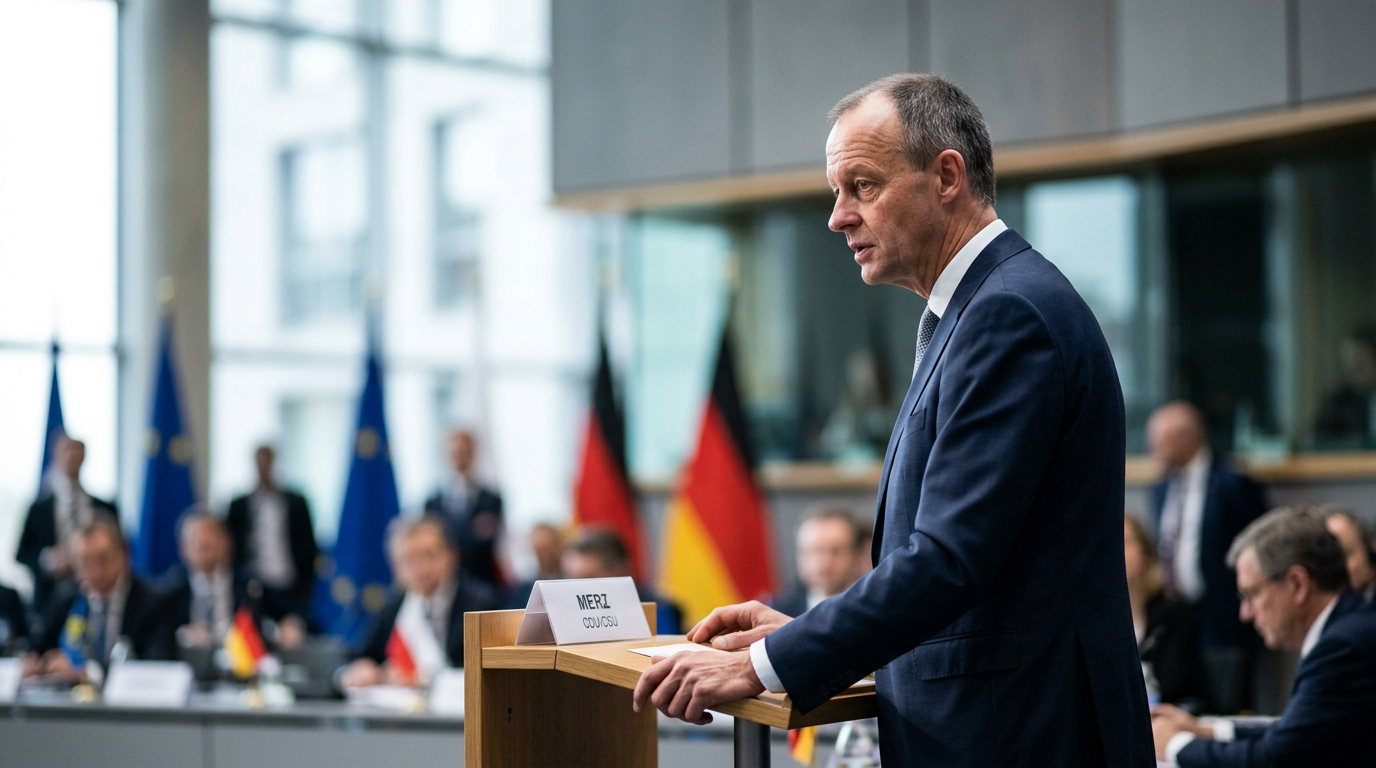
Germany Unleashes Billions in Historic Defense Spending as European Security Landscape Shifts
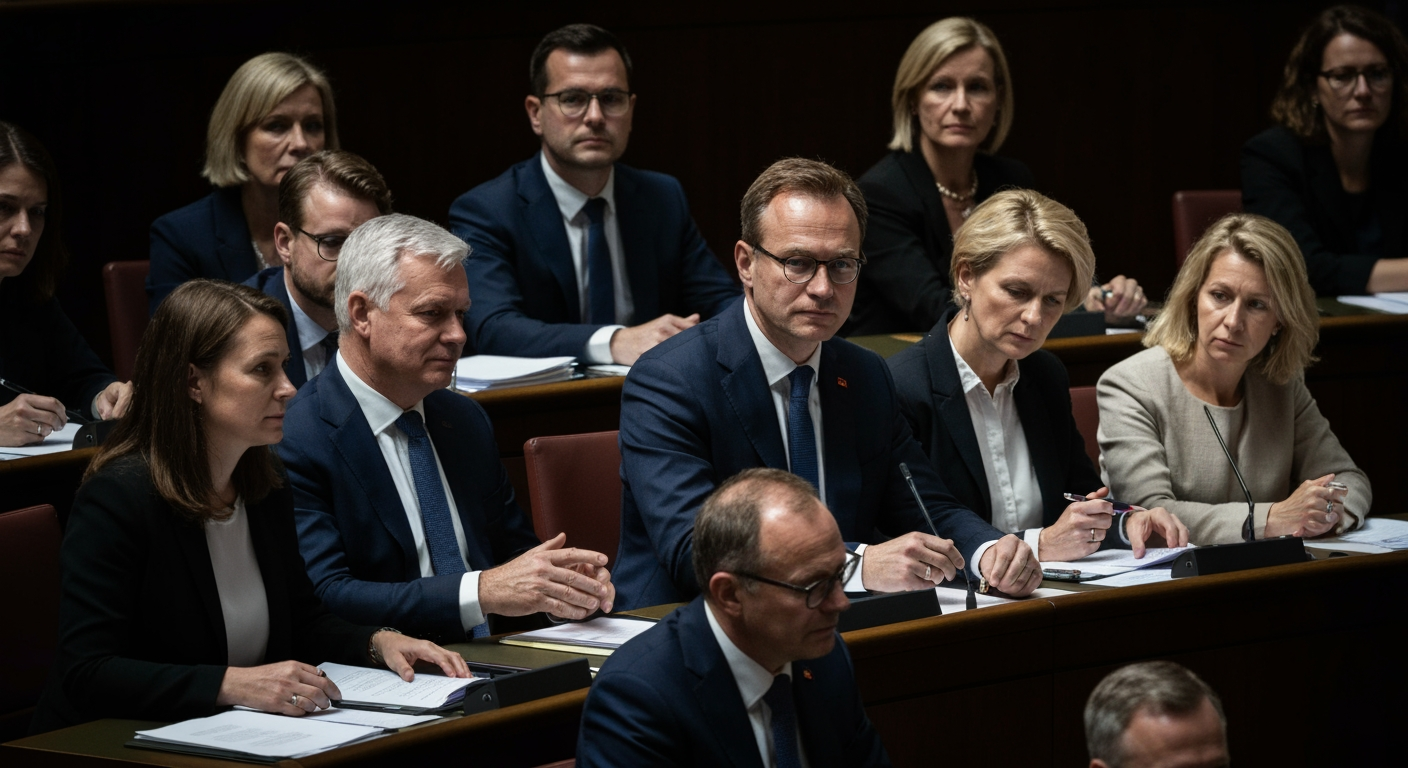
Berlin, Germany – German lawmakers have approved a massive new wave of military procurement totaling nearly 50 billion euros ($59 billion) on December 17, 2025, marking a profound acceleration in the nation's commitment to defense and security. This latest decision by the budget committee of the Bundestag pushes Germany's total defense acquisitions for 2025 to a historic high of 82.98 billion euros, signaling a definitive departure from decades of military reticence. The comprehensive spending package, spanning land, air, sea, and cyber domains, underscores Germany's strategic pivot in response to escalating geopolitical tensions, particularly the ongoing conflict in Ukraine and evolving dynamics within NATO.
The Zeitenwende Continues: A Nation Reimagines Its Defense
The roots of this unprecedented defense outlay trace back to Chancellor Olaf Scholz's declaration of a "Zeitenwende" or "turning point" following Russia's full-scale invasion of Ukraine in February 2022. This moment shattered Germany's long-standing pacifist tradition, born from its World War II past, and initiated a radical reassessment of its defense posture. A cornerstone of this shift was the establishment of a 100-billion-euro special fund for the Bundeswehr, the German armed forces, aimed at addressing years of chronic underinvestment and modernizing its capabilities.
For decades, German military expenditure remained comparatively low, averaging around 1.5% of its GDP, well below NATO's non-binding 2% target. However, the 2022 invasion served as a catalyst, prompting Germany to meet NATO's 2% target for the first time in 2024. The current government, under Chancellor Friedrich Merz, has not only continued but significantly amplified this trajectory. It has pledged to raise core defense spending to an ambitious 3.5% of GDP by 2029, a new NATO target influenced by the alliance's evolving security requirements and concerns over weakening security commitments from Washington. This commitment solidifies Germany's aspiration to build the strongest conventional army in Europe.
Mammoth Procurement: Equipping the Bundeswehr for a New Era
The 50 billion euro procurement package approved by the Bundestag's budget committee on December 17, 2025, represents the largest funding package to date for the Bundeswehr. This approval encompasses more than 30 new defense projects, critical for bolstering Germany's military readiness and operational capacity. Key procurements include advanced air defense systems such as PAC-3 MSE missiles and IRIS-T SLM systems, along with Meteor missiles for Eurofighter jets. Significant investments are also earmarked for ground forces, including an expansion of the Puma armored fighting vehicle fleet, self-propelled howitzers, and thousands of Eagle V 4x4 armored vehicles.
Beyond direct combat capabilities, the package addresses crucial support functions. It allocates approximately 21 billion euros for military clothing and personal equipment for up to 460,000 soldiers and 80,000 civilian staff. Investments in reconnaissance and surveillance are substantial, with 1.5 billion euros for eight remotely-piloted MQ-9B SeaGuardian aircraft for submarine detection and 1.76 billion euros for the SPOCK satellite surveillance system, vital for supporting German tank brigades deployed abroad. The defense ministry highlighted that these new purchases, alongside others throughout the year, have resulted in a "historic" number of defense acquisitions.
Strategic Implications and European Security Architecture
This monumental increase in German military spending carries profound strategic implications for both Germany and the broader European security architecture. By meeting and exceeding NATO's defense spending targets, Germany aims to fulfill its obligations to the alliance and assert its responsibility for peace and security in Europe. Defense Minister Boris Pistorius has consistently emphasized the necessity of these investments for strengthening NATO's collective defense.
The expanded capabilities are crucial as European nations collectively brace for potential future threats. Intelligence assessments predict that Russia could rebuild its forces for offensive operations against NATO by 2029. In response, Germany is not only strengthening its domestic military but also enhancing its presence on NATO's eastern flank. This includes the permanent stationing of a full armored brigade in Lithuania for the first time in its post-war history, and participation in constructing defenses in Poland. These deployments are part of a broader European effort to create a robust defensive wall against potential aggression, particularly vital given concerns about the long-term commitment of the United States to European security.
Germany is also pushing for greater European strategic autonomy and closer cooperation within the European Union's Common Security and Defence Policy (CSDP). There is a strong emphasis on harmonizing weapon systems, encouraging joint investment, research, development, and procurement of European-made defense technologies to overcome industrial fragmentation. Recent initiatives also include a comprehensive weapons partnership with Ukraine, involving joint research, development, and production of weapons, and integrating Ukrainian industry into the pan-European defense market. This proactive stance aims to ensure Europe's ability to defend itself, independent of external factors.
Public Support and Fiscal Considerations
The substantial increase in defense spending has largely garnered public support within Germany. Recent polls indicate that a majority of Germans favor higher defense expenditure, with some surveys showing 68% support and others indicating 65% agreement with plans to raise the budget to 3-3.5% of GDP. This shift in public sentiment reflects a growing awareness of geopolitical realities and the necessity for a capable national defense. However, there is also a desire for transparency, with 77% of Germans wanting more detailed information on how the money is being spent.
Financing these ambitious plans has necessitated navigating Germany's constitutionally mandated "debt brake," which generally limits new debt to 0.35% of GDP. However, the critical nature of defense spending has led to its exemption from these strict rules. Chancellor Merz has explicitly moved to exempt defense spending, utilizing special funds and allowing for increased borrowing to accelerate the build-up. While this fiscal maneuver has drawn some criticism from within the coalition regarding budget "tricks" and the replacement of existing spending, the government maintains that the investments are crucial for national and European security. The current budget plan projects Germany to spend €649 billion ($761 billion) on its military over the coming five years, with an annual military budget projected to reach €162 billion ($190 billion) by 2029, including aid to Ukraine.
A Future Forged in Renewed Strength
Germany's decisive actions in approving billions in military expenditure underscore a historic and fundamental reorientation of its defense policy. Driven by the imperative to bolster national security, meet alliance commitments, and contribute significantly to European stability, Berlin is rapidly transforming its military capabilities. The vast sums allocated for modernization and procurement will reshape the Bundeswehr into a formidable force, signaling Germany's unwavering resolve to shoulder greater responsibility in an increasingly complex and challenging global security environment. This ongoing "Zeitenwende" is not merely an investment in hardware but a long-term commitment to a robust, credible defense posture that will define Germany's role on the international stage for decades to come.
Sources
- news.cn
- spacewar.com
- straitstimes.com
- chinadaily.com.cn
- euro-sd.com
- xinhuanet.com
- bmvg.de
- ip-quarterly.com
- tgmstatbox.com
- atlanticcouncil.org
- breakingdefense.com
- defensenews.com
- defensenews.com
- europeanconservative.com
- military.com
- delorscentre.eu
- federalists.eu
- pravda.com.ua
- aa.com.tr
- responsiblestatecraft.org
- militaeraktuell.at
- defensenews.com
- theguardian.com
Related Articles

Ratko Mladić, "Butcher of Bosnia" and Convicted War Criminal, Dies at 84
THE HAGUE, Netherlands – Ratko Mladić, the former Bosnian Serb military commander known as the "Butcher of Bosnia" and convicted of genocide, war crimes, and crimes against humanity, has died at the age of 84. Serbian...

Long-Awaited 9/11 Mastermind Trial Set for 2028, Decades After Attacks
GUANTANAMO BAY, Cuba – Nearly a quarter-century after the devastating terror attacks of September 11, 2001, a military judge has finally set a trial date for Khalid Sheikh Mohammed, the alleged mastermind behind the...