Federal Judge Orders Pentagon to Reinstate Full Press Access, Citing Constitutional Violations
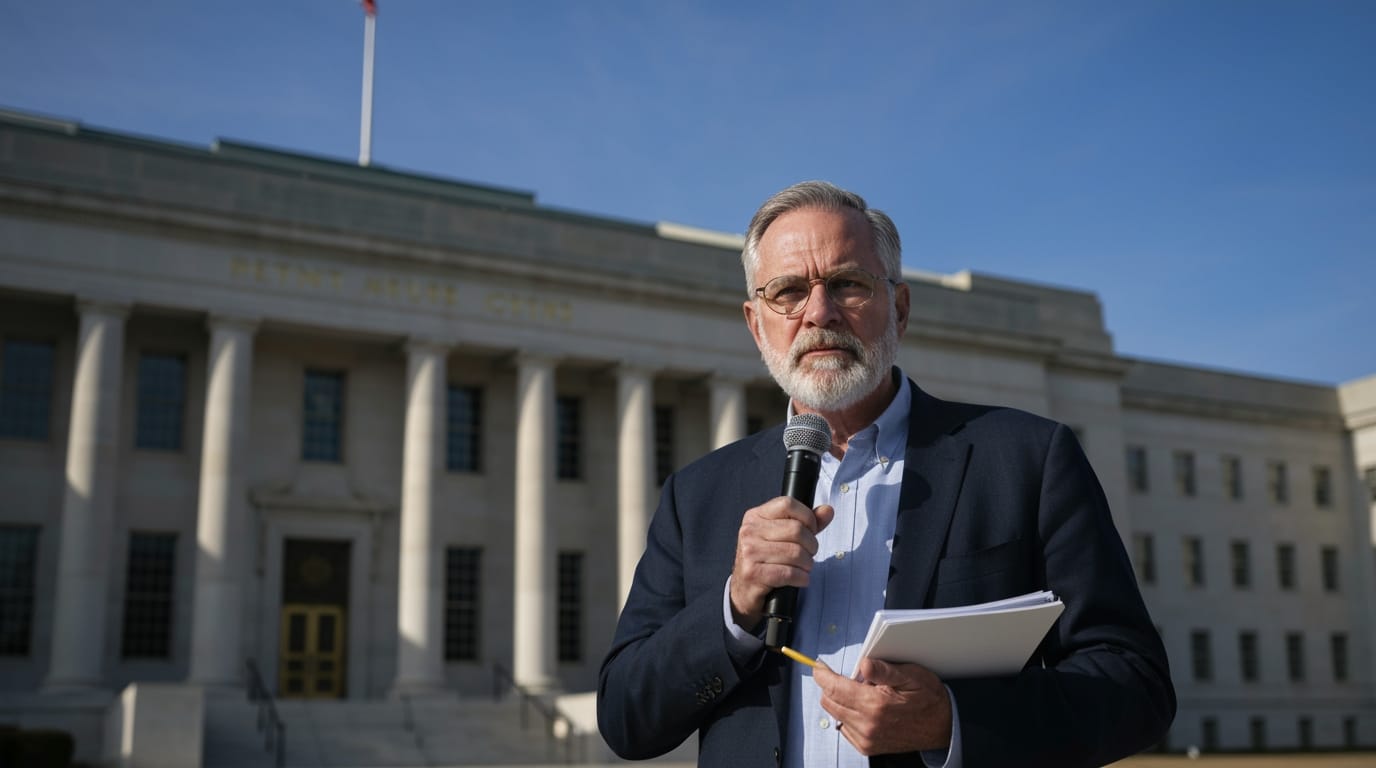
Washington, D.C. — A federal judge has delivered a significant rebuke to the Pentagon, ruling that the Department of Defense has repeatedly defied court orders to restore full access for credentialed journalists and has instead implemented policies designed to circumvent constitutional protections for the press. U.S. District Judge Paul Friedman, in a ruling issued Thursday, April 9, asserted that the Pentagon's actions represent a "blatant attempt to circumvent a lawful order of the Court" and undermine the public's right to information. This decision marks a pivotal moment in an ongoing legal battle initiated by The New York Times, highlighting mounting concerns over government transparency and the vital role of independent journalism.
Escalating Restrictions and Legal Challenge
The controversy originated last October when the Pentagon introduced a series of stringent new policies governing press access. These rules included provisions that deemed reporters who "solicit" classified or sensitive information from military personnel a security risk, potentially leading to the revocation of their press credentials. Additionally, the Pentagon controversially characterized press access as a "privilege" rather than a "right," a distinction that drew immediate condemnation from numerous news organizations. Many prominent media outlets, including CBS News and The Associated Press, opted to withdraw their reporters from the Pentagon rather than agree to these new terms, leading to a press corps primarily composed of conservative media organizations that assented to the restrictions.
In response to these perceived infringements on press freedom, The New York Times, joined by its reporter Julian Barnes, filed a lawsuit against the Pentagon and Defense Secretary Pete Hegseth in December. The lawsuit contended that the new credentialing policy violated the First Amendment's guarantees of free speech and press freedom, as well as the Fifth Amendment's due process provisions.
Friedman's Initial Ruling and Pentagon's Defiance
Judge Friedman first sided with The New York Times in a March 20 ruling, striking down several of the Pentagon's most onerous restrictions. He explicitly rejected the provision that characterized soliciting classified information as a security risk and invalidated the assertion that Pentagon access was merely a "privilege." Friedman's March order mandated the immediate reinstatement of press credentials for several Times reporters and declared that his decision applied to "all regulated parties," effectively nullifying key aspects of the Pentagon's restrictive policy.
However, the Pentagon's response to this initial ruling drew further ire from the court. Rather than fully complying, the Department of Defense implemented what it described as a "revised" or "interim" press policy. This new policy, introduced last month, effectively reinstated many of the previously blocked restrictions under a different guise. Specifically, the revised rules expelled all reporters from the building unless accompanied by government escorts and led to the closure of media outlets' designated office spaces, often referred to as the "correspondents' corridor." Judge Friedman, during a March 30 hearing, expressed "concerns" that these revised restrictions went even further than those he had initially blocked, describing some aspects as "weird" and "Kafkaesque."
The April 9 Ruling: A Strong Judicial Stance
In his most recent ruling on April 9, Judge Friedman unequivocally declared that the Pentagon had violated his earlier order. He asserted that the Department of Defense had attempted to "circumvent" his injunction and "reinstate an unlawful policy under the guise of taking 'new' action." Friedman lambasted the Pentagon's approach, stating, "The Department cannot simply reinstate an unlawful policy under the guise of taking 'new' action and expect the Court to look the other way. Nor can the Department take steps to circumvent the Court's injunction and expect the Court to turn a blind eye."
The judge specifically threw out the new regulation requiring journalists to be escorted into the building and the amended language concerning the "inducement of unauthorized disclosures." He found that the access provided under the Pentagon's revised policy was "not even close to as meaningful as the broad access" reporters previously enjoyed. Friedman's ruling also mandated the return of credentials to seven New York Times reporters. He ordered the Trump administration to submit a status report by April 16, detailing the steps taken to ensure compliance with his order.
Broader Implications for Press Freedom and Public Discourse
Judge Friedman underscored the constitutional principles at stake, noting that "Those who drafted the First Amendment believed that the nation's security requires a free press and an informed people and that such security is endangered by governmental suppression of political speech." He further emphasized the particular importance of a free press given current U.S. military operations in Venezuela and Iran, arguing that the public needs access to diverse information about government actions.
The judge concluded his ruling with a powerful statement, asserting that the case was fundamentally about "the attempt by the secretary of defense to dictate the information received by the American people, to control the message so that the public hears and sees only what the secretary and the Trump administration want them to hear and see." He added that "The Constitution demands better. The American public demands better, too."
The ruling has been hailed by press freedom advocates. Theodore J. Boutrous Jr., an attorney representing The New York Times, stated that the ruling "powerfully vindicates both the Court's authority and the First Amendment's protections of independent journalism."
Path Forward Amidst Uncertainty
Despite the unequivocal nature of Judge Friedman's ruling, the path forward remains uncertain. Pentagon spokesperson Sean Parnell had previously indicated the administration would appeal the March 20 decision. Justice Department attorneys have maintained that the Pentagon's revised policy fully complies with the judge's directives, a position directly contradicted by Friedman's latest decision.
The long-term impact on other news organizations that ceased daily reporting from the Pentagon due to the restrictive policies is also unclear. While Friedman's initial ruling applied to "all regulated parties," the specific mechanisms for restoring broader access for all journalists who left the building have yet to be fully defined. The dispute highlights a fundamental tension between government efforts to control information flow and the constitutional mandate for a free and independent press, a tension that promises to continue unfolding in the courts and public sphere.
This ruling stands as a critical reinforcement of journalistic access and the public's right to information, signaling that governmental attempts to restrict press activities, even under the guise of national security, must adhere to constitutional scrutiny. The coming days and the Pentagon's required status report will be crucial in determining the immediate compliance and future trajectory of press relations at the heart of U.S. military power.


