FIFA Under Fire: Controversial Red Card Reversal and World Cup Expansion Fuel Scrutiny
The 2026 FIFA World Cup, a spectacle of global football, finds itself at the center of intense debate, not solely for the action on the pitch, but for two pivotal issues that have cast a long shadow over the sport's governing body: an extraordinary reversal of a red card decision involving a prominent U.S. player and the tournament's unprecedented expansion. These events have reignited discussions about FIFA's governance, the integrity of its disciplinary processes, and the balance between sporting ideals and commercial ambitions.
The tournament, co-hosted by the United States, Canada, and Mexico, was always poised to be historic due to its expanded format. However, it is the controversial handling of U.S. Men's National Team striker Folarin Balogun's red card that has truly inflamed passions, drawing accusations of political interference and inconsistency in the application of rules. Simultaneously, the very structure of the expanded 48-team World Cup continues to generate debate regarding its impact on sporting quality, player welfare, and the logistical challenges it presents.
The Balogun Affair: A Red Card Rescinded Amidst Political Undertones
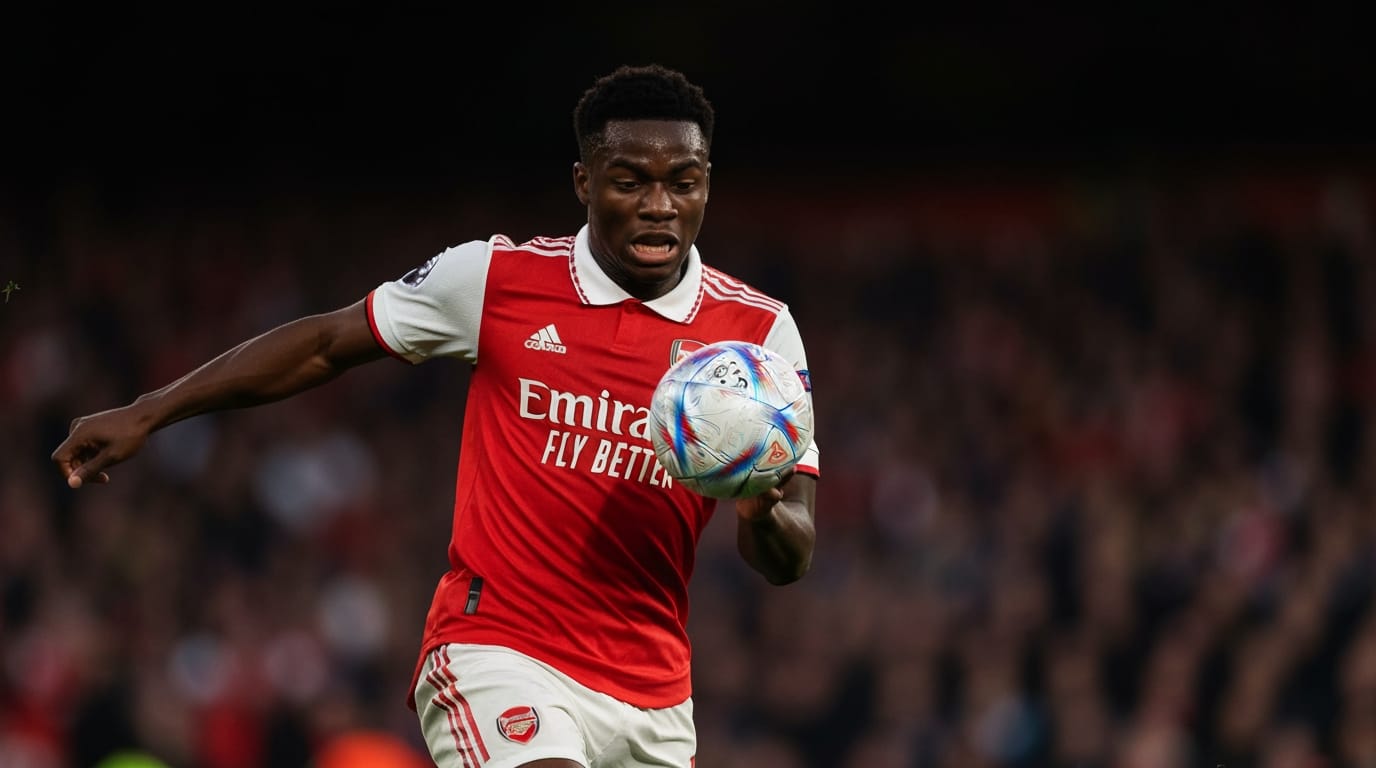
The controversy surrounding Folarin Balogun erupted during the Round of 32 match between the United States and Bosnia and Herzegovina. Balogun, a key offensive player for the U.S. with three goals in the tournament, was shown a straight red card in the 64th minute following a VAR review. The incident involved Balogun stepping awkwardly on the ankle of Bosnian defender Tarik Muharemović during an attempt to gain possession. Although the contact appeared accidental, the referee, Raphael Claus, issued the red card after consulting the video assistant referee.
Under standard FIFA regulations, a straight red card typically results in an automatic one-match suspension, with no avenue for appeal against this initial ban. Many observers and U.S. officials, including head coach Mauricio Pochettino, deemed the decision overly harsh, arguing that Balogun's actions lacked malicious intent. The initial sentiment was that Balogun would miss the crucial Round of 16 clash against Belgium, a significant blow to the U.S. team's aspirations.
However, in an extraordinary turn of events, FIFA's Disciplinary Committee announced the lifting of Balogun's suspension, allowing him to participate in the match against Belgium. This decision, made under Article 27 of FIFA's Disciplinary Code, placed Balogun on a one-year probationary period, meaning any similar future infringement would trigger the original suspension in addition to new penalties. The move was widely reported as the first instance since 1962 that a World Cup red card suspension had been rescinded.
The reversal immediately ignited a firestorm, fueled by revelations that U.S. President Donald Trump had telephoned FIFA President Gianni Infantino to discuss the decision. President Trump later publicly acknowledged his intervention, stating he had asked for a "review" of what he called a "horrible" call. This unprecedented political intercession sparked outrage, particularly from the Belgian Football Association, which formally protested Balogun's eligibility, arguing FIFA's decision ran contrary to its own disciplinary code. The Union of European Football Associations (UEFA) also condemned FIFA's action as "unprecedented, incomprehensible and unjustifiable," suggesting it "crossed a red line" and raising serious questions about the integrity and impartiality of FIFA's disciplinary processes. Critics argued that the incident created a perception that rules could be bent or overturned based on external influence, eroding public trust in the sport's governance. Despite the controversy, FIFA's appeals committee dismissed Belgium's challenge, and Balogun went on to play in the Round of 16, where the U.S. ultimately lost 4-1 to Belgium.
The Expanded World Cup: Growth Versus Growing Pains
Beyond the individual disciplinary case, the very architecture of the 2026 World Cup has been a consistent point of discussion. This edition marks a significant departure from tradition, as it is the first to feature 48 teams, an increase of 16 from the previous 32-team format. The new structure involves 12 groups of four teams, with the top two from each group and the eight best third-place finishers advancing to a new Round of 32. This expansion dramatically increases the total number of matches from 64 to 104, meaning that teams reaching the semifinals will now play eight games instead of seven.
FIFA President Gianni Infantino has championed the expansion, citing inclusivity as a primary motivation, aiming to provide more nations with the opportunity to participate in the sport's pinnacle event. Infantino has expressed satisfaction with the current tournament, calling it a "huge success," and has even hinted at the possibility of a further expansion to 64 teams for the 2030 World Cup, emphasizing the perceived global rise in the quality of play.
However, the expansion has not been without its critics. Concerns have been raised regarding the potential dilution of sporting quality, with some arguing that the larger field could lead to less competitive group stage matches and diminish the "jeopardy" that once characterized the early rounds. The revised format, which allows eight third-place teams to advance, has led to scenarios where some teams do not know their fate until other groups conclude, complicating the narrative and potentially impacting competitive integrity.
Logistical and environmental impacts are also significant concerns. The sheer scale of the expanded tournament, spread across three vast North American countries, translates to increased travel for teams and fans, contributing to a higher carbon footprint. Issues such as inadequate public transit access at some venues, particularly in the United States, have drawn criticism, adding to fan frustration. Player welfare has also been a talking point, with the increased number of matches potentially leading to greater fatigue and injury risks. Controversies surrounding ticket pricing and the commercialization of hydration breaks, used by broadcasters for advertisements, have further highlighted the commercial aspects overshadowing sporting considerations. The tournament has also been plagued by numerous VAR controversies, leading to accusations of inconsistent application of rules and frustrating managers and fans alike.
FIFA in the Crosshairs: Integrity and the Future of the Game
Both the Balogun red card reversal and the expanded World Cup format underscore a continuous challenge for FIFA: maintaining public trust and the perceived integrity of the sport amidst growing commercial pressures and external influences. The Balogun incident, particularly with the involvement of a head of state, raised profound questions about the fairness and consistency of FIFA's disciplinary actions. It created a dangerous precedent, suggesting that rules, which should be universally applied, can be altered through powerful lobbying, thereby undermining the impartial spirit of competition.
Similarly, while the expansion is framed as an inclusive move, critics often perceive it as driven by financial incentives, with more matches translating to increased revenue from broadcasting rights, sponsorships, and ticket sales. The concerns about diluted quality, increased player burden, and environmental impact suggest a potential trade-off between commercial growth and the purity of the sport.
As the 2026 World Cup progresses, these narratives continue to intertwine, placing FIFA firmly in the spotlight. The organization faces the ongoing imperative to demonstrate transparency, ensure the consistent application of its rules, and articulate a clear vision for the sport that harmonizes its global appeal and commercial aspirations with the fundamental principles of fairness and sporting integrity. The ongoing debates serve as a crucial reminder that while the World Cup unites billions, the decisions made behind the scenes will continue to shape the future of global football.