Ukraine Blasts IOC's "Cynical" Olympic Reversal for Russia Amidst Ongoing Conflict
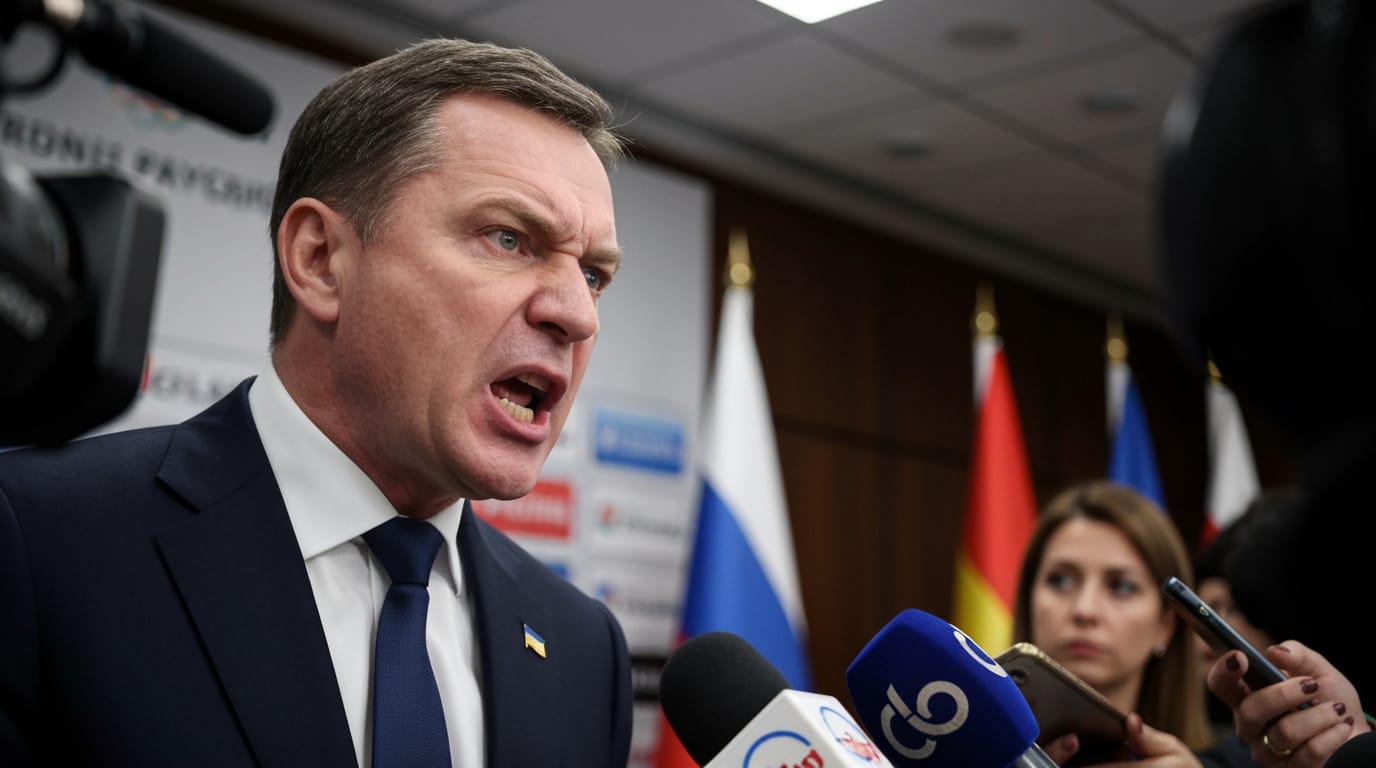
Kyiv, Ukraine – Ukraine's Sports Minister, Matviy Bidnyi, has vehemently condemned the International Olympic Committee's (IOC) recent decision to ease restrictions on Russian athletes, labeling the move "cynical" and a profound affront to the spirit of sport. The decision, which paves the way for a more substantial return of Russian athletes to global competitions, including the 2028 Los Angeles Olympics, has ignited a firestorm of criticism from Kyiv, which views it as a dangerous normalization of aggression while Ukraine endures daily attacks.
Kyiv's Outcry: A "Cynical" Betrayal
The Ukrainian government, through Minister Bidnyi, did not mince words in expressing its outrage. Bidnyi stated that the IOC's decision was "wrong and insensitive" and demonstrated a "total lack of respect for sport." He asserted that by easing these restrictions, the IOC is "effectively playing into the hands of a bloody aggressor." The timing of the announcement further exacerbated Ukraine's indignation, as it coincided with a national day of mourning following devastating missile and drone strikes that killed 26 people in Kyiv and Vyshneve. "What makes this decision particularly cynical is its timing," Bidnyi remarked, highlighting the profound disconnect between the Olympic movement's ideals and the stark realities faced by his nation.
For Ukraine, the return of Russian athletes, even under a neutral banner, represents a severe ethical and moral compromise. Bidnyi emphasized that there can be no "neutrality" when one nation is actively destroying another. He argued that "neutrality is possible only in peacetime," and when there is war, "neutrality becomes irresponsibility." The Ukrainian Foreign Ministry echoed this sentiment, calling the decision a "deeply concerning signal" and asserting that sport should "never be used as a tool to legitimize aggression."
The IOC's Shifting Stance and Rationale
The IOC's position on Russian and Belarusian athlete participation has evolved since Russia's full-scale invasion of Ukraine in February 2022. For the upcoming Paris 2024 Olympics, the IOC had initially implemented strict conditions. Russian and Belarusian athletes were permitted to compete only as "Individual Neutral Athletes" (AINs), without national flags, anthems, or colors. They were also explicitly barred from participating in the opening ceremony parade. Furthermore, these athletes had to meet rigorous eligibility criteria, including not having publicly supported the war and not being affiliated with military or state security agencies. Only 32 such neutral athletes ultimately competed at Paris 2024.
However, a more significant shift occurred on July 7, 2026, when the IOC provisionally lifted the suspension of the Russian Olympic Committee (ROC) and advised international sports federations to conclude the three-year program of vetting Russian athletes for neutral status. This latest move effectively paves the way for a broader return of Russian athletes, potentially allowing them to compete as a full national team with their own flag and anthem at the 2028 Los Angeles Games, though a final decision on national symbols is pending. The IOC justified its decision by stating its desire to "ensure all athletes have the possibility to compete" and not be "held accountable for their governments' actions." It also cited the ROC's confirmation that it no longer includes regional sports organizations from occupied Ukrainian territories as a basis for lifting the suspension. IOC President Kirsty Coventry articulated that the organization does not condone violence or war but believes in allowing athletes to participate in sports competitions.
A Nation's Grief Meets Olympic Policy
Ukraine argues that the IOC's abstract principles of athlete neutrality and autonomy of sport fail to acknowledge the devastating human cost of the ongoing war. Since February 2022, hundreds of thousands of Ukrainian soldiers and tens of thousands of civilians, including several hundred athletes and coaches, have been killed. Beyond the tragic loss of life, over 850 sports facilities across Ukraine have been extensively damaged or destroyed. Bidnyi invited IOC officials to witness the destruction firsthand, stating, "Let them visit the ruined sports academies, and meet our young athletes who have to train under missile sirens."
The minister also raised concerns about the approximately 20,000 Ukrainian children whom he described as "state-kidnapped by Russia," highlighting the profound moral implications of allowing Russian participation in youth sports events like the upcoming Youth Olympic Games in Dakar. "Allowing Russia to compete at the Youth Olympic Games sends a horrific message to the world," Bidnyi stated. For Ukraine, the idea of Russian athletes competing on the international stage while their country perpetrates such actions is seen as a direct insult to the victims and a disregard for the suffering endured by the Ukrainian people.
Beyond the Arena: Geopolitics and Athletic Integrity
Ukrainian officials view Russian athletes not merely as individuals but as potential instruments of state propaganda. Bidnyi contended that Russian athletes are "agents of hybrid influence" and that sports are a crucial component of Russia's propaganda machinery. Kyiv has consistently argued that Russia uses international sporting events to legitimize its aggression and project an image of normalcy, contrary to its actions on the ground. The Ukrainian National Olympic Committee (NOC) has submitted evidence to the IOC, alleging that some Russian athletes who qualified for the Paris 2024 Games have actively supported the war or have direct links to military structures.
This stance contrasts sharply with that of some other international sports federations. Notably, World Athletics has maintained a full ban on Russian and Belarusian athletes, a decision lauded by Bidnyi as a "model of true leadership, integrity, and moral clarity." Similarly, FIFA and UEFA continue to exclude Russia from major football competitions, avoiding potential boycotts from other national teams. The differing approaches underscore the deep divisions within the global sports community regarding how to address the intersection of sports and geopolitical conflict.
Navigating the Future: Ukraine's Stance and Athlete Conduct
Despite its profound disappointment, Ukraine has ruled out a boycott of the Olympic Games. Instead, Bidnyi affirmed that Ukraine will "stand our ground" to ensure its voice is heard on the international stage. This involves a continued diplomatic offensive, urging host governments and international sports federations to prohibit the display of Russian state symbols at events. Kyiv maintains that allowing Russian flags or anthems would normalize the actions of an aggressor state.
Ukrainian athletes, who face the daunting prospect of competing alongside their Russian counterparts, have been advised by Minister Bidnyi to maintain a "cold head" and ignore any provocations. "I would tell them to react in a proper way, a dignified way," Bidnyi said, anticipating that Russia might use its representatives for propaganda. This guidance reflects the challenging emotional and psychological burden placed on Ukrainian athletes, who are expected to represent their nation's resilience while navigating a morally complex sporting landscape.
The IOC's latest decisions have undoubtedly deepened the rift between the Olympic movement's aspirations for unity and the harsh realities of global conflict. While the IOC maintains its focus on athlete participation and political neutrality, Ukraine perceives these actions as a grievous misstep that risks undermining the very principles of peace and respect that the Olympic Games are meant to embody. The saga continues to highlight the intricate and often contentious relationship between international sport and global politics, with Ukraine steadfast in its resolve to ensure that the world does not forget the price of aggression.