Former Bolivian President Luis Arce Detained in Sweeping Corruption Probe
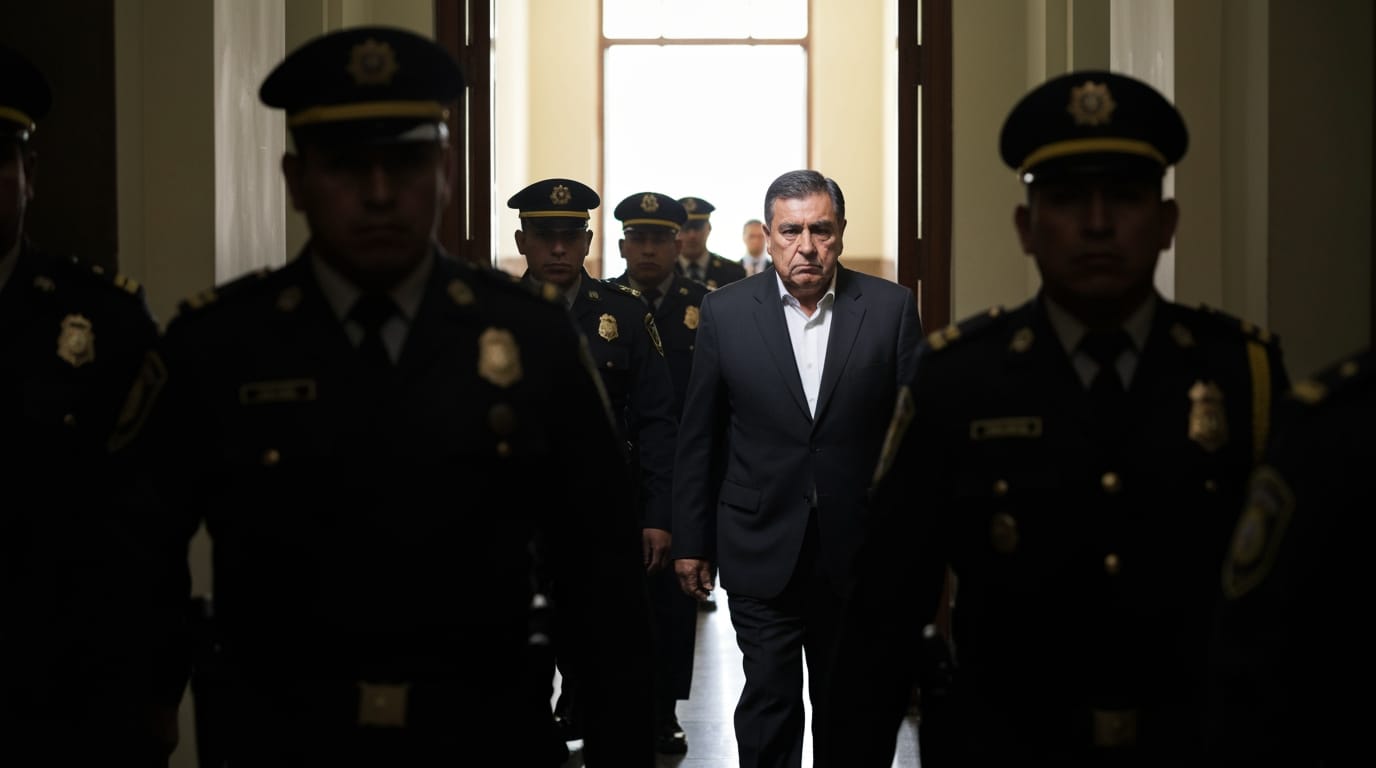
LA PAZ, Bolivia – Former Bolivian President Luis Arce was detained Wednesday as part of a wide-ranging corruption investigation, just one month after leaving office, marking a dramatic shift in the nation's political landscape. The arrest, confirmed by Vice President Edman Lara, signals a vigorous pursuit of accountability by the newly inaugurated conservative government of President Rodrigo Paz, which has vowed to eradicate graft from the highest echelons of power. Arce, who served as president from 2020 until November 2025, faces allegations of embezzlement, breach of duty, and "economic misconduct" stemming from his tenure as economy minister under former President Evo Morales.
Political Whirlwind and Allegations of Misconduct
The detention of Luis Arce, a prominent figure in the socialist Movement Toward Socialism (MAS) party, has sent shockwaves through Bolivia, highlighting the deep political polarization that continues to define the South American nation. His arrest follows the inauguration of conservative President Rodrigo Paz, whose victory in November ended two decades of socialist dominance. Vice President Edman Lara publicly celebrated Arce's apprehension via social media, stating, "We said that Luis Arce would be the first to go to prison, and we are delivering. Everyone who has stolen from this country will return every last cent and be held to account."
The corruption probe primarily focuses on Arce's actions during his extended period as economy minister under Evo Morales, from 2006 to 2017 and again in 2019. Prosecutors allege that Arce authorized the illicit transfer of public treasury funds into the personal accounts of political leaders. A significant accusation points to the diversion of an estimated $700 million from a state-run fund specifically earmarked for the development of Indigenous communities and peasant farmers, who have historically formed the backbone of the MAS party's support. Marco Antonio Oviedo, a senior official in the Paz administration, identified Arce as the "main person responsible for this massive economic damage."
One specific instance cited in the investigation involves former leftist lawmaker Lidia Patty, who was reportedly arrested last week in connection with allegedly receiving close to $100,000 for a tomato cultivation project. These allegations paint a picture of systemic financial malfeasance that the new government is determined to expose and prosecute.
Contentious Circumstances of the Arrest
Details surrounding Arce's detention have added another layer of controversy to the unfolding events. María Nela Prada, Arce's former Justice Minister and a staunch ally, publicly denounced the arrest as an "illegal kidnapping." She asserted that Arce was not formally notified of the arrest warrant, had no family members present during his apprehension, and was transferred without official notification. Prada described Arce being "alone" in La Paz's Sopocachi neighborhood when he was allegedly forced into a minibus with black-tinted windows, echoing concerns about due process.
In contrast, the new government maintains the arrest was lawful and a demonstration of its commitment to combating corruption. A special police force dedicated to fighting corruption confirmed Arce's custody at their headquarters in La Paz. The vice president's celebratory tone and the swift action taken by law enforcement underscore the highly politicized nature of the current legal proceedings. Outgoing executive branch members in Bolivia are prohibited from leaving the country for 90 days after a change in government, a legal provision that facilitated Arce's detention within the country.
A Nation's Political Pendulum Swings
Arce's arrest marks a significant turning point in Bolivia's turbulent political history, which has frequently seen leaders and their allies face legal challenges from successor governments. His presidency, from November 2020 to November 2025, followed a period of interim rule by Jeanine Áñez, who stepped in after Evo Morales's controversial resignation in 2019. Arce himself came to power after an election that sought to restore stability following widespread protests and allegations of electoral fraud related to Morales's attempt at a fourth term.
During his own term, Arce faced internal divisions within the MAS party, particularly with his former mentor Evo Morales, and even survived an attempted coup in June 2024. Notably, Arce did not seek re-election in the August 2025 presidential race, and was reportedly expelled from the MAS party upon leaving office.
The current administration, under President Rodrigo Paz, has not only targeted Arce but has also pursued other former officials. Several executives from the state oil company YPFB have been arrested on corruption charges this week as part of an ongoing audit of public enterprises. Furthermore, in a significant reversal of judicial fortunes, the Supreme Court in November 2025 overturned the 10-year prison sentence of former interim President Jeanine Áñez for her role in the 2019 political crisis, ordering her immediate release. Her allies have also been released, while an arrest warrant remains outstanding for Evo Morales on separate charges. This pattern of arrests and releases strongly suggests that Bolivia is experiencing a fervent period of political retribution and reordering of power.
Implications for Bolivia's Future
The detention of former President Luis Arce initiates a new and uncertain chapter in Bolivian politics. While the new government frames the arrest as a necessary step to combat deeply entrenched corruption, Arce's allies contend it is a clear act of political persecution. The unfolding legal battle is expected to be closely watched both domestically and internationally, as it will inevitably test the independence of Bolivia's judicial system and shape the future of its democratic institutions.
The promised fight against corruption by the Paz administration, while potentially popular, risks further deepening the country's political divides. The outcome of Arce's case, and those of other former officials, will likely have profound implications for reconciliation and stability in a nation long accustomed to political turbulence. The coming months will reveal whether these actions lay the groundwork for genuine accountability or merely perpetuate a cycle of political score-settling.


