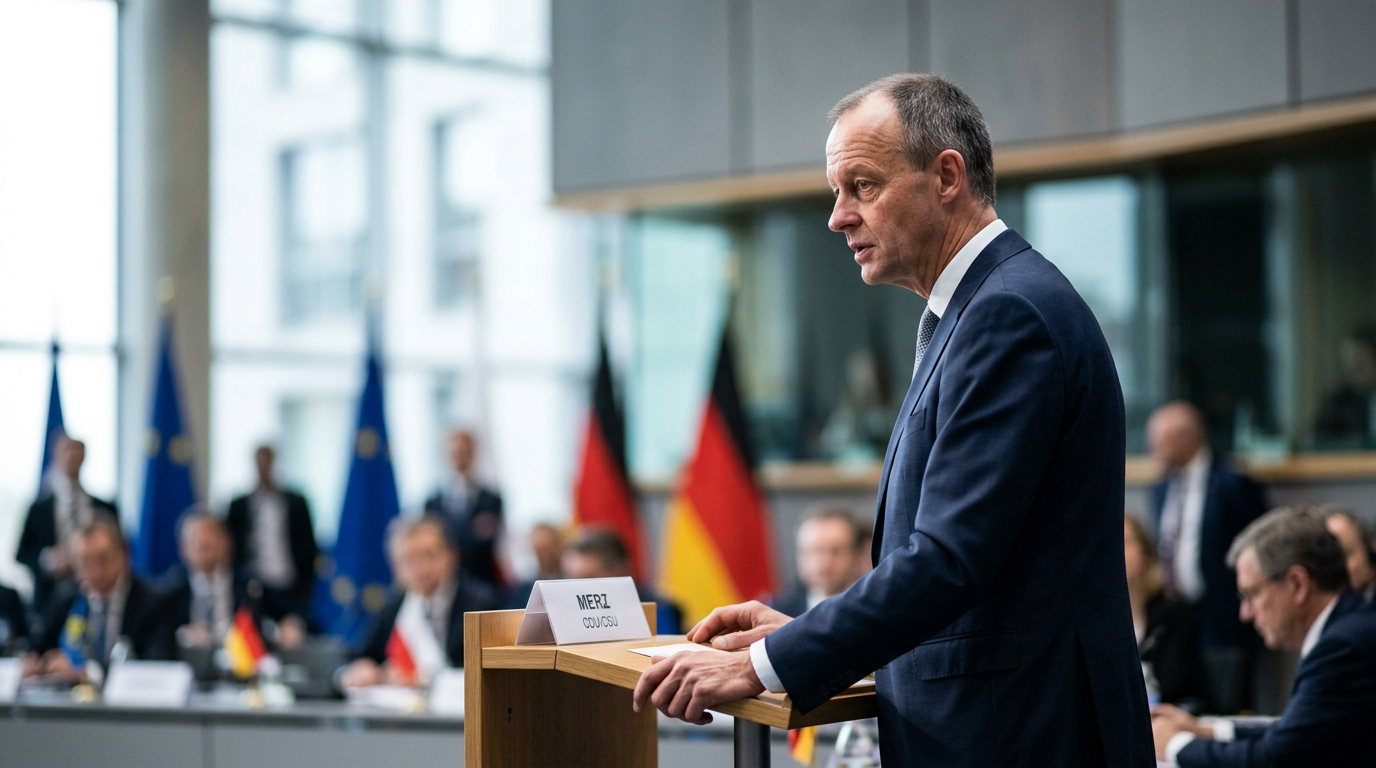
Former Pakistani Premier Imran Khan and Wife Bushra Bibi Sentenced to 17 Years in State Gifts Corruption Case
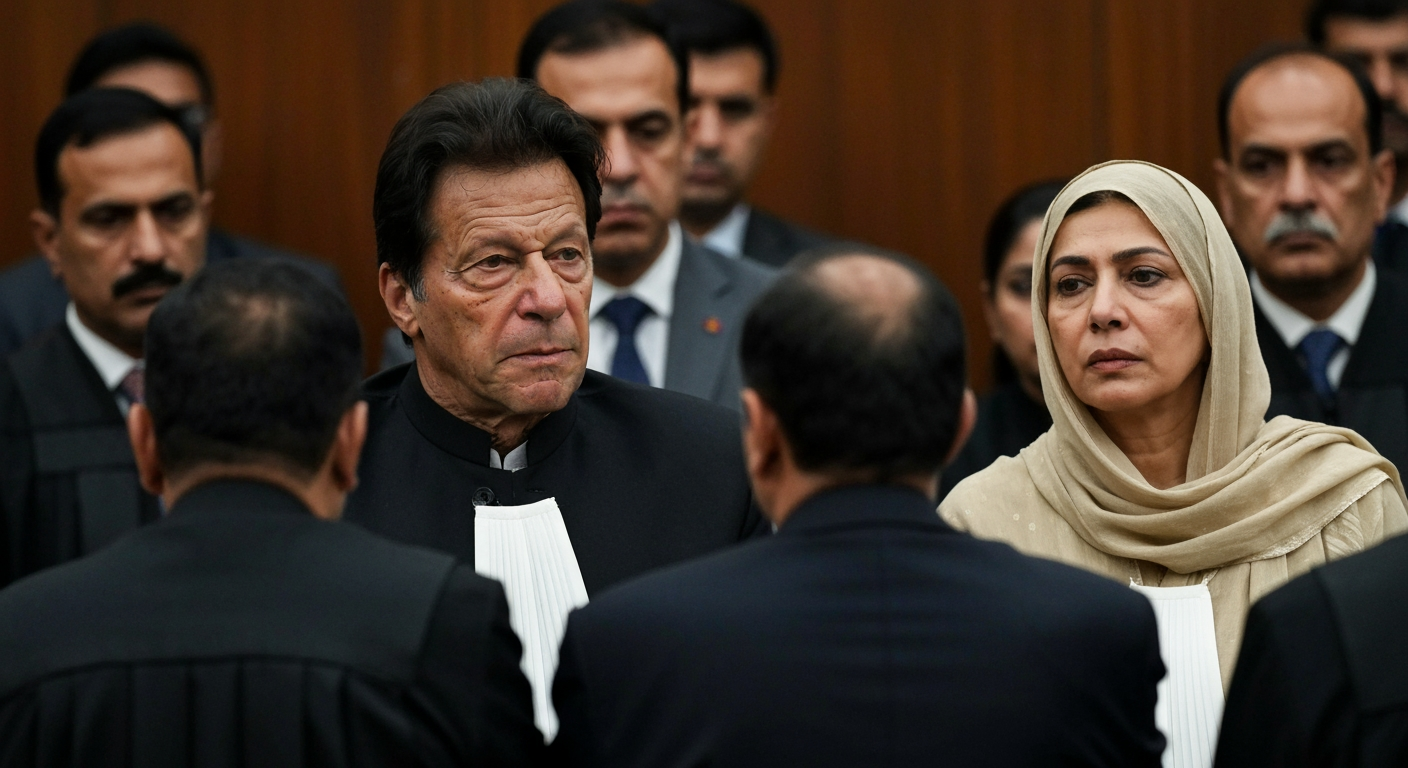
Islamabad, Pakistan – In a significant development reverberating across Pakistan's tumultuous political landscape, a special court on Saturday, December 20, 2025, sentenced former Prime Minister Imran Khan and his wife, Bushra Bibi, to 17 years in prison each in the Toshakhana-2 corruption case. The verdict, delivered within the confines of Rawalpindi's Adiala Jail where Khan is already incarcerated, marks another legal blow to the former cricket star, further entangling him in a web of judicial challenges since his ouster from power in April 2022. Both were also levied substantial fines, and their sentences are set to run consecutively with previous convictions, extending the timeline of their imprisonment.
The latest ruling intensifies the legal pressures on Khan, who has consistently maintained that the multitude of cases against him are politically motivated attempts to sideline him from public life. This conviction adds to a series of judgments that have profoundly impacted his political career and that of his Pakistan Tehreek-e-Insaf (PTI) party. The sentences handed down today underscore the deep political fissures and the contentious role of the judiciary in Pakistan's ongoing power struggles.
The Toshakhana-2 Case Unpacked: Allegations of Gift Misappropriation
The Toshakhana-2 case centers on accusations of fraudulent practices in the handling and sale of state gifts received by the former first couple from the Saudi government in 2021. Specifically, prosecutors alleged that valuable items, including an expensive Bulgari jewelry set, watches, and diamond and gold jewelry sets, were acquired by Khan and Bushra Bibi at highly discounted prices and subsequently sold without being properly deposited in the Toshakhana, the state's official gift repository.
During the court proceedings, the prosecution contended that the Bulgari jewelry set, valued at approximately 80 million Pakistani Rupees (PKR), was purchased by Khan for a mere PKR 2.9 million. This alleged undervaluation and subsequent sale without due process formed the core of the corruption charges. Special Judge Central Shahrukh Arjumand, presiding over the case at Adiala Jail, found the couple guilty under various sections of the Pakistan Penal Code and the Prevention of Corruption Act. Khan and Bushra Bibi were each awarded 10 years of rigorous imprisonment under Sections 34 (common intention) and 409 (criminal breach of trust) of the Pakistan Penal Code, and an additional seven years under Section 5(2) (criminal misconduct by public servants) of the Prevention of Corruption Act. The court also imposed fines of PKR 16.4 million on each of them, with the stipulation that failure to pay these fines would result in additional jail time.
The case was initially filed in July 2024, and though both Khan and Bushra Bibi had secured bail in this specific case in October and November 2024 respectively, they were formally indicted in December of the previous year. The trial proceeded while they were already incarcerated for other convictions, highlighting the continuous legal challenges faced by the former premier. Both convicts retain the right to challenge their convictions before the High Court.
A Cascade of Convictions: Other Legal Battles
The Toshakhana-2 conviction is not an isolated incident but rather the latest in a series of legal judgments against Imran Khan and his wife. Their ongoing incarceration in Adiala Jail began following an earlier conviction in the high-profile Al-Qadir Trust corruption case. In January 2025, an accountability court sentenced Khan to 14 years and Bushra Bibi to seven years in prison in the Al-Qadir Trust case.
The Al-Qadir Trust case involves allegations of corruption and abuse of authority related to a £190 million settlement between the UK's National Crime Agency (NCA) and Pakistani real estate tycoon Malik Riaz. The National Accountability Bureau (NAB) alleged that funds intended for the Pakistani government were diverted to a Supreme Court account, and that Khan and Bushra Bibi, through the Al-Qadir Trust, received land from Riaz for the construction of an educational institution in exchange for legal protection regarding these funds.
Furthermore, Khan has faced legal scrutiny in other high-profile matters. He and former Foreign Minister Shah Mahmood Qureshi were initially sentenced to 10 years in jail in the cipher case, which pertained to the alleged mishandling of a classified diplomatic document. However, the Islamabad High Court later acquitted both Khan and Qureshi in this case on June 3, 2024.
Another notable case involved the "un-Islamic marriage" or Iddat case, where Khan and Bushra Bibi were sentenced to seven years in prison in February 2024, based on a complaint filed by Bushra Bibi's former husband. The complaint alleged that their marriage violated Islamic law by not observing the mandatory waiting period after a divorce. However, they were subsequently acquitted in this case on July 13, 2024.
Khan has maintained that the more than 200 cases filed against him since his removal from office are part of a concerted effort to undermine his political standing and prevent his return to power.
Political Fallout and Future Implications
The cumulative impact of these convictions, particularly the 17-year sentence in Toshakhana-2, is profound for Imran Khan's political future. The Information Minister stated that Khan's jail term in the Toshakhana-2 case would begin after his sentence in the Al-Qadir Trust case concludes, indicating consecutive sentencing. This means Khan faces a potentially lengthy period of imprisonment.
The continuous legal battles have significantly hampered Khan's ability to lead his Pakistan Tehreek-e-Insaf (PTI) party, especially in the run-up to and aftermath of general elections. The party has consistently denounced the court proceedings as unfair and politically motivated, characterizing them as a "black chapter in history." PTI leaders and supporters have accused the establishment of weaponizing legal institutions to suppress dissent and neutralize political opposition.
The multiple convictions and ongoing incarceration of a prominent political figure like Khan have drawn attention to the state of democratic institutions in Pakistan and raised questions about the impartiality of the judiciary. Analysts suggest that such legal actions contribute to the erosion of democratic norms and can set precedents for the use of legal mechanisms to sideline political opponents.
Conclusion
The sentencing of Imran Khan and Bushra Bibi to 17 years in prison in the Toshakhana-2 case represents a pivotal moment in Pakistan's ongoing political saga. Coming on the heels of other convictions, this judgment further complicates Khan's prospects for a return to active politics and signals a continued period of legal and political uncertainty for the former Prime Minister and his party. As Khan's legal team prepares for appeals, the implications of these consecutive sentences will undoubtedly shape the narrative of justice, accountability, and political power in Pakistan for years to come. The unfolding events underscore the deep divisions within the country and the persistent struggle for democratic stability amidst a backdrop of escalating legal and political challenges.
Sources
- defence.in
- newsonair.gov.in
- madhyamamonline.com
- livemint.com
- pakistantoday.com.pk
- thenorthlines.com
- yenisafak.com
- nationalheraldindia.com
- pragativadi.com
- thestar.com.my
- clickorlando.com
- jurist.org
- thehindu.com
- nation.com.pk
- geo.tv
- pakistantoday.com.pk
- newindianexpress.com
- indianexpress.com
- aa.com.tr
- thenews.com.pk
- indiatribune.com
- economictimes.com
- thehindu.com
- themedialine.org
- hamptonroadscares.org
Related Articles

Ratko Mladić, "Butcher of Bosnia" and Convicted War Criminal, Dies at 84
THE HAGUE, Netherlands – Ratko Mladić, the former Bosnian Serb military commander known as the "Butcher of Bosnia" and convicted of genocide, war crimes, and crimes against humanity, has died at the age of 84. Serbian...

Long-Awaited 9/11 Mastermind Trial Set for 2028, Decades After Attacks
GUANTANAMO BAY, Cuba – Nearly a quarter-century after the devastating terror attacks of September 11, 2001, a military judge has finally set a trial date for Khalid Sheikh Mohammed, the alleged mastermind behind the...