Former Spanish PM Zapatero Under Investigation in Landmark Airline Bailout Probe
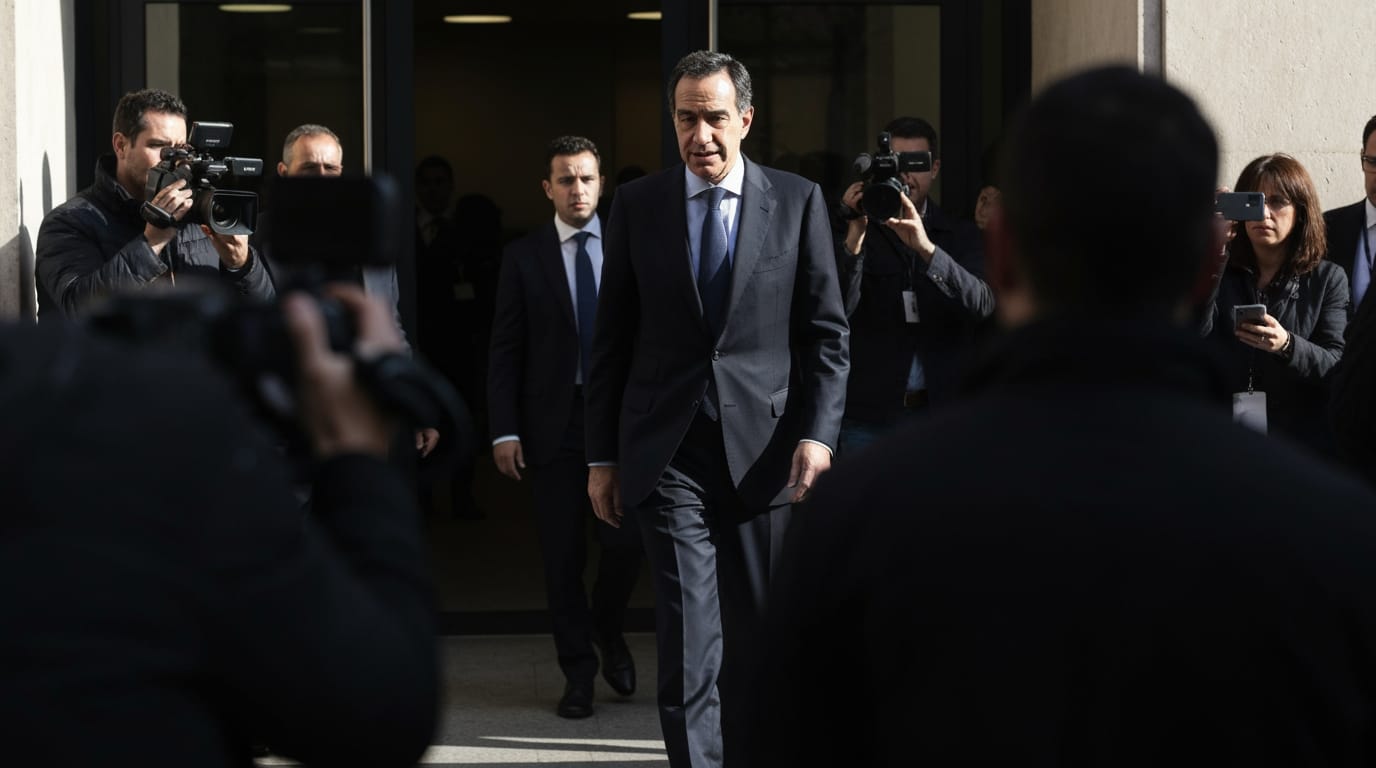
MADRID – Former Spanish Prime Minister José Luis Rodríguez Zapatero has been formally placed under judicial investigation for alleged influence peddling, money laundering, criminal organization, and document falsification, marking an unprecedented moment in Spain's democratic history. The probe centers on a controversial €53 million state bailout granted to the obscure airline Plus Ultra during the COVID-19 pandemic in 2021, and the potential illicit financial transactions surrounding it. This development intensifies pressure on the current Socialist government led by Prime Minister Pedro Sánchez, a close ally of Zapatero, as the nation grapples with a widening web of corruption inquiries.
The Unfolding Allegations Against a Former Leader
The investigation, spearheaded by the National Court (Audiencia Nacional) in Madrid, has drawn national and international attention. Judicial authorities confirmed the formal inquiry on Tuesday, May 19, 2026, leading to searches of Zapatero's office in Madrid and several associated companies. Zapatero, who served as Prime Minister from 2004 to 2011, has been summoned to testify as a suspect on June 2. This marks the first instance in Spain's modern democratic era that a former prime minister faces a formal corruption investigation.
Central to the allegations is the state rescue of Plus Ultra Lineas Aéreas, a small carrier that received €53 million (approximately $62 million) in public funds via the state holding company SEPI in March 2021. Critics have long questioned the bailout's legitimacy, arguing that Plus Ultra was a marginal airline with limited market share and questionable financial viability, seemingly at odds with the "strategic company" designation it received to qualify for pandemic relief funds. The company's ownership links to Venezuelan businessmen seen as close to the government of then-President Nicolás Maduro have further fueled concerns about transparency and potential political influence.
Investigators allege that Zapatero was a driving force behind the bailout, accused of pressing the Ministry of Transport, then led by Jose Luis Abalos, to approve the rescue. Specific allegations detail suspicious payments through a consulting firm named Analisis Relevante, owned by Julio Martínez Martínez, a close friend of Zapatero known as "Julito." This firm purportedly received money from Plus Ultra, which was then allegedly used to pay Zapatero for "global consulting" services. Reports indicate Zapatero received over €400,000 gross over five years from Analisis Relevante. Additionally, businessman Víctor de Aldama, involved in other corruption probes, has alleged that Zapatero received a staggering €10 million in commissions related to the bailout. A contract between Plus Ultra and Julio Martínez is also under scrutiny, which allegedly granted Martínez a 1% commission if the €53 million aid was fully disbursed.
The Controversial Bailout and Its Backstory
The Plus Ultra bailout occurred during a period of unprecedented government intervention to support businesses hit by the global health crisis. However, from its inception, the aid to Plus Ultra generated significant controversy. The airline operated a limited number of routes, primarily to Ecuador, Peru, and Venezuela, with a small fleet. Its national market share was reportedly less than 0.1%, raising questions about its classification as a "strategic company" essential to the Spanish economy.
Anti-corruption police are investigating whether the bailout money was misused or diverted, potentially laundered through shell companies in Spain, France, and Switzerland, with some funds allegedly originating from Venezuelan state programs. The probe intensified after several arrests in late December, including Plus Ultra's president, Julio Martínez, and CEO Roberto Roselli, a Venezuelan national, on charges of money laundering. Judicial experts had reportedly concluded that Plus Ultra was likely insolvent even before it requested public assistance, further challenging the rationale behind the bailout.
Zapatero's Defense and Political Ramifications
Zapatero has consistently denied any wrongdoing, stating that all income he received was legal, properly invoiced, and declared to tax authorities. He has also refuted claims of mediating in the rescue process and has characterized the accusations as a concerted campaign to discredit him. His defense against these serious charges will be presented when he testifies before the National Court on June 2.
The investigation carries significant political weight, particularly for the ruling Socialist Workers' Party (PSOE) and current Prime Minister Pedro Sánchez. Zapatero has been a prominent ally and supporter of Sánchez, and this probe adds another layer of complexity to Sánchez's administration, which is already facing multiple corruption investigations involving high-ranking officials, his wife, and his brother. The conservative opposition People's Party has been quick to leverage the revelations, intensifying its attacks on the government and demanding parliamentary explanations from Sánchez regarding Zapatero's role. The investigation also casts a spotlight on Zapatero's long-standing business and political ties with Venezuela, a relationship that has drawn criticism and scrutiny over the years.
A Test of Democratic Institutions
The charges against Zapatero – including money laundering, criminal organization, influence peddling, and document falsification – carry substantial penalties, with Spanish law stipulating prison sentences of six months to six years for money laundering, alongside hefty fines, professional disqualifications, and asset confiscation. Should additional charges of bribery be confirmed, the custodial penalties could increase further.
As the investigation proceeds, Spain's democratic institutions face a critical test. The outcome will not only determine the legal fate of a former head of government but could also significantly reshape the political landscape, influencing public trust and setting precedents for accountability at the highest levels of power. The unfolding legal drama ensures that the scrutiny on the Plus Ultra bailout and its alleged beneficiaries will remain intense in the coming weeks and months.


