Fragile Hope Shatters: Ukraine War Roars Back as Ceasefire Fails, Long Road to Peace Ahead
The fleeting prospect of a pause in the protracted conflict between Russia and Ukraine has once again dissolved, casting a stark light on the immense obstacles hindering a lasting peace. A three-day ceasefire, brokered by the United States and observed from May 9 to May 11, 2026, crumbled almost immediately upon its expiration, giving way to renewed and intense hostilities. This latest breakdown underscores the profound mistrust and irreconcilable demands that continue to fuel a war now well into its fifth year, leaving observers to ponder not if, but when, genuine de-escalation might ever occur.
The Illusion of Calm: A Truce Broken
The recent U.S.-brokered ceasefire, intended to offer a brief respite, proved to be little more than a temporary lull before the storm. Almost immediately following its expiration, both sides reported fresh attacks. Ukraine launched drone assaults on Russian oil refineries and ports, aiming to cripple Moscow's energy revenues and military capabilities. Russian authorities reported intercepting nearly 300 Ukrainian drones overnight, with falling debris igniting fires near industrial facilities in the Krasnodar and Astrakhan regions. Concurrently, Russia unleashed a fresh wave of more than 200 attack drones and over 80 aerial bombs across Ukraine, causing damage to energy infrastructure, residential buildings, and leading to at least one fatality. Ukrainian President Volodymyr Zelenskyy criticized Russia for ending the "partial silence" and vowed a strong response, reiterating his call for Moscow to initiate a "real, lasting ceasefire." This swift return to large-scale combat highlights the deep-seated military objectives still pursued by both nations, overshadowing any temporary diplomatic overtures.
Entrenched Demands: The Unyielding Path to Peace
At the core of the enduring conflict lie deeply entrenched and often maximalist demands from both Kyiv and Moscow, creating a chasm that current diplomatic efforts have failed to bridge. Russia, as outlined by President Vladimir Putin in June 2024, insists on retaining all currently occupied Ukrainian territory, gaining full control over provinces it claims but does not fully occupy, and securing an official end to Ukraine's aspirations of joining NATO. Furthermore, Russia demands the international community recognize its annexations and lift all existing sanctions. This stance is reinforced by Russia's belief that it holds the advantage in a war of attrition, capable of outlasting and overpowering Ukraine.
Conversely, Ukraine's leadership, led by President Zelenskyy, maintains a clear and unyielding set of conditions for peace. These include the complete withdrawal of all Russian troops from Ukrainian territory, the restoration of Ukraine's internationally recognized borders as they stood prior to the 2014 annexation of Crimea, the release of prisoners and forcibly deported Ukrainian children, and robust security guarantees to prevent future aggression. Kyiv also demands accountability for war crimes, with the prosecution of Russian leaders being a key point. The issue of territorial integrity is particularly fraught, as both the Ukrainian and Russian constitutions now lay claim to several administrative units within Ukraine, making any territorial compromise an existential constitutional challenge for both states. Moreover, significant segments of both electorates remain staunchly opposed to any concessions, rendering political compromise domestically perilous for either government. These fundamental disagreements, especially over sovereignty and territorial control, have historically stalled previous negotiation attempts, including early talks in 2022 and renewed efforts in 2025.
International Maneuvers and Shifting Sands of Diplomacy
International efforts to mediate an end to the conflict have been continuous but largely inconclusive. The United States, having provided substantial aid to Ukraine—approximately $188 billion since January 2022—has actively sought to broker a peace deal. Former President Donald Trump's administration has played a visible role, proposing various peace plans, including a "20-point peace plan" and advocating for the recent three-day ceasefire. However, these initiatives have often been met with mixed reactions, sometimes facing refusal from both Moscow and Kyiv due to their perceived partiality or lack of comprehensive solutions. Ukrainian officials have expressed concerns that Washington's proposals might favor Russian demands, especially regarding territorial concessions, and fear potential reductions in vital military and humanitarian aid.
European nations, which have collectively provided roughly $197 billion in aid to Ukraine, have generally aligned more closely with Ukrainian proposals for a just peace. There has been discussion among European leaders about forming a "coalition of the willing" to provide peacekeeping forces post-ceasefire, and a renewed focus on bolstering European defense capabilities. However, unity among Western allies could be tested in a post-ceasefire scenario, particularly regarding the costs of Ukrainian reconstruction and the continuation of sanctions against Russia. As U.S.-mediated negotiations have stalled, and Washington's focus has seemingly broadened to include other global crises, Russia has indicated that talks with Ukraine are currently not a priority. This diplomatic impasse signals that a negotiated end to the conflict remains elusive, with a "forever war" at a lower intensity or an uneasy armistice being increasingly discussed as potential, albeit unsatisfactory, outcomes.
The Unbearable Human Toll and Future Implications
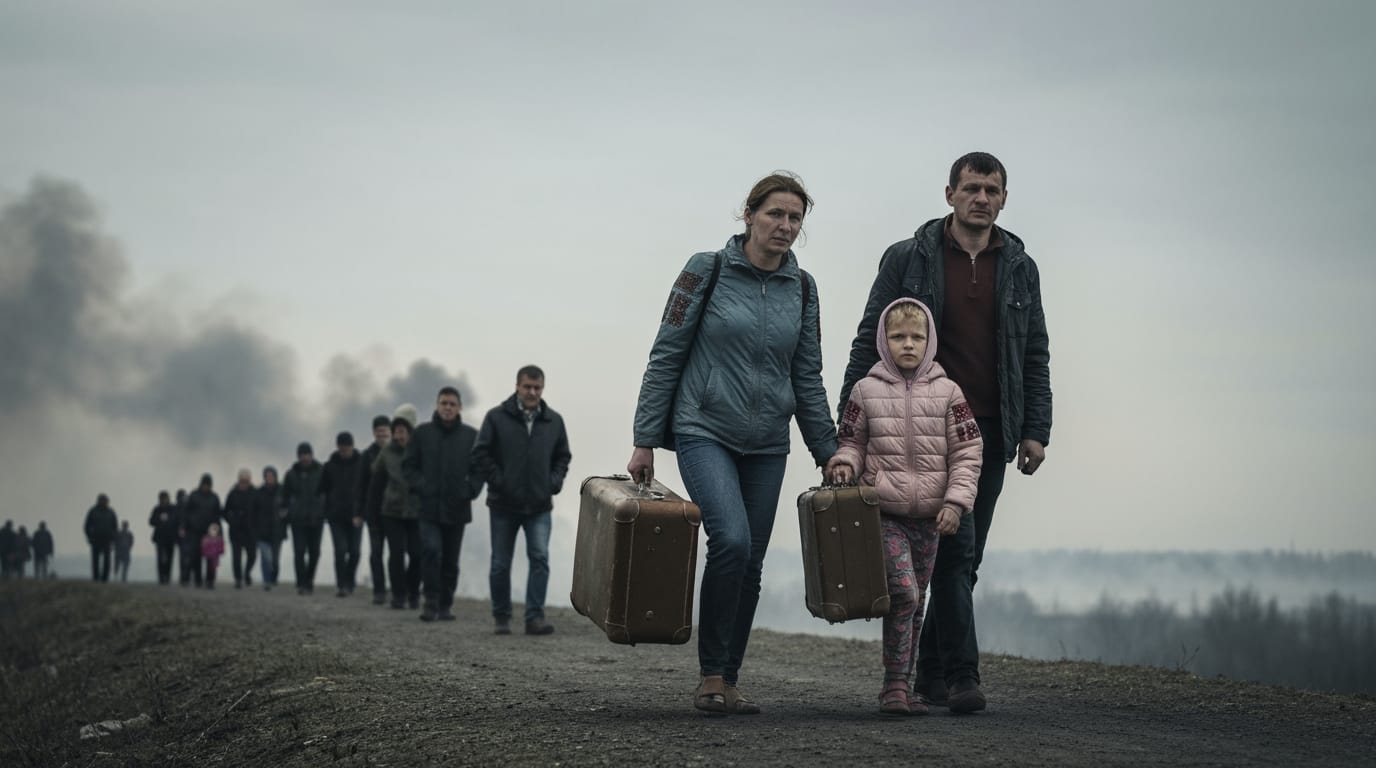
The human cost of the ongoing conflict remains staggering, exerting immense pressure for a resolution. As of February 2026, nearly 56,000 civilians have been either wounded or killed. The war has forcibly displaced a third of Ukraine's population, with 3.7 million internally displaced persons and 5.9 million registered as refugees globally. Approximately 10.8 million people are in urgent need of humanitarian assistance. Critical infrastructure, including over 2.5 million homes—13 percent of the country's housing stock—has been damaged or destroyed, alongside essential transport and energy facilities, with damages estimated at $176 billion. These disruptions have severely impacted access to basic necessities such as water, electricity, healthcare, and education.
A particularly grave humanitarian issue is the forcible transfer and deportation of Ukrainian children to Russia. Tens of thousands of children remain trapped, separated from their families. International efforts, including the International Coalition for the Return of Ukrainian Children, co-chaired by the EU, Ukraine, and Canada, are actively working to locate and repatriate these children, with the European Commission recently announcing €50 million in support. Ensuring the safe return and reintegration of these children is now considered a central component of any future peace agreement. The devastation extends beyond immediate casualties, with the war causing long-term psychological trauma, disruption to public health, and widespread societal impact.
An Uncertain Horizon
The recent, short-lived ceasefire serves as a stark reminder of the complexities and high stakes involved in the Russia-Ukraine war. While Russian President Putin has recently suggested the war may be "coming to an end," his rhetoric is viewed by some as an attempt to leverage a perceived shift in the global order, rather than an immediate signal for genuine de-escalation. Ukraine's resolve to reclaim its sovereignty and hold Russia accountable remains firm, bolstered by its increasing capacity for self-defense, including the development of long-range drones and missiles.
The path forward is fraught with uncertainty. Scenarios ranging from a prolonged war of attrition to an uneasy armistice without a formal peace agreement are considered more probable than a decisive victory for either side or a swift diplomatic breakthrough. Any sustainable peace will require addressing the core disagreements over territory, security, and accountability, alongside massive reconstruction efforts and the healing of deep societal wounds. The international community, grappling with the geopolitical fallout and humanitarian catastrophe, continues to seek avenues for de-escalation. However, as the fighting resumes with renewed intensity, the prospect of a true, lasting peace in Ukraine appears to remain a distant and challenging goal.


