Iran's Deepening Crisis: Political Prisoner Numbers Surge Amid Regional Turmoil
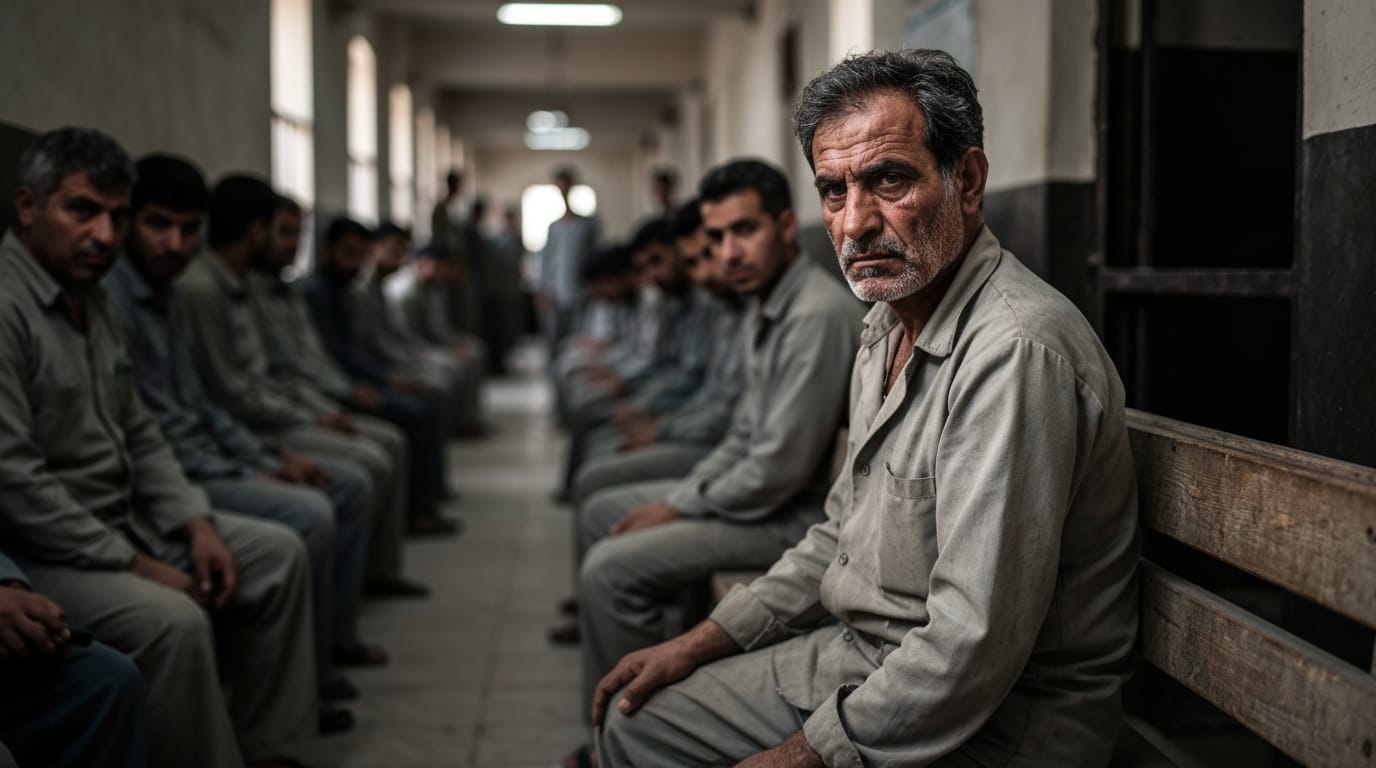
TEHRAN — As geopolitical tensions continue to escalate in the Middle East, fueled by the ongoing conflict described by some as a "US-Israel war," Iran's internal crackdown on dissent has intensified dramatically, leading to an alarming surge in political prisoners. Human rights organizations report tens of thousands of arrests and a sharp increase in executions, drawing parallels to past periods where regional crises served as a pretext for domestic repression. The scale of the detentions, coupled with severe human rights abuses in custody, paints a grim picture of a nation where opposing voices are systematically silenced under the shadow of external conflict.
The Alarming Increase in Detentions
The number of political prisoners in Iran has swelled to an estimated 15,000, placing the country among the top jailers of dissidents globally. This surge is particularly pronounced since June 2025, following what some sources refer to as the start of an "Israeli and U.S. missile campaign targeting Iranian military and nuclear sites," which triggered an immediate domestic security crackdown. Since then, Iranian authorities have reportedly arrested over 21,000 individuals, including journalists, human rights activists, social media users, and members of ethnic and religious minority communities. The United Nations' rights office reported in April 2026 that at least 21 people have been executed and more than 4,000 detained on national security charges since the beginning of the "US-Israel war," with many facing unfair trials and torture.
Human rights advocates contend that the Islamic Republic has historically leveraged periods of external pressure and conflict to intensify its suppression of internal opposition, employing it as a "smokescreen" to justify sweeping restrictions on fundamental freedoms. This pattern of repression is not new, but its current intensity has raised grave concerns among international observers.
Targets of Repression: Journalists, Activists, and Minorities
The widespread arrests have disproportionately targeted a broad spectrum of Iranian society, with journalists, human rights defenders, and ethnic and religious minorities facing severe repercussions.
Journalists have found themselves at the forefront of this crackdown. Reza Valizadeh, an Iranian-American journalist, was sentenced to 10 years in prison in December 2024 for "collaborating with the hostile US government," a charge his lawyer stated was based on his work for a US government-funded broadcaster. Similarly, Elaheh Mohammadi and Niloofar Hamedi, two journalists who reported on the death of Mahsa Jina Amini in 2022, were sentenced to five years in prison in October 2024 for "propaganda against the state" and "assembly and collusion to act against national security." Iran was designated the world's worst jailer of journalists in 2022, a situation that has reportedly worsened.
Human rights activists, particularly women, have also endured intensified repression. Nobel Peace Prize laureate Narges Mohammadi remains imprisoned, with grave concerns raised about her deteriorating health and the systematic denial of adequate medical care. Her case symbolizes the extreme risks faced by those challenging state abuses. Other activists, including women's rights defenders, have been arbitrarily arrested and subjected to coercive interrogations and threats.
Ethnic and religious minorities, including Kurds, Baluchis, Azerbaijani Turks, Ahwazi Arabs, and Baha'is, have been particularly impacted. These communities, often already marginalized, face heightened scrutiny and arbitrary arrests on vaguely defined "national security" charges. Following the June 2025 "12-day war," a new law was passed mandating harsher penalties for those suspected of "spying for Israel and the U.S.," making espionage punishable by death and asset confiscation. This has led to the interrogation of Jewish citizens in Tehran and Shiraz over alleged contact with relatives in Israel, triggering profound fear within the community.
Harsh Conditions and Lack of Due Process
Accounts from former detainees and human rights organizations reveal a pattern of egregious abuses within Iran's detention facilities. Prisoners are routinely denied fundamental aspects of due process, including access to legal counsel, formal charges, and public trials. Confessions extracted under torture, ill-treatment, or the threat of isolation are frequently used to secure convictions, often leading to lengthy prison sentences, flogging, or even death.
The physical conditions in prisons like Tehran's notorious Evin Prison are often life-threatening. Reports highlight systematic denial of medical care, leading to severe health crises among detainees, particularly for elderly prisoners and those with chronic illnesses. Unsanitary living conditions, widespread contamination, and infestations of rodents are common, exacerbating the risk of infectious diseases. Overcrowding is a persistent issue, with many prisoners forced to sleep on floors or in hallways. Instances of physical abuse, prolonged solitary confinement, and even sexual violence have been documented.
The use of the death penalty has escalated dramatically, serving as a tool of political repression. In 2025, executions in Iran rose by 68% compared to the previous year, with at least 1,639 people executed for ordinary criminal and political charges. In 2023, 853 executions were recorded. Since March 2026, 24 political prisoners have been executed "after unfair trials in the revolutionary courts." At least 42 political prisoners are currently facing death sentences, a growing trend that highlights the judiciary's increasing use of capital punishment to suppress dissent.
International Condemnation and Calls for Action
The intensifying crackdown has drawn widespread condemnation from the international community. The United Nations Human Rights Office, Amnesty International, Human Rights Watch, and CIVICUS have all voiced grave concerns over the escalating repression. These organizations consistently call for the immediate and unconditional release of all arbitrarily detained political prisoners and urge Iranian authorities to uphold their obligations under international human rights law. The European Union has also expressed alarm over the situation, particularly concerning human rights defenders like Narges Mohammadi.
Despite international pressure, the Iranian government appears resolute in its approach, seemingly using the backdrop of regional tensions to consolidate power and quell any signs of internal unrest. The current climate of heightened political instability and external conflict provides a challenging environment for human rights advocacy, as access to independent information about detention facilities becomes increasingly difficult.
Conclusion
The escalating number of political prisoners and the deteriorating human rights situation in Iran represent a profound crisis. Against a backdrop of ongoing regional tensions, the Iranian government has intensified its repressive tactics, targeting a broad range of citizens perceived as threats to national security. The systematic denial of due process, coupled with the prevalence of torture, inhumane prison conditions, and a surge in politically motivated executions, underscores a deliberate strategy to silence dissent. As international bodies continue to highlight these grave abuses, the fate of thousands of political prisoners remains precarious, underscoring an urgent need for sustained global attention and concerted efforts to hold the Iranian authorities accountable for their human rights obligations.


