High Stakes in Beijing: Trump and Xi Navigate a Fractured Global Order
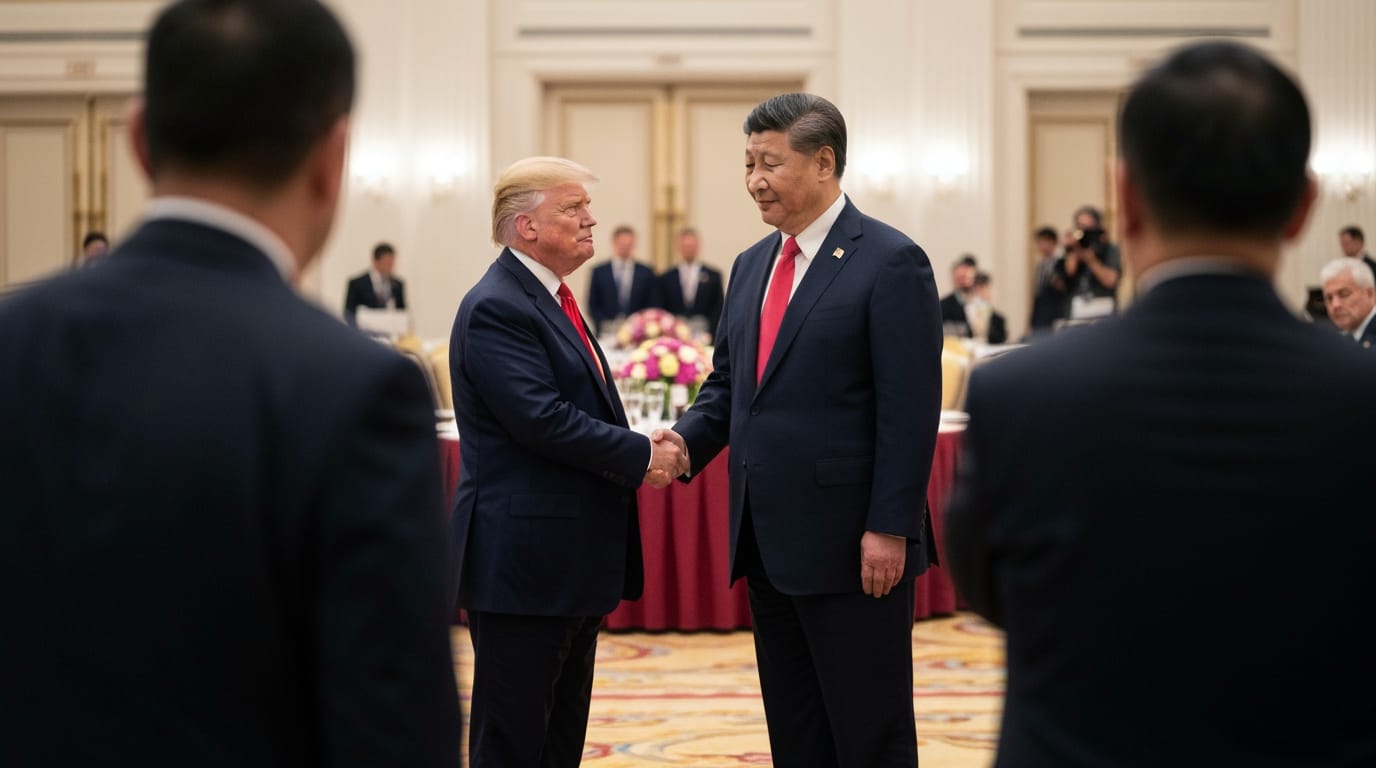
BEIJING – As President Donald Trump prepares for his two-day summit with Chinese President Xi Jinping in Beijing this week, the world watches with bated breath, keenly aware that the discussions carry profound implications for global trade, technological competition, and the delicate balance of international relations. This summit, the first presidential visit to China in nearly a decade, arrives amidst an already turbulent global landscape, marked by a fragile ceasefire in the Middle East and an intensifying geopolitical rivalry between the world's two largest economies. The upcoming talks build upon a complex and often confrontational history between the two leaders, a relationship that has fundamentally reshaped the trajectory of US-China ties and the international order itself.
The Genesis of a New Rivalry: Trump's First Term
The initial years of Donald Trump's presidency inaugurated a significant recalibration of American foreign policy towards China, shifting from decades of engagement to a posture of direct competition. Upon entering office, the Trump administration operated under the conviction that China's rise in national power often came at the expense of American interests, necessitating a strategy to either slow China's progress or compel its leaders to be more responsive to US priorities. This new approach manifested prominently in the form of a trade war, initiated in March 2018 with a Section 301 investigation into China's trade practices.
The trade conflict rapidly escalated, with the United States imposing tariffs on hundreds of billions of dollars worth of Chinese goods, citing concerns over alleged unfair trade practices, intellectual property theft, and forced technology transfers. Beijing responded with retaliatory tariffs on American products, creating widespread disruption across global supply chains and impacting industries from agriculture to technology. Amidst this economic friction, the leaders held a series of critical meetings, including at the G20 summits in Buenos Aires in December 2018 and Osaka in June 2019, where they agreed to periodic truces and open-ended trade negotiations. These discussions culminated in the signing of the "Phase One" trade agreement in January 2020. This deal saw China commit to purchasing an additional $200 billion worth of US manufactured goods, services, agricultural products, and energy over 2017 levels within two years. The agreement also included promises from Beijing to strengthen intellectual property protections, prohibit forced technology transfers, and address currency practices, establishing a dispute resolution system to ensure compliance. However, despite these commitments, significant tariffs remained on approximately $360 billion worth of Chinese imports, and the underlying structural issues in the relationship largely persisted.
An Uneasy Truce: Navigating a Fractured Landscape
Following a period of diminished direct engagement, the two leaders re-entered high-level discussions with a meeting at the APEC summit in Busan, South Korea, in October 2025. This interaction marked their first face-to-face encounter in six years and resulted in a one-year trade truce, which saw US tariffs on Chinese goods reduced from 57 percent to 47 percent. President Trump characterized this meeting as highly successful, famously rating it a "12 out of 10."
The upcoming Beijing summit in May 2026, however, unfolds against a backdrop of intensified global instability. A war in Iran has significantly roiled global energy markets, leading to the effective closure of the Strait of Hormuz, a critical passageway for a fifth of global oil and gas. This conflict has depleted US weapon stockpiles and injected fresh tensions into the US-China relationship, given China's role as a major diplomatic backer of Iran and its largest oil purchaser. The pervasive global chaos and ongoing advancements in artificial intelligence, which introduce new cybersecurity uncertainties, further complicate the strategic environment. In this volatile context, analysts suggest that both leaders are primarily seeking to foster stability and mitigate vulnerabilities in their intertwined relationship.
Contentious Crossroads: The Beijing Agenda
The agenda for the Beijing summit is laden with critical and often contentious issues. For the United States, a primary objective is to achieve greater stability in the relationship, assess compliance with prior agreements, and explore potential new areas of cooperation. President Trump aims to secure tangible economic and security benefits, including Chinese support for efforts to resolve the Iran conflict and reopen the Strait of Hormuz. Economic priorities include commitments from China for substantial purchases of US goods and services, particularly in agriculture and aerospace, and expanding China's supply of rare earth elements to the US. Cooperation on combating fentanyl precursors and establishing a framework for bilateral discussions on artificial intelligence are also on the table.
Conversely, China's paramount objective is to achieve greater predictability, especially regarding tariffs. Beijing also seeks to leverage the summit to consolidate its global stature and potentially sideline voices within the Trump administration advocating for a more confrontational approach. A highly sensitive issue on China's agenda is Taiwan. Beijing is expected to press forcefully on the Taiwan question, with President Xi having previously indicated that the issue must be definitively resolved. China seeks explicit US agreement to restrict arms sales to Taiwan and may push for a significant shift in US declaratory policy, aiming for Washington to state it "opposes" Taiwan independence rather than merely "does not support" it. Taipei, meanwhile, watches with acute anxiety, concerned that a transactional US foreign policy might lead to a softening of US support for the island.
The Shifting Calculus: Economic Realities and Geopolitical Ambitions
A noticeable evolution in the Trump administration's approach to China has become apparent during this hypothetical second term. The focus appears to have shifted from coercing China into fundamental systemic economic changes to prioritizing "managed trade" and erecting higher barriers against Chinese goods. This pragmatic shift acknowledges that China has largely ceased efforts to appease the US administration and is more likely to engage in strategic, reciprocal actions.
Economically, the two nations remain deeply interdependent yet increasingly competitive. China's growing control over critical minerals, rare earths, and magnet supply chains, essential for modern military capabilities and advanced manufacturing, grants it significant leverage in economic statecraft. This dynamic has led some observers to suggest a state of "mutually assured destruction" in economic relations, where both sides possess the capacity to inflict considerable pain on the other. The potential outcomes of these high-level interactions extend beyond bilateral concerns, impacting global governance. There is a risk that a revitalized "G2" dynamic, where the US and China increasingly assert their interests regionally, could marginalize smaller states, reduce their agency, and weaken multilateral norms.
A Precarious Future
The Beijing summit represents another critical juncture in the perpetually complex US-China relationship. While expectations for transformative breakthroughs are modest, the meeting offers a vital opportunity for both leaders to gauge intentions, manage escalating tensions, and potentially forge incremental agreements on pressing issues. The interplay of trade disputes, technological rivalry, regional security concerns, and broader global instabilities ensures that every interaction between President Trump and President Xi carries immense weight. The ability of these two global powers to navigate their profound differences and find common ground will not only determine the future of their bilateral relationship but also significantly shape the trajectory of the international order for years to come.


