France Greenlights Next-Generation Aircraft Carrier, Solidifying Global Naval Ambition
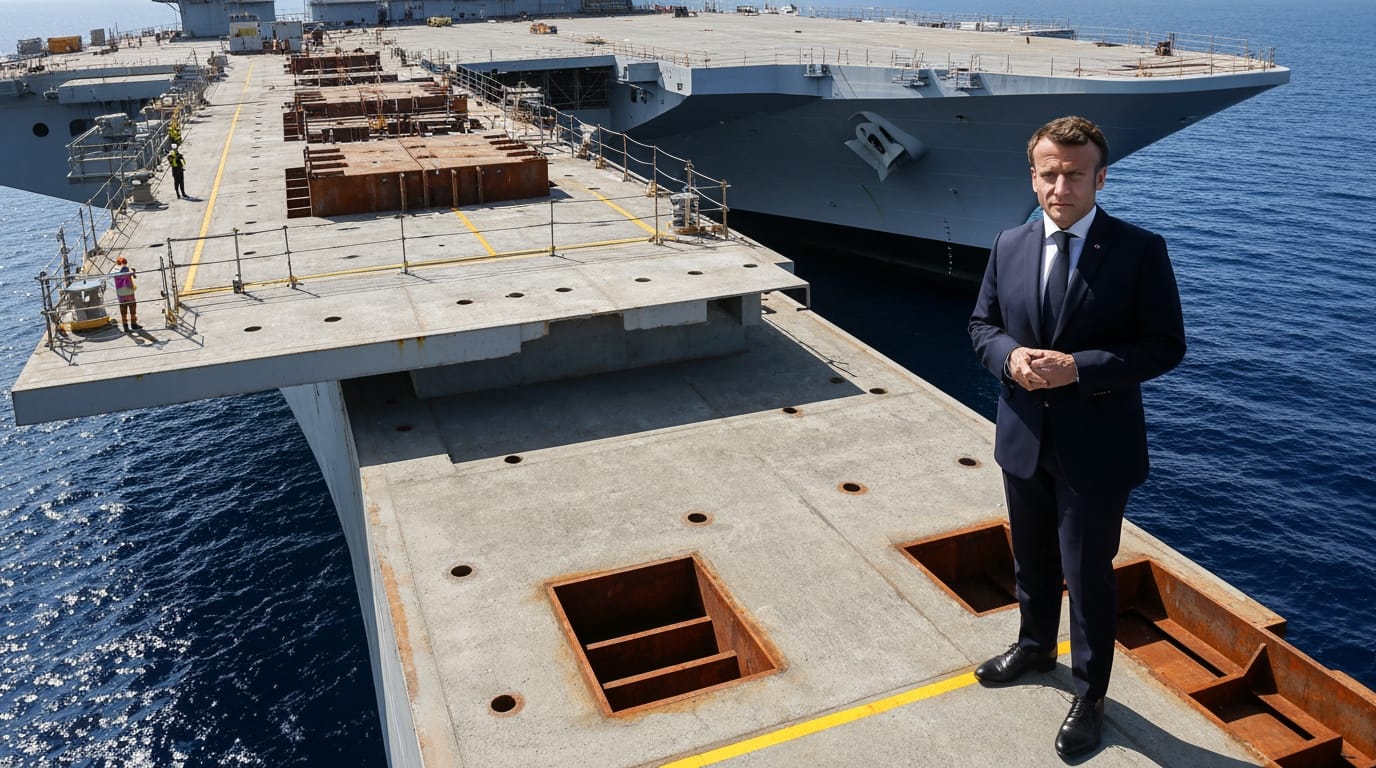
Abu Dhabi, UAE – France has officially committed to building a new nuclear-powered aircraft carrier, a colossal undertaking designed to reinforce its strategic autonomy and power projection capabilities on the global stage. President Emmanuel Macron announced the decisive step on Sunday, December 21, 2025, during an address to French troops stationed in the United Arab Emirates, marking a critical milestone for the nation's defense posture amidst an increasingly complex international landscape. The vessel, known as the Porte-Avions de Nouvelle Génération (PA-NG), is slated to replace the venerable Charles de Gaulle in the late 2030s, promising a significant leap in naval capacity and technological prowess.
A New Era of French Naval Power
The PA-NG represents a monumental upgrade over its predecessor, the Charles de Gaulle, France's sole existing aircraft carrier which has been in service since 2001 and is projected for retirement around 2038. With an estimated displacement of 75,000 to 80,000 tons and a length of 300 to 310 meters, the PA-NG will be nearly double the size of the 42,000-ton Charles de Gaulle. This increased scale is not merely for grandeur; it translates directly into enhanced operational capabilities. The new carrier will be powered by two advanced K22 nuclear reactors, each generating approximately 220 megawatts of electrical power. This robust nuclear propulsion system will not only provide virtually unlimited range and a speed of around 27 knots but also support all-electric ship systems and the demanding energy requirements of its advanced launch and recovery mechanisms.
Central to the PA-NG's operational superiority will be its aviation facilities. The ship will feature three Electromagnetic Aircraft Launch Systems (EMALS) and three Advanced Arresting Gear (AAG), both supplied by the U.S. firm General Atomics. These systems, similar to those found on the U.S. Navy's Gerald R. Ford-class carriers, will enable the French Navy to operate a broader and heavier mix of aircraft, including more than 40 Rafale M fighters, E-2D Hawkeye airborne early warning aircraft, helicopters, and drones. Crucially, the PA-NG is being designed with future air combat in mind, capable of integrating next-generation combat aircraft developed under the Future Combat Air System program. Its significantly enlarged flight deck, spanning approximately 17,000 square meters, is expected to boost sortie generation rates and enhance overall operational flexibility.
Strategic Imperative in a Turbulent World
President Macron underscored the strategic importance of the PA-NG, stating during his announcement, "In an age of predators, we must be strong to be feared. And in particular, strong at sea!" This statement reflects France's enduring commitment to maintaining a credible and independent defense capability. The new aircraft carrier is seen as essential for ensuring France's power projection from the high seas, enabling the nation to respond to crises and protect its interests globally. Naval aviation plays a critical role in safeguarding France's overseas territories, particularly in the Indo-Pacific region, where geopolitical tensions are increasingly prevalent.
Beyond immediate power projection, the PA-NG project is vital for preserving France's unique nuclear shipbuilding skills, which are crucial for both its aircraft carrier and submarine fleets. The development and integration of the new K22 nuclear reactors ensure that France maintains its expertise in this highly specialized field. The carrier is described not just as a military asset but also as a "tool of power par excellence but also diplomacy," highlighting its role in asserting influence and fostering international partnerships. French defense officials have emphasized that the PA-NG will provide long-term control of air and sea spaces, massive and repeatable power projection far from its homeport, and autonomous situational assessment capabilities, complementing its strategic oceanic and air forces.
Economic Footprint and Industrial Ambition
The construction of the PA-NG represents a significant investment in France's industrial base and national economy. The project is expected to engage approximately 800 suppliers across the country, with 80% of these being small and medium-sized enterprises (SMEs). This vast supply chain will contribute to significant job creation, with projections indicating around 700 new positions created directly by the project and an additional 1,400 jobs within key industrial partners like Naval Group and Chantiers de l'Atlantique.
The initial stages of this ambitious endeavor are already underway. While hull construction is anticipated to begin around 2031 at Chantiers de l'Atlantique in Saint-Nazaire, significant progress has been made on critical long-lead items. In April 2024, contracts were awarded for the initial components of the nuclear propulsion systems, with the welding of the first confinement sheets for the nuclear reactors commencing on September 25, 2025. This early work ensures that the crucial nuclear power plants, developed by TechnicAtome, will be ready for integration when the main construction phase begins. The formal production contract for the ship itself is expected to be signed by the end of 2025, following President Macron's final approval.
Navigating Challenges and Criticisms
Despite the strategic rationale, the PA-NG project has not been without its critics. With an estimated cost of around €10 billion, the investment comes at a time of budgetary pressures and a significant public deficit in France. Some lawmakers and military strategists have voiced concerns, questioning whether such a substantial sum could be better allocated to other pressing defense needs, such as additional frigates, unmanned systems, or cyber capabilities, especially amidst fears of a potential European conflict.
Critics also highlight the inherent vulnerability of a single, high-value asset like an aircraft carrier in an era of advanced anti-ship hypersonic and ballistic missiles. They argue that relying on such a large, centralized platform might be a "20th-century solution for 21st-century problems," advocating for more dispersed, flexible, and resilient forces. However, French defense officials have largely dismissed these arguments, with Armed Forces Minister Sébastien Lecornu asserting that delaying the program would not necessarily save money and would ultimately compromise France's security and its ability to project power. The final cost of the PA-NG is still being refined, with a definitive figure expected by the end of 2025.
Looking to the Future
The official green light for the Porte-Avions de Nouvelle Génération signals France's unwavering commitment to its role as a significant global naval power. While preliminary design work commenced in 2020, with detailed pre-project phases completed in 2024, the full realization phase is now set to accelerate. Sea trials are projected for approximately 2035, with the carrier expected to achieve full operational capability around 2038, coinciding with the retirement of the Charles de Gaulle.
This ambitious project is more than just a ship; it is a long-term investment in France's defense independence, technological leadership, and diplomatic influence. By integrating cutting-edge technologies and a substantially larger, more capable air wing, the PA-NG is poised to become the cornerstone of French naval power for decades to come, ensuring France remains a force to be reckoned with in the increasingly contested maritime domains of the 21st century.


