French Municipal Elections Reshape Political Landscape Ahead of Crucial 2027 Ballot
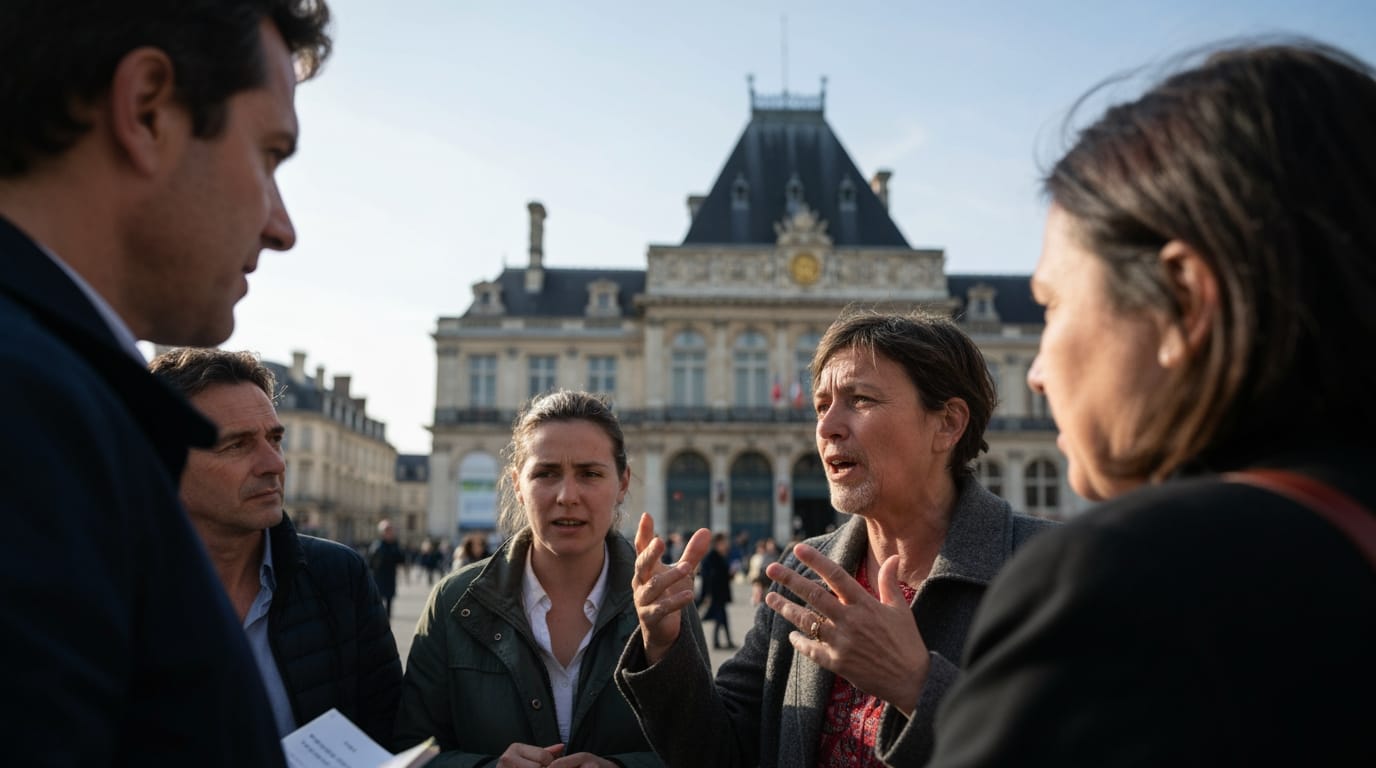
Paris, France – France's recent municipal elections have delivered a complex and often contradictory set of results, providing a critical, albeit nuanced, snapshot of the nation's political mood just 13 months before the pivotal 2027 presidential elections. While local contests rarely offer a definitive forecast for national polls, the outcomes have revealed shifting alliances, emergent contenders, and significant challenges for incumbent and aspiring parties alike, effectively drawing the initial battle lines for the next national electoral cycle.
The second round of voting, held recently, saw French citizens head to the polls in over 1,500 communes, with major urban centers proving to be key battlegrounds. The results showcased the continued local strength of traditional parties, a surprising resilience from the centrist bloc, and a complex narrative for the far-right National Rally, challenging previous assumptions of an "unstoppable" advance. Simultaneously, the once-surging Green movement experienced a significant dip, while the broader left celebrated high-profile victories in major cities, albeit with internal strategic dilemmas surfacing regarding alliances with the hard-left.
The Shifting Sands of Urban Power: Left's Resurgence and Green Momentum Fades
One of the most striking narratives emerging from the municipal elections was the left's ability to secure significant victories in some of France's largest cities. In Paris, Socialist candidate Emmanuel Gregoire triumphed, succeeding fellow party member Anne Hidalgo as mayor and reinforcing the capital's long-standing left-leaning profile. This victory, achieved by a broad left coalition, was hailed as a clear rejection of right-wing and far-right influences in the capital. Beyond Paris, the left also prevailed in other major urban centers such as Marseille, Lyon, and Lille, marking a notable resurgence in these key metropolitan areas.
However, this success was not uniformly distributed, nor did it signal a cohesive left-wing front. While the left often won pluralities in major cities, the elections sent a clear signal to mainstream left parties: alliances with the hard-left France Unbowed (LFI) proved to be a liability in several instances. Voters in traditional Socialist Party strongholds, such as Clermont-Ferrand and Brest, shifted towards the center and right when such alliances were formed, indicating a reluctance among the electorate for radical change at the local level. LFI itself achieved symbolic victories in Saint-Denis and Roubaix, demonstrating a mobilized base but one with limited broader reach. This suggests a forthcoming "strategic reckoning" for the left, which will likely feature two competing visions vying for dominance in the 2027 presidential race.
Conversely, the "Green wave" that swept across many urban areas in the 2020 municipal elections appeared to recede. After a period marked by cost-of-living crises and geopolitical instability, environmental concerns seemingly slipped down voters' priority lists. Green mayors lost in significant cities like Strasbourg, Bordeaux, and Poitiers, and the outgoing Green mayor in Lyon narrowly held onto power, highlighting the fragility of these previously strongholds. This fading momentum raises questions about the Greens' leverage and strategic positioning heading into 2027.
Macron's Centrist Bloc: Beating Low Expectations and Emergent Contenders
President Emmanuel Macron's centrist movement, La République En Marche (LREM), which often struggles with local grassroots support, managed to exceed low expectations in several key contests. Despite Macron's personal unpopularity, candidates backed by the centrist camp secured unexpected victories in Bordeaux and Annecy. Furthermore, they gained influence through strategic alliances in cities such as Toulouse, Angers, and Limoges.
A significant outcome for the centrist bloc was the strong performance of former Prime Minister Edouard Philippe. Philippe, a center-right politician, successfully held Le Havre, defying polls and bolstering his status as a credible contender for the 2027 presidential election. His ability to maintain local support reinforces his position as potentially the best-placed centrist to challenge the National Rally in the coming national election. However, the centrist picture remains mixed, with Macron-backed candidates losing in Lyon, Nice, and Pau, where former Prime Minister François Bayrou was unseated. For the centrist camp, the path to 2027 hinges on their ability to unite behind a single, strong candidate like Philippe, as fragmentation could risk them missing the second round of the presidential vote.
The National Rally's Mixed Fortune and Conservative Resilience
The far-right National Rally (RN) entered the municipal elections with high hopes, particularly after its strong national polling figures and the narrative of an inevitable advance towards power. However, the local results painted a more complex picture, suggesting that the RN's "march to power is not unstoppable." The party notably failed to capture Marseille, France's second-largest city, as well as suffering defeats in nearby Toulon and Nimes, cities where they had led in the first round of voting. These outcomes suggest that mainstream parties, when effectively organized, can still successfully block the RN, particularly in larger urban centers where the party's brand continues to face significant resistance from many voters.
Despite these setbacks in major cities, the RN's advance was not entirely stalled. In fiercely conservative Nice, an RN ally, Eric Ciotti, secured a victory against a Macron-backed candidate, marking a significant win for the far-right in a major city. The party also picked up smaller cities like Carcassonne and impressively multiplied its number of local councilors thirteen-fold. While the RN remains a frontrunner on paper for 2027, the municipal results have tempered the sense of inevitability and highlighted a persistent ceiling for the party in larger urban strongholds.
Meanwhile, the conservative Republicans (LR) demonstrated a degree of local resilience, reaffirming their position as France's largest local force. Despite a symbolic defeat in Paris, where their candidate Rachida Dati's polarizing profile and looming corruption case were cited as factors, the party emphasized its underlying strength across numerous communes. The municipal success, however, leaves the Republicans with a strategic decision for 2027: whether to maintain their identity as a well-supported minority or to explore broader alliances with the center to counter extreme parties on both the left and right.
Voter Turnout and the Road to 2027
The municipal elections also underscored concerns about voter engagement. Turnout in the second round, while higher than the COVID-impacted 2020 vote, remained four points lower than in 2014, with just over 48% participation in mainland France by late afternoon on election day. This persistent trend of lower turnout in local elections can be interpreted in various ways, potentially reflecting voter apathy or a perception that local issues are disconnected from national political discourse. However, for parties hoping to mobilize their bases for 2027, it highlights the challenge of galvanizing the electorate.
Overall, the municipal elections have provided a crucial, albeit complex, prelude to the 2027 presidential and legislative ballots. The results have not presented a clear-cut trajectory for any single political force but rather a fragmented landscape where alliances, local presence, and candidate appeal will be paramount. The left faces the challenge of reconciling internal divisions and strategic alignments, particularly concerning LFI. The centrist bloc must consolidate around a strong figure to avoid being squeezed by the extremes. The National Rally, while demonstrating national potential, still struggles with urban penetration. The traditional right, though locally strong, grapples with its national identity and potential alliances. As France moves closer to the 2027 ballot, these municipal outcomes will undoubtedly inform campaign strategies, candidate selections, and alliance formations, setting the stage for a highly contested and unpredictable national election.


