Horn of Africa on Edge as Shifting Alliances Reshape Regional Power Dynamics
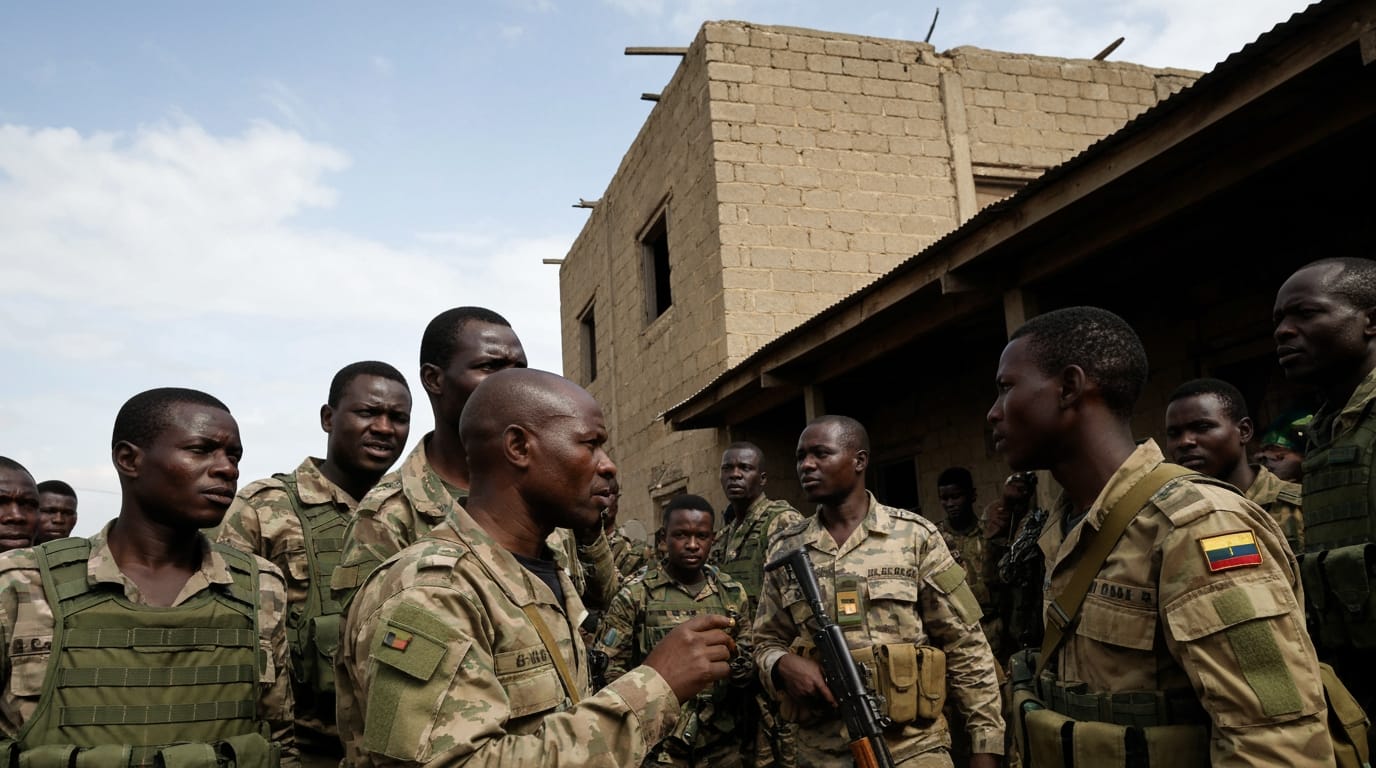
The Horn of Africa, a strategically vital region bordering the Red Sea, is experiencing a profound and dangerous geopolitical restructuring, marked by the rapid formation of new alliances and escalating tensions. At the heart of this volatility lies Ethiopia's assertive pursuit of Red Sea access and a burgeoning collective security pact involving Egypt, Somalia, and Eritrea, directly challenging Addis Ababa's ambitions. This complex interplay of national interests, historical rivalries, and external influence threatens to unravel an already fragile peace, potentially igniting proxy conflicts and impacting global trade routes.
Ethiopia's Maritime Quest and the Somaliland Catalyst
Ethiopia, a landlocked nation of over 120 million people, has long articulated its strategic necessity for direct access to the Red Sea, a goal intensified since Eritrea's independence in 1993 left it without a coastline. This ambition crystallized in January 2024 with the signing of a controversial Memorandum of Understanding (MoU) with Somaliland, a self-declared state. The MoU reportedly grants Ethiopia naval access to the Gulf of Aden via a 50-year lease on a 20-kilometer stretch of Somaliland's coastline in exchange for potential recognition of Somaliland's independence and a stake in Ethiopian Airlines. This move, however, has ignited a firestorm of protest from Somalia, which views Somaliland as an integral part of its territory, calling the deal an act of aggression and a violation of its sovereignty.
The Somaliland deal has become a critical flashpoint, not merely between Ethiopia and Somalia, but across the entire region. Ethiopia's federal government, still navigating the aftermath of a devastating civil war that formally ended in 2022, sees this maritime access as crucial for its economic development and national security. Yet, this pursuit has inadvertently triggered a realignment of forces, exacerbating pre-existing grievances and forging unlikely partnerships. The delicate political order that followed the Tigray peace agreement is now fracturing, revealing deeper structural pressures that have long shaped the Horn of Africa's security dynamics.
A New Axis Emerges: Egypt, Somalia, and Eritrea Unify Against Ethiopia
In a significant diplomatic shift, leaders from Egypt, Somalia, and Eritrea convened in Asmara in October 2024 to discuss a potential collective security alliance against Ethiopia. This emerging trilateral pact represents a direct counter to Ethiopia's Red Sea aspirations and its perceived regional dominance. Egypt's involvement is primarily driven by its long-standing and tense standoff with Ethiopia over the Grand Ethiopian Renaissance Dam (GERD) on the Blue Nile, with Cairo seeking to leverage Somalia to gain concessions from Addis Ababa and enhance its influence in the critical Red Sea region. Egypt has already forged military cooperation and intelligence exchange agreements with Somalia and is expected to finalize a similar security pact with Eritrea.
Somalia, for its part, sees this alliance as a means to challenge Ethiopia's "hegemonic ambitions" and reclaim its regional standing, which it perceives as threatened by the Somaliland MoU. Mogadishu views the alliance as a strategic response to Ethiopia's actions, shifting from a marginalized country to a key regional player. Eritrea's participation marks another dramatic reversal in regional alliances. Once a tactical partner of Ethiopian Prime Minister Abiy Ahmed during the Tigray war, Eritrea now exhibits growing mistrust towards Addis Ababa. Reports of troop deployments along the Ethiopia-Eritrea border signal resurfacing tensions, underscoring the transactional nature of alliances in the region, often shaped by immediate security concerns rather than lasting ideological alignment.
The formation of this anti-Ethiopia bloc could lead to heightened diplomatic tensions, economic sanctions, and potentially, proxy conflicts, reminiscent of Cold War-era dynamics. Ethiopia has so far adopted a "wait and watch" approach, postponing the full implementation of its Somaliland MoU, but recent unconfirmed reports suggest ongoing discussions for its advancement, which could prompt a stronger stance from Egypt and its partners.
External Powers Deepen Geopolitical Competition
The shifting alliances within the Horn of Africa are further complicated by the increasing involvement of external actors, all vying for influence along critical trade and energy corridors. The region's strategic location, at the western mouth of the Indian Ocean security architecture and encompassing the Red Sea, Bab el-Mandeb, and the Gulf of Aden, makes it a nexus for global competition.
Various international powers, including the United Arab Emirates, Saudi Arabia, Turkey, Iran, Russia, and the United States, are actively engaging with regional states. The UAE has strengthened financial and political ties with Ethiopia, while Egypt and Saudi Arabia maintain closer relationships with Eritrea and other regional stakeholders. Turkey, for instance, signed a defense and economic cooperation agreement with Somalia in August 2024, allowing it to build its largest overseas base and commence oil and gas exploration in Somali maritime locations. This external interest is not solely economic; it also intersects with broader geopolitical rivalries, such as the US-Iran confrontation, where maritime security and alliance cohesion in the Gulf can have direct ripple effects on the Horn of Africa. The competition for dominance and influence among these global actors fuels the region's inherent instability, making internal conflicts and interstate rivalries more complex and potentially more dangerous.
Implications for Regional Stability and International Security
The current trajectory in the Horn of Africa points towards a period of significant instability. The potential for a wider confrontation is growing as national ambitions clash and alliances solidify along new fault lines. The consequences extend beyond political and military spheres, threatening humanitarian crises, disrupting critical trade routes, and impacting energy security. Ongoing internal conflicts in Sudan, South Sudan, and Somalia, coupled with the renewed tensions between Ethiopia and Eritrea, create a volatile environment where small sparks can rapidly escalate.
While an all-out war remains a daunting prospect, the rise of Cold War-style proxy conflicts, diplomatic standoffs, and economic pressures appears increasingly likely. The fragile peace achieved in Ethiopia after its civil war could be jeopardized, and the humanitarian impact on a region already prone to drought and displacement could be devastating. The international community, often criticized for its "scant attention" to the region, faces the urgent challenge of addressing these foundational drivers of rivalry—geography, resources, and strategic access—to prevent a broader catastrophe.
The Horn of Africa stands at a crossroads, where the pursuit of national interests, the shifting loyalties of regional powers, and the increasing involvement of external actors are creating a highly combustible situation. The transactional nature of alliances, constantly adapting to immediate security concerns, means that the political landscape remains fluid and unpredictable. Without comprehensive efforts to address underlying grievances and foster inclusive regional security frameworks, the prospect of prolonged conflict and instability looms large over this critical part of the world.


