French Navy Intercepts Sanctioned Russian Oil Tanker in Atlantic, Escalating Maritime Enforcement
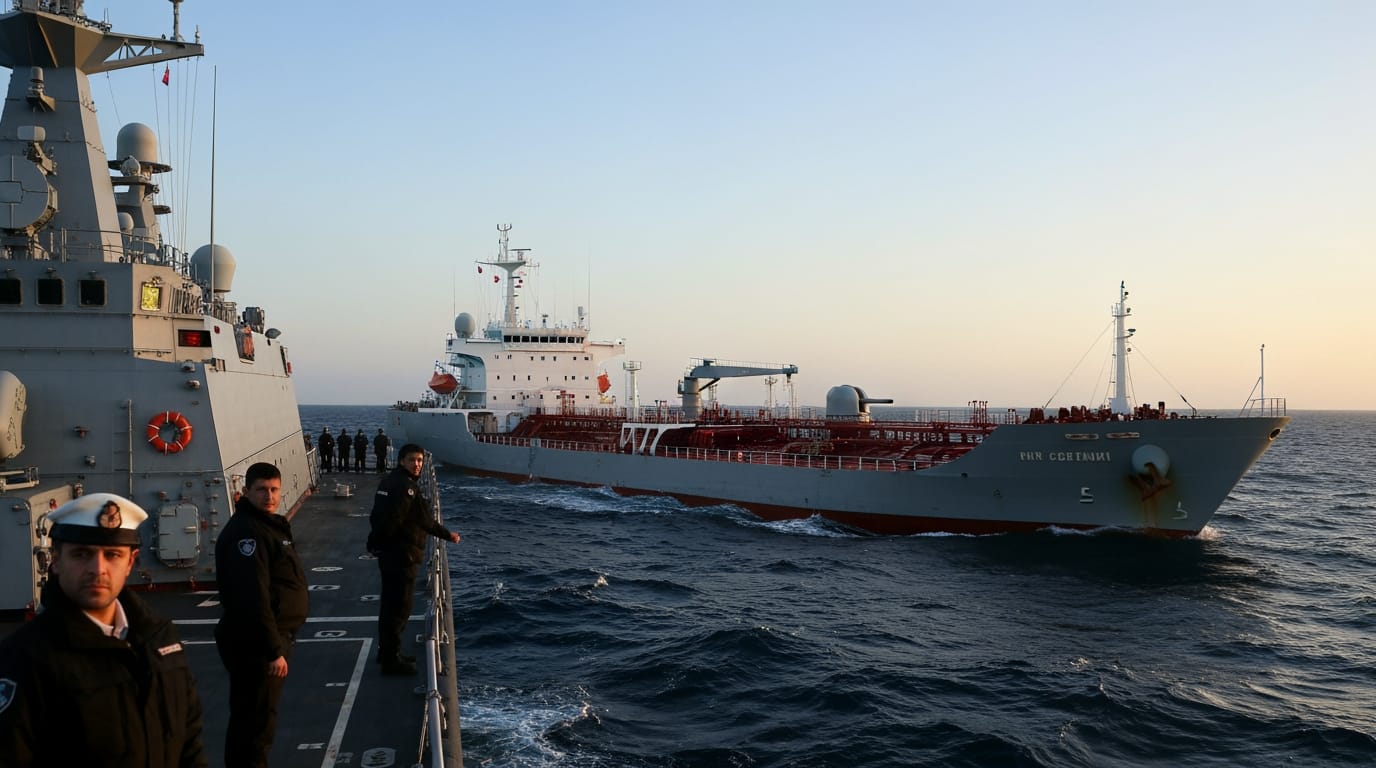
PARIS, France – In a significant move to counter Russia’s sanctions-evasion tactics, the French Navy, with support from allied nations, intercepted a Russian-linked oil tanker, the Tagor, in international waters of the Atlantic Ocean on May 31. The operation, publicly announced by French President Emmanuel Macron on June 1, marks one of the most assertive actions taken by Western navies against Moscow’s illicit oil trade network since the full-scale invasion of Ukraine began in 2022. The Tagor, suspected of operating under a false flag and carrying sanctioned Russian crude oil or petroleum products, underscores the intensifying global effort to disrupt revenue streams fueling Russia's ongoing conflict.
The Interception of the Tagor: A Decisive Naval Action
The French Navy's interception of the Tagor on Sunday morning, May 31, was executed with precision in international waters, demonstrating a coordinated effort with partners, including the United Kingdom. President Macron emphasized that the operation was conducted in strict compliance with the law of the sea, highlighting France’s unwavering determination to uphold international legal frameworks. The vessel, identified as the Tagor (formerly known as British Gannet with IMO number 9282481), had departed from Russia and was transporting crude oil and petroleum products that are under sanctions by the European Union, the United Kingdom, and Ukraine. Investigations confirmed irregularities with the flag the tanker was flying, a common tactic employed by the "shadow fleet" to obscure true ownership and bypass detection.
The boarding of the Tagor has triggered a judicial investigation, treating the incident as a law enforcement matter rather than solely a military exercise. While specific details regarding the cargo volume, the exact location of interception, and the vessel's current status have not been fully disclosed, the French Navy has since diverted the ship. This event is not an isolated incident but rather part of a broader, stepped-up campaign by France and its allies to curb Russia's shadow fleet. Prior to this, France had intercepted other Russian-linked tankers, including the Deyna in March 2026 and the Grinch in January 2026, both suspected of sanctions evasion, with the Boracay also being detained in October 2025. These earlier operations often resulted in investigations or fines, signaling a growing trend of active enforcement against vessels attempting to circumvent international restrictions.
Unmasking the "Shadow Fleet": Russia's Sanctions Evasion Network
The Tagor is a key component of what is widely referred to as Russia's "shadow fleet" or "dark fleet." This expansive network consists of aging tankers operating through opaque ownership structures, often registered under shell companies and frequently changing flags to conceal their links to Russia and bypass Western sanctions on energy exports. Moscow began relying heavily on this shadow fleet following its full-scale invasion of Ukraine in 2022, as a means to sustain its vital oil exports despite the imposition of stringent international sanctions.
These vessels often operate with questionable insurance coverage, posing significant environmental and safety risks, a concern explicitly raised by President Macron. The global shadow fleet is estimated to include thousands of tankers, with a substantial number of them linked to sanctioned activities. The European Union, the United States, and the United Kingdom have been working to identify and sanction entities and vessels involved in this illicit trade. The EU has already sanctioned hundreds of vessels in Russia's shadow fleet and is considering a new package of sanctions that could target an additional 20 shadow fleet tankers, and potentially extend to liquefied natural gas (LNG) tankers. This ongoing effort reflects a collective resolve to deprive Russia of the financial resources needed to continue its aggression in Ukraine.
International Law and Coordinated Enforcement Efforts
The interception of the Tagor underscores the complex legal and geopolitical landscape surrounding sanctions enforcement at sea. France's actions are explicitly framed within the bounds of international maritime law, particularly the United Nations Convention on the Law of the Sea (UNCLOS). The legal basis for such interceptions often relies on suspicions of false flagging or non-compliance with maritime regulations, especially when vessels are operating in international waters.
Allied nations have been increasingly coordinating their efforts to crack down on the shadow fleet. The US, for instance, has also been actively intercepting sanctioned oil tankers, including multiple Venezuelan-linked vessels in the Caribbean and the Indian Ocean, demonstrating a global reach in disrupting illicit maritime activity. These joint operations reflect a growing consensus among Western powers that the shadow fleet poses a direct challenge to the effectiveness of sanctions regimes and global maritime security. Ukraine has actively welcomed these measures, urging European allies to update legislation to allow for the seizure of shadow fleet vessels and the repurposing of their cargo for European security. The growing focus on accountability is also evident in legal proceedings, such as a French court sentencing in absentia the captain of a suspected Russian "shadow fleet" tanker in March 2026 for failing to comply with orders.
Implications for Global Energy Markets and Geopolitics
The interception of the Tagor is more than just a naval operation; it carries significant implications for global energy markets and the broader geopolitical struggle surrounding the conflict in Ukraine. By disrupting the shadow fleet, Western nations aim to tighten the economic squeeze on Russia, reducing its ability to finance its military objectives. The European Union's sanctions framework includes provisions to prohibit maritime services to Russian oil trade unless it adheres to the G7 price cap, which currently stands at $44.10 per barrel for Urals crude. Efforts are underway to refine these sanctions, with discussions about freezing the oil price cap to prevent an automatic increase that could benefit Russia amidst global energy price fluctuations, partly influenced by instability in the Middle East.
This incident signals an increased willingness of Western powers to take direct action against sanctions evasion, raising the stakes for those involved in facilitating Russia's illicit oil trade. It also highlights the persistent challenges in enforcing complex international sanctions, as Russia continuously adapts its strategies to circumvent restrictions. The ongoing cat-and-mouse game between naval forces and the shadow fleet is likely to continue, with potential ripple effects on shipping costs, insurance premiums, and the global supply of oil as legitimate operators become increasingly wary of involvement with sanctioned entities. The firm stance taken by France and its allies aims to reinforce the message that circumventing international sanctions to fund an aggressive war is unacceptable and will face decisive countermeasures.


