UK Spared £100 Million Payout as Court Rules Against Rwanda in Deportation Deal Dispute
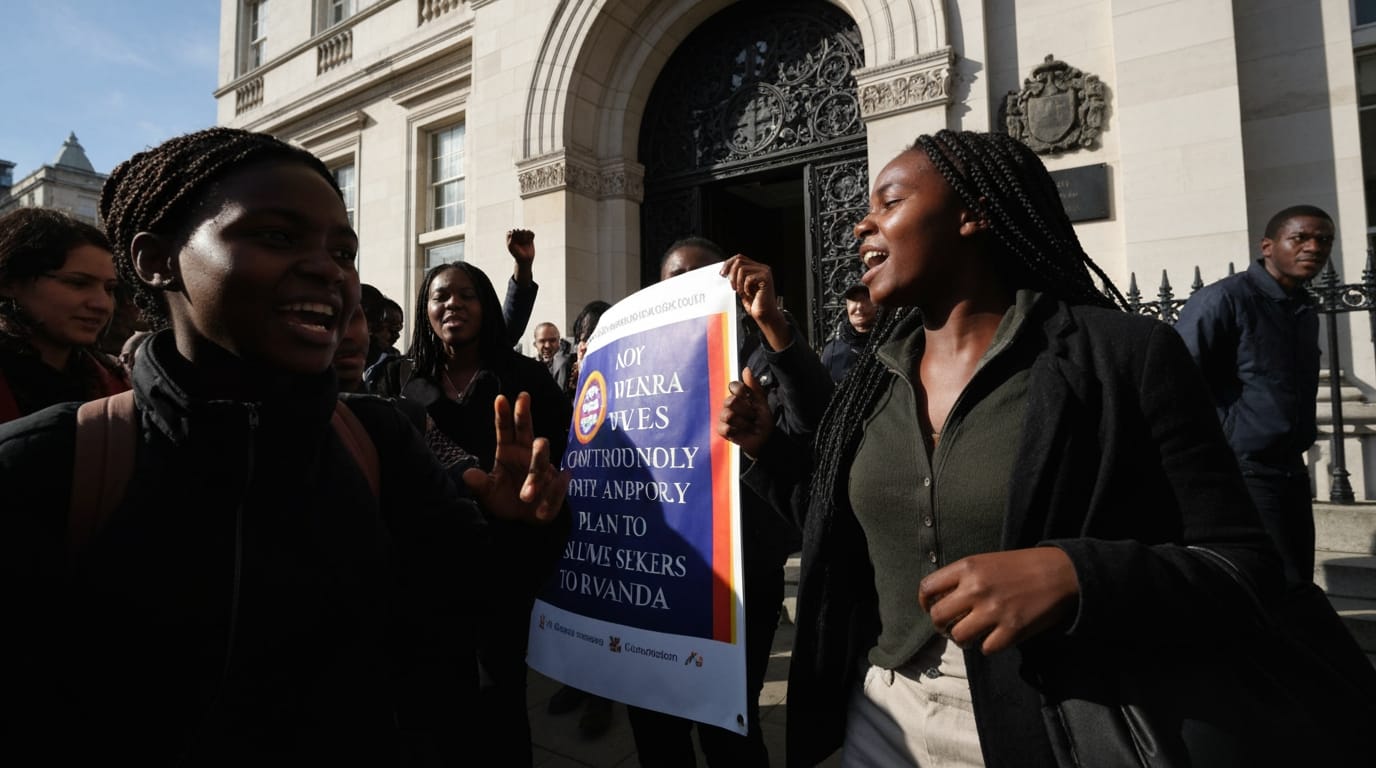
The Hague, Netherlands – The United Kingdom has emerged victorious from an international arbitration case, saving taxpayers more than £100 million after a court ruled against Rwanda's claim for compensation over a scrapped asylum deportation plan. The Permanent Court of Arbitration in The Hague announced today that it has rejected all financial claims made by the East African nation, bringing a definitive financial close to one of the most controversial immigration policies in recent British history.
The ruling, issued on May 15, 2026, and publicly confirmed today, concludes a protracted legal dispute that began after the UK's Labour government, under Prime Minister Sir Keir Starmer, abandoned the Conservative-era scheme in July 2024. Rwanda had sought substantial compensation, alleging a breach of the 2022 Migration and Economic Development Partnership (MEDP) agreement.
Arbitration Court Sides with Britain on Financial Claims
The three-day hearing in March at The Hague saw legal teams for both nations present their arguments before the international tribunal. Rwanda contended that the UK had breached the financial terms of the initial agreement, claiming it was owed over £100 million in outstanding payments, compensation, and interest. This sum was primarily for two years of projected costs and for preparations made by Kigali to host asylum seekers.
However, lawyers representing the UK successfully argued that the decision to scrap the plan was a foreseeable consequence of the change in government following the 2024 general election. They asserted it was "entirely logical" and "simple common sense" that no further payments would be due once the Labour Party, which had pledged to end the scheme, took power. Crucially, the court found by a majority that Rwanda had, in diplomatic notes exchanged in November 2024, agreed "to forgo any additional payments by the United Kingdom in April 2025 and April 2026." This agreement effectively negated Rwanda's later claims for these periods.
A spokesperson for the UK government hailed the ruling as a "clear vindication" that protects British taxpayers from further expenditure on a policy that had already cost hundreds of millions. Rwanda's government spokesperson, Yolanda Makolo, acknowledged the tribunal's decision, stating that Kigali respects the award and considers the matter concluded, despite one arbitrator issuing a dissenting opinion.
A Policy Plagued by Legal Hurdles
The origin of the controversial Rwanda asylum plan dates back to April 2022, when then-Prime Minister Boris Johnson's Conservative government announced its intention to send asylum seekers deemed to have arrived in the UK illegally to Rwanda. The stated aim was to deter perilous English Channel crossings by small boats and disrupt people-smuggling networks.
From its inception, the policy was met with fierce criticism from human rights organizations, legal experts, and opposition parties, leading to a barrage of legal challenges. The first scheduled deportation flight in June 2022 was famously grounded just minutes before takeoff due to an interim injunction from the European Court of Human Rights (ECHR). This intervention triggered a series of further legal battles in UK courts.
The most significant legal blow came in November 2023, when the UK Supreme Court unanimously ruled the policy unlawful. The highest court in the land concluded that Rwanda was not a safe country to which asylum seekers could be removed due to a substantial risk of "refoulement"—the potential for individuals to be returned to their home countries where they could face persecution or inhumane treatment. This ruling highlighted concerns about Rwanda's asylum system and its human rights record.
In response to the Supreme Court's judgment, the Conservative government, then under Prime Minister Rishi Sunak, attempted to circumvent the ruling by negotiating a new treaty with Rwanda and enacting the Safety of Rwanda (Asylum and Immigration) Act 2024. This legislation aimed to legally declare Rwanda a safe country and drastically limit avenues for legal challenges in UK courts. However, no asylum seekers were ever forcibly deported under the scheme.
The Political Shift and the Scheme's Demise
The fate of the Rwanda plan took a decisive turn with the UK general election in 2024. The Labour Party had made the outright cancellation of the scheme a central plank of its immigration platform. Upon taking office in July 2024, Prime Minister Sir Keir Starmer swiftly declared the plan "dead and buried," dismissing it as an "expensive and ineffective gimmick."
The decision to scrap the policy, while welcomed by critics, set the stage for the recent financial arbitration. Rwanda's Minister of Justice, Emmanuel Ugirashebuja, expressed that the UK had "not done Rwanda a courtesy of informing it in advance" of the cancellation, suggesting that Kigali leaders learned of the development through the media. He argued that Rwanda had incurred "significant costs" in its preparations, forming the basis of their compensation claim.
Before its eventual cancellation, the plan had already cost British taxpayers a substantial sum. Estimates indicate that the Conservative government had spent at least £290 million, with some figures suggesting the total expenditure reached over £700 million. Despite this considerable outlay, only four individuals voluntarily relocated to Rwanda under a separate voluntary removals program, with no forced deportations ever occurring.
A Costly Chapter Closes
The international court's ruling in The Hague draws a line under the financial liabilities of a policy that became a lightning rod for debate on immigration, human rights, and international law. For the UK government, the decision to avoid a nine-figure payout is a significant financial relief and a vindication of its legal strategy in the arbitration.
While the legal battles surrounding the scheme have now largely concluded, its legacy, particularly its significant cost and the political divisions it engendered, continues to be discussed. The current Labour government has shifted its focus to alternative strategies for managing migration, including measures aimed at targeting people-smuggling gangs, signaling a distinct departure from the controversial deportation agreement. The ruling marks a definitive end to one of the most tumultuous chapters in modern British immigration policy, sparing the public purse from further financial obligations related to a plan that ultimately failed to launch.


