Taiwan Opposition Leader Embarks on Critical U.S. Tour Amid Geopolitical Tensions
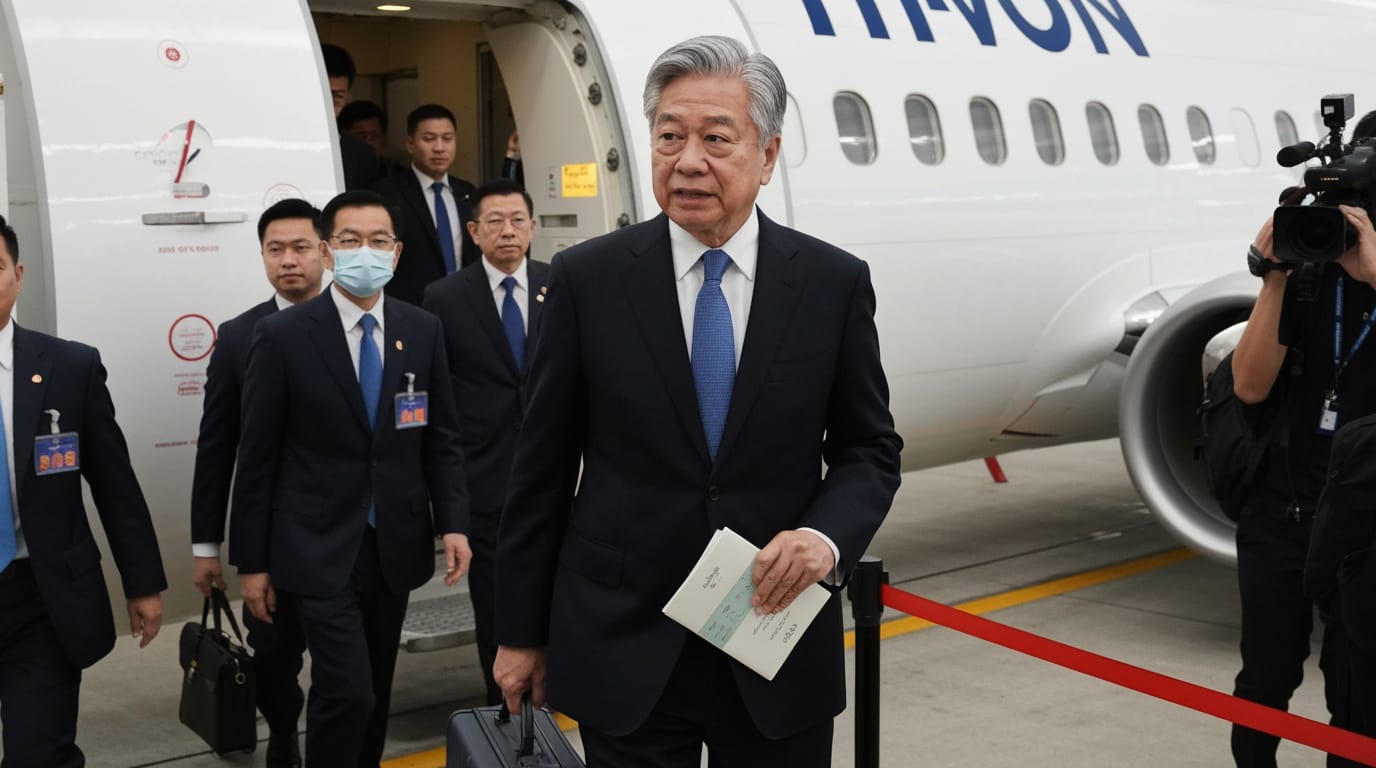
Taipei, Taiwan – June 1, 2026 – Cheng Li-wun, Chairwoman of Taiwan's main opposition Kuomintang (KMT) party, departed today for a pivotal two-week visit to the United States. The high-stakes trip aims to strengthen ties with Washington, reassure American policymakers of the KMT's commitment to regional stability, and engage with a range of U.S. officials and experts, all against a backdrop of escalating cross-strait tensions and domestic political maneuvering.
The visit by the leader of Taiwan's largest opposition party comes just weeks after her landmark meeting with Chinese President Xi Jinping in Beijing, a move that sparked both scrutiny and anticipation in international circles. Cheng's dual engagements with both Washington and Beijing underscore the delicate diplomatic balancing act Taiwan's political figures must perform as the island navigates its complex relationship with its democratic allies and its powerful authoritarian neighbor.
Navigating the Diplomatic Tightrope: A Quest for Trust and Understanding
Chairwoman Cheng's itinerary includes stops in several key U.S. cities, including San Francisco, Boston, New York, Washington D.C., and Los Angeles, with a focus on discussions in the nation's capital from June 9-12. The stated purpose of her tour is to engage with American lawmakers, officials, and policy experts on issues critical to Taiwan. Cheng has expressed a desire for the KMT to play a significant role in regional peace efforts and to "gain deeper trust" from the United States. Discussions are expected to center on peace and stability in the Taiwan Strait, regional security, and the future of U.S.-Taiwan relations.
A highly anticipated, though perhaps unlikely, aspect of her trip is Cheng's expressed "very willing[ness]" to meet U.S. President Donald Trump. While acknowledging her official position as KMT chairwoman rather than head of state, Cheng emphasized her readiness to engage with anyone "conducive to peace" and in a pivotal leadership position, drawing a parallel to her recent meeting with President Xi Jinping. Such a meeting, if it were to occur, would mark a historic moment, as no Taiwanese leader has met a sitting U.S. president since diplomatic relations between Taipei and Washington were severed in 1979. Beyond a potential high-level meeting, Cheng is scheduled to meet with both Republican and Democratic members of Congress, participate in closed-door discussions at prominent think tanks such as the Center for Strategic and International Studies (CSIS), the Council on Foreign Relations, and the Asia Society, and visit the American Institute in Taiwan (AIT) Washington headquarters. She is also slated to give talks at prestigious universities, including Harvard, MIT, and Columbia.
Domestic Political Currents and Geopolitical Implications
Cheng's visit carries substantial weight for Taiwan's domestic political landscape. The KMT, alongside its ally the Taiwan People's Party (TPP), currently holds a legislative majority, positioning them as significant players in shaping Taiwan's policy direction. This leverage was recently demonstrated when the KMT spearheaded a move to cut by one-third a government plan to spend an additional $40 billion on arms, a decision that included funds for drones and domestically-made equipment. This action has drawn scrutiny, particularly from the U.S., which has consistently advocated for Taiwan to boost its defense spending. Cheng's trip will likely involve her explaining this decision and seeking to alleviate American concerns regarding Taiwan's commitment to self-defense.
The geopolitical ramifications of Cheng's visit are equally significant. Her recent meeting with President Xi Jinping, a rare occurrence for a KMT leader, signaled the party's intent to maintain communication channels with Beijing. This approach contrasts with the current Democratic Progressive Party (DPP) government under President Lai Ching-te, whom China regards as a "separatist" and whose repeated offers for dialogue have been rebuffed by Beijing. President Lai rejects Beijing's sovereignty claims, asserting that only the people of Taiwan can decide their future. The KMT, while affirming Taiwan's democratic identity, has historically advocated for closer economic and cultural ties with mainland China and adheres to the "1992 consensus," which acknowledges "one China" but allows for differing interpretations. Cheng's visit to the U.S. provides an opportunity for the KMT to present its nuanced cross-strait policy to a key international partner and to articulate how it believes peace and stability can be maintained in the region. The visit is particularly relevant given Cheng's previous expressions of satisfaction with the improving China-U.S. ties following a recent meeting between Trump and Xi.
Precedents and Challenges for the Opposition
Cheng Li-wun is not the first Taiwanese opposition leader to undertake such a sensitive diplomatic mission. Her predecessor as KMT Chair, Eric Chu, made a similar trip to the U.S. in 2022, which included the reopening of the KMT's representative office in Washington D.C.. More recently, in January 2026, KC Huang, Chairman of the Taiwan People's Party (TPP), also led a delegation to Washington, D.C., where he met with various U.S. government agencies, including the Office of the United States Trade Representative and the Department of State. Huang's trip focused on conveying concerns about Taiwan's defense budget, particularly its lack of transparency and legislative oversight. These prior visits highlight a recurring pattern of Taiwanese opposition parties engaging with Washington to convey their perspectives and influence U.S. policy towards Taiwan.
However, Cheng's trip is not without its challenges. Observers anticipate that she will face skepticism in Washington, especially concerning the KMT's stance on defense spending and its interactions with Beijing. Some analysts note that the KMT has struggled to compete with the DPP for influence on Capitol Hill in recent years. Cheng's task will be to convincingly articulate the KMT's vision for Taiwan's future, its approach to cross-strait relations, and its commitment to bolstering Taiwan's security in a way that resonates with American policymakers and strengthens U.S. confidence in the island's democratic resilience.
Conclusion: A Balancing Act for Taiwan's Future
Chairwoman Cheng Li-wun's visit to the United States represents a critical juncture for Taiwan's opposition and its international standing. By engaging directly with U.S. leaders and experts, the KMT aims to project an image of responsible governance and a commitment to peace and stability. However, the delicate balance between maintaining dialogue with Beijing and securing Washington's unwavering support for Taiwan's security will be a central challenge. The outcomes of this two-week tour will be closely watched in Taipei, Beijing, and Washington, as they could significantly influence the geopolitical dynamics of the Indo-Pacific region and the future trajectory of Taiwan's international relations.


