Hungary on the Brink: New PM Magyar Moves to Oust President, Signaling Radical Overhaul
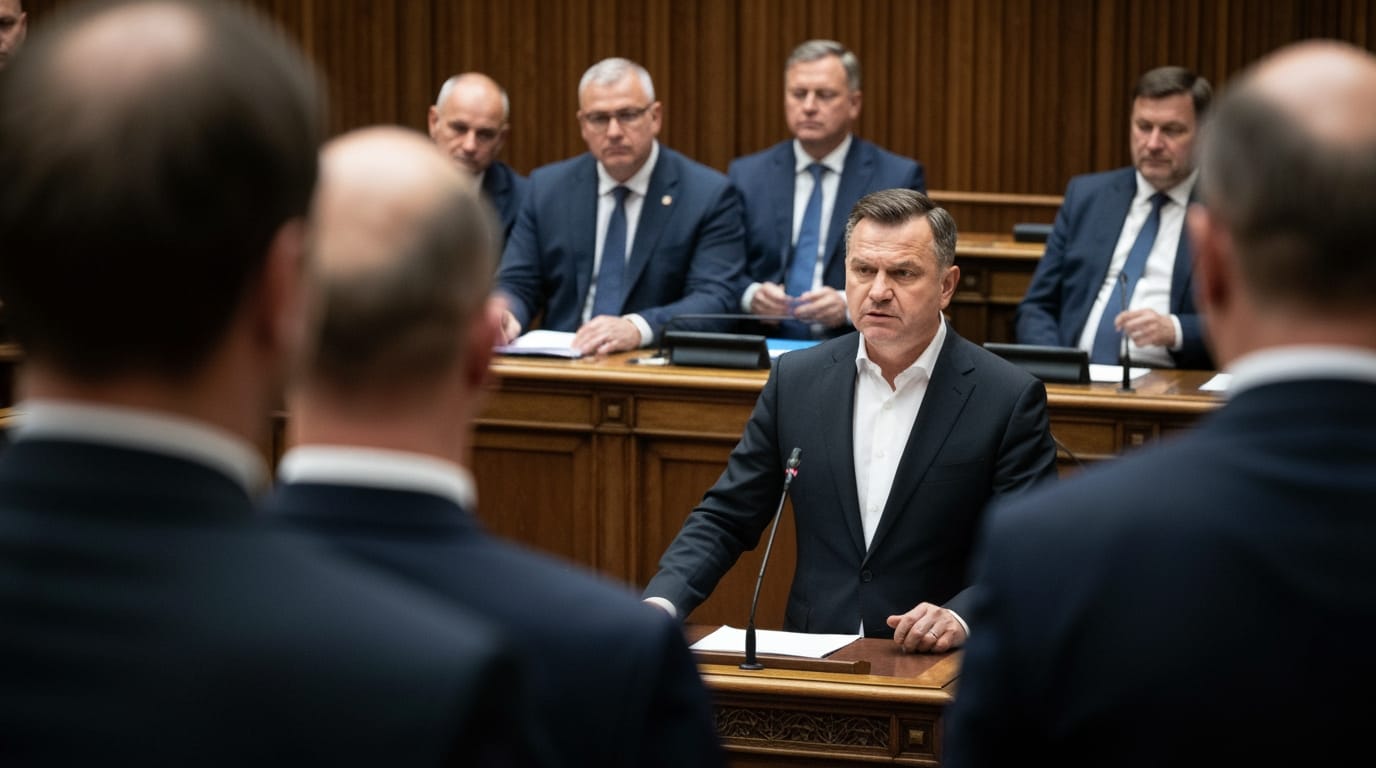
BUDAPEST – Hungary finds itself at a pivotal political juncture as newly installed Prime Minister Péter Magyar embarks on an ambitious and potentially disruptive campaign to remove President Tamás Sulyok from office. Less than a month after leading his Tisza Party to a historic landslide victory that ended Viktor Orbán's 16-year premiership, Magyar is leveraging his parliamentary supermajority to dismantle the entrenched political system he characterizes as corrupt and anti-democratic. The unprecedented move against the largely ceremonial head of state signals a radical departure from the previous administration and promises a period of intense constitutional and institutional reform in the Central European nation.
A Seismic Shift: Magyar's Ascent to Power
The political landscape of Hungary underwent a dramatic transformation in April 2026, when Péter Magyar, a former Fidesz insider, led the Respect and Freedom (Tisza) Party to an overwhelming victory in the parliamentary elections. The Tisza Party secured 141 of 199 seats, achieving a two-thirds supermajority that empowers the new government to amend the constitution at will. This electoral triumph marked the most significant political upheaval in Hungary since Orbán's return to power in 2010, effectively ending his long-standing rule. Magyar, who assumed office as Prime Minister on May 9, 2026, campaigned primarily on an anti-corruption platform and a pledge to restore democratic institutions and rule of law. His rapid rise from a disillusioned former government official to the country's top political leader has been widely described as a "political earthquake". The high voter turnout, approaching 79%, underscored a strong public desire for change.
Magyar's political breakthrough is intimately tied to the 2024 "pardon scandal" that rocked Hungary. In February 2024, then-President Katalin Novák resigned after it emerged she had pardoned a man convicted of helping to cover up a child sexual abuse case at a state-run children's home. The scandal also led to the resignation of Justice Minister Judit Varga, Magyar's former wife, who had countersigned the pardon. Magyar publicly denounced the Fidesz government, accusing them of scapegoating women and asserting that the system benefited political allies and family members. His outspoken criticism and subsequent departure from all state-owned company positions positioned him as a credible insider challenging the Orbán establishment. He quickly gained significant public support, consolidating a new political platform for those dissatisfied with both the government and the traditional opposition parties.
The Presidential Confrontation: Sulyok Under Pressure
The current political storm centers on President Tamás Sulyok, who was elected to the largely ceremonial post in February 2024, following Novák's resignation. Prime Minister Magyar has repeatedly called for Sulyok's resignation, accusing him of being an "Orbán puppet" who failed to uphold national unity and served the interests of the previous government. On Monday, June 1, 2026, following a meeting with President Sulyok, Magyar confirmed that the President had refused to step down. In response, Magyar announced his government's intention to initiate legal proceedings and constitutional amendments to remove Sulyok from office. He stated that this legislative process, which he anticipates will take about a month, aims to "remove all the puppets" appointed by Orbán over the past 16 years.
President Sulyok, a constitutional lawyer by training and a former head of the Constitutional Court, has defended his position, emphasizing his allegiance to constitutional norms and his role as a check on executive power. He has argued that calls for his resignation are "politically motivated, therefore constitutionally irrelevant" and could cause "worrisome" problems within the country. Sulyok has also sought a legal assessment of the conflict from the Venice Commission, an advisory body of legal experts from the Council of Europe. Despite his refusal to resign, Sulyok has expressed readiness to cooperate with Magyar's government, including signing necessary laws to unlock EU funds previously frozen due to rule of law concerns under Orbán.
Constitutional Battle and Future Implications
The Hungarian presidency, while largely ceremonial, holds significant constitutional powers. The President can refer laws back to parliament for reconsideration or directly to the Constitutional Court for review. This ability could potentially delay or impede the new government's ambitious reform agenda. Magyar's government views Sulyok, a Fidesz appointee, as a potential obstacle, particularly given that the Constitutional Court itself is perceived to be stacked with Orbán loyalists. The proposed constitutional amendments to facilitate Sulyok's removal are seen as a direct assertion of the new government's mandate to dismantle the institutional legacy of the previous administration.
This constitutional showdown is more than just a power struggle; it represents a fundamental redefinition of Hungary's political system. Prime Minister Magyar has pledged a comprehensive sweep of state institutions to eliminate the "state capture" that characterized Orbán's rule. His government plans to establish investigative committees to probe alleged corruption and abuses of power by the previous government. Beyond the presidency, Magyar's reform agenda includes term-limiting the prime minister to two terms, dissolving the Sovereignty Protection Office established by Orbán, and reducing political privileges for officeholders. The new government also aims to improve relations with the European Union, signaling a more pro-European stance and a potential path to adopting the Euro.
A Nation Awaits its New Trajectory
As Péter Magyar's government presses forward with its plan to remove President Sulyok, Hungary is bracing for a period of significant political and institutional change. The confrontation underscores Magyar's determination to fulfill his electoral promises of a comprehensive overhaul, moving beyond the "old left-right divide" and establishing a more transparent, accountable, and pro-European Hungary. While the immediate future promises constitutional battles and intense political maneuvering, the long-term implications could redefine Hungary's democratic framework and its standing within the European Union. The outcome of this unprecedented move against the presidency will be a critical indicator of the new government's ability to navigate complex legal and political challenges and reshape the nation's trajectory.


