Gaza's Deadly Deluge: An "Utterly Preventable Tragedy," Amnesty International Charges
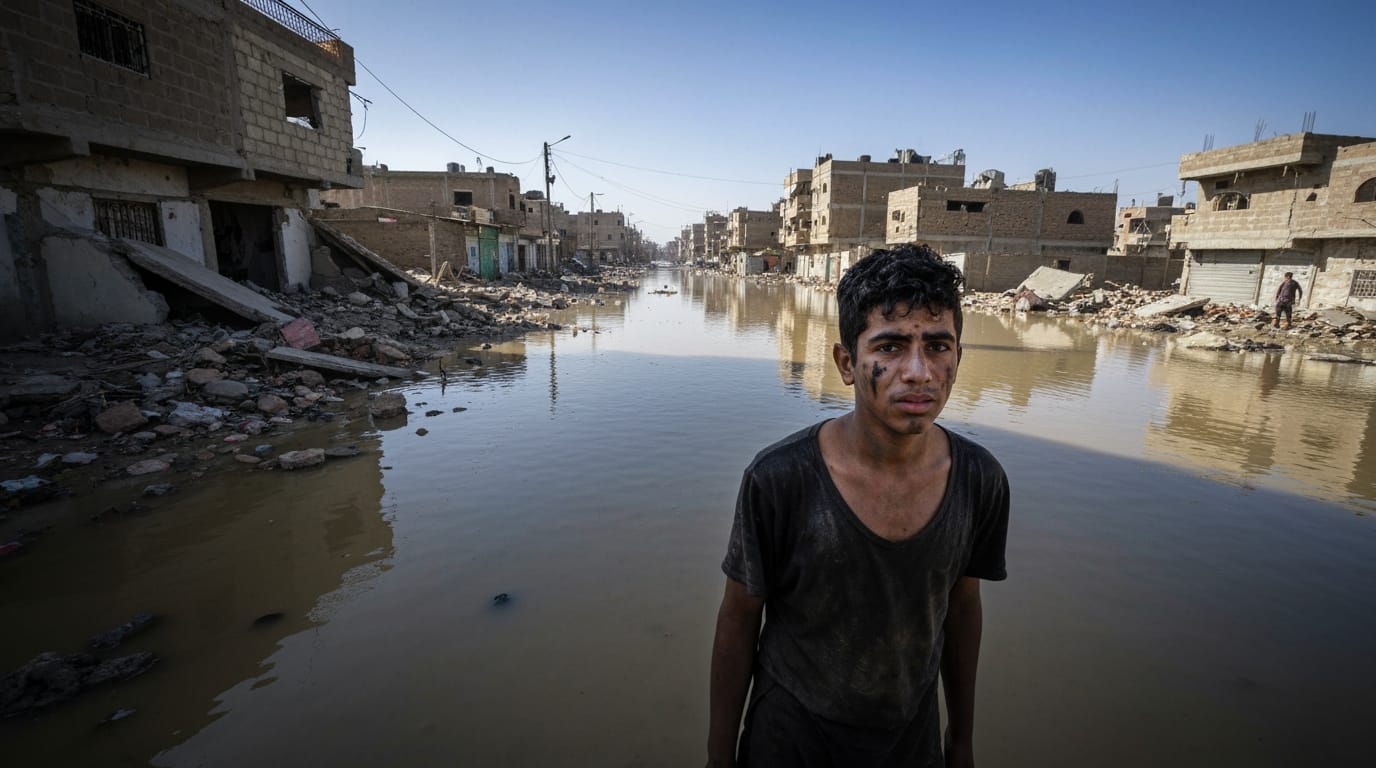
GAZA STRIP — Recent torrential rains and severe storms have unleashed a devastating humanitarian crisis across the occupied Gaza Strip, triggering widespread flooding, collapsing structures, and claiming at least 16 lives. In the aftermath of this calamity, human rights organization Amnesty International has issued a scathing condemnation, labeling the deaths an "utterly preventable tragedy" and directly attributing the devastation to Israel's protracted blockade and deliberate restrictions on essential aid and repair materials.
The unfolding disaster, exacerbated by a population already struggling with years of conflict and displacement, has plunged Gaza into a deeper state of emergency, highlighting the catastrophic fragility of its infrastructure. As thousands of makeshift shelters and tents were deluged, leaving families exposed to freezing conditions, and damaged buildings gave way, the international community faces urgent calls for accountability and immediate intervention.
The Deluge and Its Deadly Toll
The heavy rainfall and fierce winds that swept through the Gaza Strip around mid-December 2025 transformed an already dire humanitarian situation into a deadly catastrophe. Reports indicate at least 16 fatalities, with a significant number occurring due to buildings, already weakened by past conflicts, collapsing under the strain of the relentless downpour. On December 12 alone, nine individuals were crushed to death when three separate structures gave way in areas including Bir al-Naaja, Jabalia refugee camp, and Sheikh Radwan. An earlier incident on December 11 saw another victim die from a collapsed building in al-Shati refugee camp, bringing the confirmed toll to ten from structural failures. Among the tragic losses was a two-week-old baby, who reportedly succumbed to hypothermia, a stark indicator of the harsh, untenable living conditions faced by Gaza's most vulnerable.
Thousands of tents and temporary shelters, housing a vast displaced population, were inundated, leaving families without even the most basic protection against the elements. Over 700 tents were damaged or completely submerged, while at least 40 designated emergency shelters were directly impacted by severe flooding. The United Nations Office for the Coordination of Humanitarian Affairs (OCHA) reported that the storm aggravated the already desperate circumstances for over 79,000 individuals sheltering in more than 100 UNRWA schools and other displacement sites, many of which are ill-equipped to withstand such weather events. The scenes emerging from Gaza portray a population on the brink, where the basic human rights to shelter, safety, and dignity have been severely eroded.
Amnesty's Scathing Condemnation
Amnesty International's assessment leaves little room for ambiguity, asserting that the recent deaths and widespread destruction were not merely an act of nature but a foreseeable outcome of deliberate policy choices. Erika Guevara Rosas, Amnesty International's Senior Director for Research, Advocacy, Policy, and Campaigns, explicitly stated that the "devastating scenes of flooded tents and collapsed buildings in Gaza... cannot be blamed solely on 'bad weather'." Instead, Rosas contended, they are "the foreseeable consequences of Israel's ongoing genocide and deliberate policy of blocking the entry of shelter and repair materials for the displaced."
The human rights group’s report, published in December 2025, accused Israeli authorities of systematically blocking humanitarian aid and implementing policies that deliberately inflict conditions of life calculated to bring about the physical destruction of Palestinians in Gaza—an act prohibited under the Genocide Convention. Amnesty highlighted that Israel has permitted only "extremely limited supplies" to enter the enclave, thereby exacerbating the vulnerability of a population already reeling from years of conflict and severe restrictions. The organization's findings underscore the complete collapse of basic services and the dire humanitarian situation, noting that thousands of civilians have died from preventable causes due to these actions.
Gaza's Crumbling Foundations: A Decades-Long Crisis
The recent floods did not just expose a temporary vulnerability; they laid bare the profound degradation of Gaza's essential civilian infrastructure, a crisis years in the making. For nearly two decades, the Gaza Strip has been under an Israeli blockade, significantly restricting the movement of people and goods, including critical construction materials. This blockade, intensified since 2007, has systematically hindered the construction, repair, and upgrade of homes, water systems, sanitation facilities, and power infrastructure, despite rapid population growth and recurrent hostilities.
Current assessments paint a grim picture: Gaza's vital infrastructure, from its healthcare to its water and sanitation systems, has been decimated, particularly over the past year. Water production stands at merely 25 percent of its pre-October 2023 levels, with only two of three desalination plants functioning intermittently. Consequently, over 95 percent of Gaza's water is deemed unsafe for drinking, leading to an alarming resurgence of waterborne diseases, including polio, which had been absent for 25 years. The lack of proper sanitation has resulted in an accumulation of an estimated 395,000 tons of solid waste and sewage seeping into drinking water sources. Furthermore, a staggering 68 percent of the road network has been destroyed, impeding crucial access for humanitarian aid and emergency services. This chronic state of disrepair created a highly susceptible environment where even moderate rainfall could trigger extensive damage and loss of life.
The Blockade's Grip: Restrictions on Aid and Reconstruction
Central to Amnesty International's indictment is the ongoing Israeli blockade, which governs the entry of goods into Gaza. Many items, including crucial construction materials, are classified as "dual-use" – meaning they can have both civilian and military applications – and their entry is severely restricted. This policy has critically hampered efforts to rebuild and maintain Gaza's infrastructure, leaving homes and public facilities vulnerable to collapse.
Even following a recent ceasefire, humanitarian access remains heavily constrained. OCHA reports significant obstacles, including insecurity, complex customs clearance procedures, a limited number of partners authorized to bring cargo into Gaza, and frequent delays or denials of cargo at crossing points. The scarcity of shelter materials is particularly acute; despite an estimated 1.28 million people in urgent need of shelter assistance, fewer than 50,000 tents have been allowed into Gaza due to what the UN describes as "major limitations" imposed by the Israeli government. Aid organizations, such as Save the Children, confirm their inability to bring in humanitarian supplies, stating that the limited UN aid allowed falls far short of meeting the population's immense needs. This persistent bottleneck on vital supplies has left Gaza's population with virtually no means to protect themselves against natural disasters, let alone rebuild their shattered lives.
Calls for Accountability and Urgent Action
The "utterly preventable" deaths and widespread destruction caused by the recent floods have amplified international calls for urgent action and accountability. Amnesty International has urged the global community to exert pressure on Israel to immediately lift the blockade on Gaza and remove all restrictions on the entry of life-saving supplies, including essential shelter materials, nutritious food, and medical aid. The organization stressed that after multiple displacements, the destruction or damage of at least 81 percent of structures, and the designation of nearly 58 percent of Gaza's total area as no-go zones, the overwhelming majority of Palestinians are left in dilapidated tents or damaged shelters, utterly exposed.
The United Nations has consistently underscored the catastrophic humanitarian conditions, with infrastructure damage described as "catastrophic." UN officials have appealed to all parties to respect international humanitarian law and ensure the full, unimpeded entry of assistance. The events of mid-December serve as a grim reminder of the human cost when critical infrastructure is systematically undermined and humanitarian aid is deliberately restricted. As winter conditions intensify, the international community faces an imperative to act decisively, not only to provide immediate relief but also to address the systemic issues that continue to make such tragedies inevitable in the Gaza Strip.


