Gaza's Shattered Campuses Force Academic Exodus, Leaving Many in Desperate Limbo
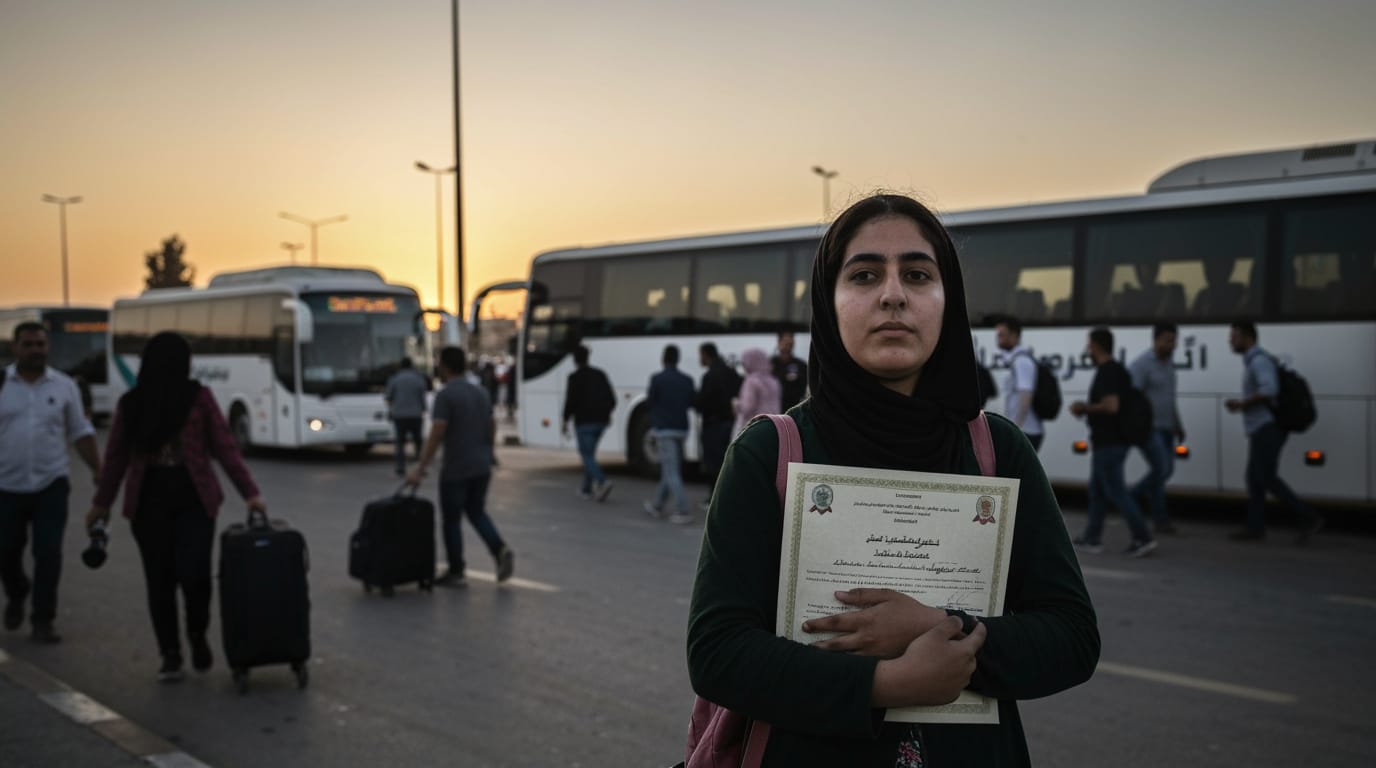
GAZA STRIP — As the educational infrastructure in the Gaza Strip lies in ruins, thousands of Palestinian students face a stark choice: abandon their academic dreams or embark on a perilous journey to continue their studies abroad. While a fortunate few navigate the complex and often opaque channels out of the besieged enclave, a significant number remain trapped, their futures hanging precariously in a state of indefinite suspension, highlighting a profound humanitarian and intellectual crisis.
The relentless conflict has decimated Gaza's universities, turning vibrant centers of learning into rubble and extinguishing the aspirations of a generation. With most academic institutions destroyed, professors killed, and basic necessities like electricity and internet access severely limited, the pursuit of higher education within Gaza has become virtually impossible. This catastrophic collapse has spurred a desperate quest for opportunities beyond Gaza's borders, yet the path to academic sanctuary is fraught with bureaucratic hurdles, prolonged delays, and heartbreaking uncertainty.
Education Under Siege: A Generation's Future in Ruins
The scale of destruction to Gaza's educational system is immense, effectively dismantling the foundation for future generations. "Most universities here in Gaza have been destroyed, and my professors and most supervisors here have been killed. So, there is no good place to continue your education," stated Shima'a Arafa, a 24-year-old nursing science graduate who was accepted into a Master of Science in Epidemiology program at the University of Alberta. Her words underscore the grim reality facing students who had planned to pursue advanced degrees within their homeland. The United Nations Children's Fund (UNICEF) reports that Gaza's education system, already struggling under a nearly two-decade blockade, is now on the brink of complete collapse following the recent conflict. This systemic devastation means that students like Arafa, who aspire to rebuild Gaza's healthcare system, find themselves without any local avenues to gain the necessary expertise. The physical destruction is compounded by the loss of academic staff, further eroding any immediate prospects for educational revival.
The Hope of Departure, Plagued by Bureaucracy
Despite the devastation, many Gazan students have demonstrated extraordinary resilience, securing admissions and even full scholarships to prestigious universities worldwide. Canada, in particular, has seen a significant number of applications. According to the Palestinian Students and Scholars at Risk Network, approximately 130 master's and doctoral students in Gaza have been accepted to over 25 Canadian post-secondary institutions. However, the promise of a new academic beginning is frequently stalled by an arduous and often inexplicable exit process.
Students like Shima'a Arafa face monumental obstacles, including the inability to provide required biometric data necessary for visa processing due to the ongoing conflict. Even those who manage to leave Gaza, such as Abdullah Hassan, a 30-year-old doctoral candidate accepted by the University of Toronto, find themselves caught in a bureaucratic quagmire. Hassan, who left Gaza more than three years ago and completed his biometrics and medical exams, has been waiting for Canadian approval for over nine months, leading to missed semesters and profound frustration. He, like many others, expresses a feeling of discrimination against Palestinian students.
Trapped in Uncertainty: The Psychological Toll of Limbo
For every student who manages to secure an acceptance abroad, countless others remain mired in a desperate state of uncertainty, their dreams put on indefinite hold. The psychological toll of this limbo is immense, affecting not only those still within Gaza but also those who have left but cannot move forward. Logain Hamdan, a computer engineering student with a scholarship to a UK university, described the "crushing force" of seeing others evacuated while her own name remains missing from lists, despite meeting all eligibility criteria. Her scholarship, and those of at least eight other students known to her, are now at risk due to "unexplained and inconsistent delays in the evacuation process."
Tragically, some students have paid the ultimate price while waiting. Dalia and Sally, twins accepted to the University of Waterloo in Canada, were killed by an Israeli airstrike in December 2024. Their deaths serve as a stark reminder of the extreme risks faced by those unable to escape. The constant threat of violence, coupled with the erosion of their educational prospects, leaves many students grappling with despair and a profound sense of injustice. The inability to plan for the future, coupled with the ongoing trauma, creates an environment where mental health is severely impacted.
A Fragmented Global Response and Calls for Clarity
While the plight of Gazan students has drawn international attention, the global response to facilitate their safe passage and continued education has been fragmented. Countries like the United Kingdom, Italy, Ireland, and France have been more successful in evacuating Gazan students, offering a pathway for some to escape the conflict and pursue their studies. For instance, 34 students were evacuated to the UK in September 2025 alone.
However, the perceived inconsistency in processing applications and facilitating departures, particularly concerning countries like Canada, has led to increased scrutiny. Critics point to prolonged visa delays attributed to security checks and evacuation challenges, questioning why other nations have managed to overcome similar hurdles. The lack of transparency in evacuation lists and permit systems exacerbates the frustration, leaving students and their advocates to wonder about the criteria and decision-making processes. As one student lamented, "Nobody, not the universities, MPs, or even the solicitors who know the procedures best, can answer these questions. The process is opaque..."
The crisis facing Gazan students represents more than just individual tragedies; it signifies a potential intellectual void for a region that desperately needs educated professionals to rebuild. The continuous delay in facilitating their education not only jeopardizes their personal futures but also hinders the long-term recovery and development of Gaza. Without a concerted and coordinated international effort to provide clear, consistent, and swift pathways for these students, Gaza risks losing an entire generation of its brightest minds, further deepening the scars of conflict and making future reconstruction an even more formidable challenge.


