Germany's Far-Right AfD Intensifies Push for Power Amidst Rising Electoral Fortunes
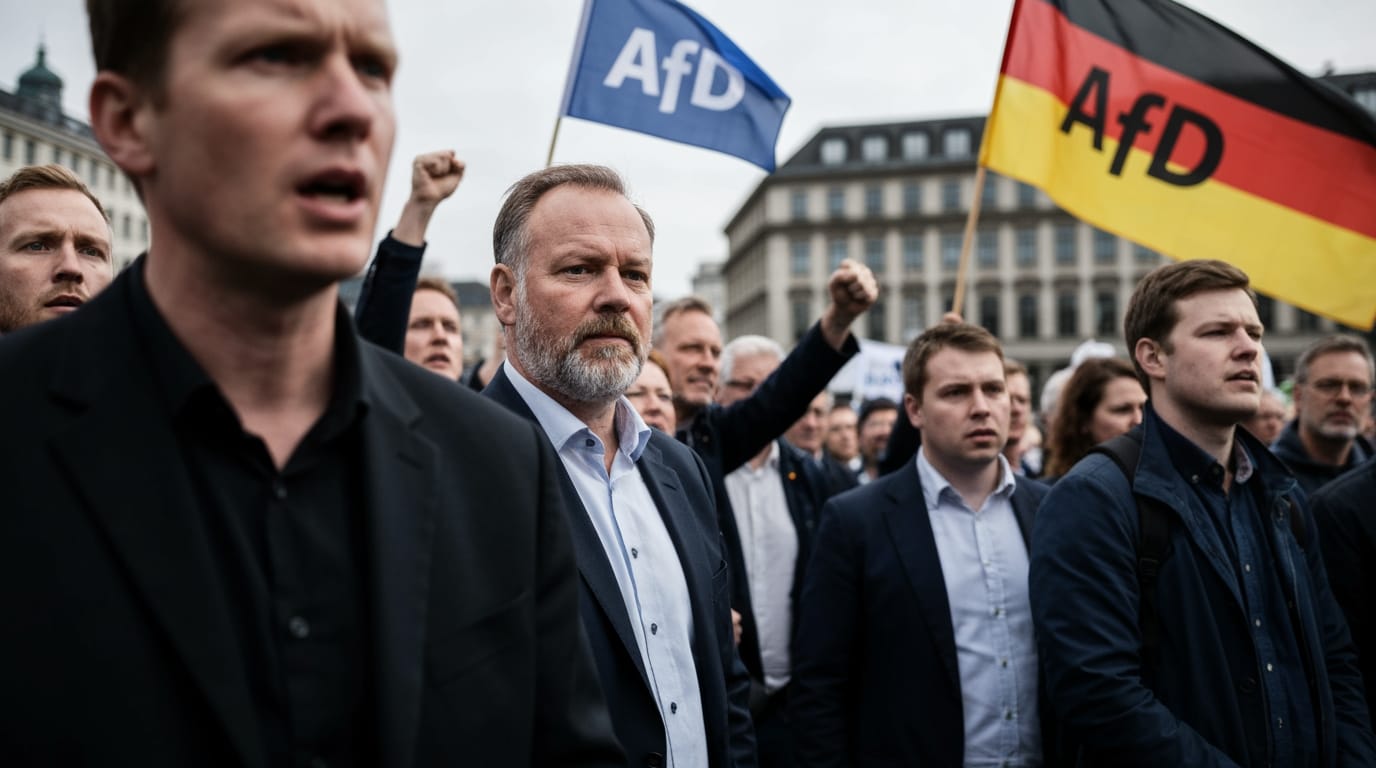
Berlin, Germany – The Alternative for Germany (AfD), once largely dismissed as a protest party, has significantly escalated its ambition to govern, leveraging a surge in public support and recent electoral successes to assert itself as a formidable force in German politics. With national opinion polls placing the far-right party at unprecedented levels of support, surpassing mainstream rivals, the AfD is actively positioning itself to move beyond opposition and into positions of executive power at both state and, potentially, federal levels. This assertive shift marks a critical juncture for Germany's political landscape, challenging long-standing democratic norms and sparking widespread concern.
The AfD's calculated trajectory towards governance is underscored by its explicit rhetoric and strategic focus on upcoming state elections. Party co-leader Alice Weidel has declared 2026 a "year of destiny for AfD," a sentiment echoed by the party's intensified campaign efforts and internal strategizing aimed at translating popularity into tangible political control. This bold declaration comes amidst a climate of growing discontent with established parties, economic uncertainties, and persistent debates over immigration, issues the AfD has skillfully exploited to broaden its appeal across the nation.
The AfD's Meteoric Ascent and Strategic Evolution
Founded in 2013 primarily as a Eurosceptic movement opposing eurozone bailouts, the AfD underwent a significant ideological transformation following the 2015 refugee crisis. The party pivoted its focus to immigration, Islam, and national identity, tapping into populist and xenophobic sentiments that fueled its rapid expansion. This shift propelled the AfD into the Bundestag in 2017, marking its entry into federal parliament.
While experiencing a temporary dip in the 2021 federal election, the party rebounded dramatically in the 2025 federal election, securing 20.8% of the vote and becoming the second-largest party in the Bundestag. This marked the best result for a far-right party in postwar Germany, demonstrating a widening base of support. Recent national polls further illustrate this trend, with a YouGov poll in June 2026 showing the AfD leading with 29% — an eight-point lead over the next closest party, the CDU/CSU, and its largest lead ever recorded.
Beyond national figures, the AfD has achieved notable successes at the state and local levels. In September 2024, the party became the first far-right party since the Nazi era to win a plurality of seats in a state election, taking 33% in Thuringia. Concurrently, it garnered around 30% of the vote in Saxony and Brandenburg. The party also tripled its support in North Rhine-Westphalia local elections in September 2025, reaching 16.5%. In December 2023, the AfD saw its first mayor elected in Pirna, Saxony, and its first head of a county administration in Thuringia. Looking ahead, the party is polling at 41% in Saxony-Anhalt and aims for outright victory in the September 2026 state election, with aspirations of becoming the largest party in Mecklenburg-Vorpommern as well. These regional breakthroughs are seen by the party as crucial steps towards achieving national power.
Core Ideologies and Policy Frameworks
The AfD's political platform is built upon several foundational pillars, primarily characterized by stringent stances on immigration, European Union policy, and a distinct foreign policy orientation. A central tenet is radical immigration control, including calls for "re-migration" initiatives that would involve the mass deportation of foreign nationals and the rejection of asylum applications. The party's rhetoric frequently includes anti-Islam sentiments, advocating for bans on "Islamic symbols of power" like minarets and full-body veils, reflecting its broader ethno-nationalist program. Immigration is consistently identified as the most pressing issue by AfD voters.
On the European front, the AfD maintains a deeply Eurosceptic stance, advocating for a "Europe of Nation States" and the abolition of the euro in favor of reintroducing the German mark. It explicitly rejects bailouts for EU member countries, a position that harks back to its founding principles.
In foreign policy, the AfD is known for its pro-Russian sympathies, questioning Germany's NATO commitments and advocating for closer ties with Moscow. Leaders have openly expressed a desire for a return to cheaper energy imports from Russia, a stance that has drawn criticism and raised concerns among other political actors about the party's alignment.
Domestically, the party champions direct democracy modeled after Switzerland, seeks to limit the influence of established political parties, and calls for strengthened law enforcement. Its economic proposals include a reversal of current energy transitions, suggesting the dismantling of existing wind turbines and a return to nuclear power.
The AfD's political position has been officially recognized as "far-right" and "right-wing populist," with parts of the party identified as "völkisch nationalist." In 2025, the Federal Office for the Protection of the Constitution classified the AfD as a "confirmed right-wing extremist endeavor," enabling increased surveillance, although this classification was temporarily suspended by a court injunction. Critics frequently accuse the party of promoting racist, Islamophobic, and anti-Semitic attitudes.
The "Firewall" Under Threat and Societal Reactions
The AfD's escalating pursuit of power has intensified the debate surrounding Germany's "firewall," the long-standing consensus among mainstream parties to refuse any form of coalition or cooperation with the far-right. While this firewall has largely held, it has shown signs of strain. In a notable incident, CDU leader Friedrich Merz faced significant backlash after his party relied on AfD support to pass a motion on asylum policy in the Bundestag, an act some interpreted as undermining the firewall.
The AfD's rise has also triggered robust public opposition. Tens of thousands of protesters, representing unions, civil society groups, and left-wing parties, have repeatedly demonstrated against AfD congresses, blocking roads and expressing profound fears about the party's growing influence. These protests highlight deep societal divisions and a strong resolve among a significant portion of the population to resist the AfD's political agenda.
Concerns about the AfD entering government extend to the federal level. German Defence Minister Boris Pistorius stated in July 2026 that the federal government is contemplating withholding sensitive information from state ministers in administrations formed by the AfD, citing worries about potential information leaks to far-right circles or even Russia. Opponents also express apprehension about the AfD potentially replacing large numbers of civil servants in state administrations, which could compromise institutional integrity.
Despite its surging popularity, the AfD still faces considerable hurdles to forming stable governments. The unwavering refusal of other major parties to cooperate creates significant coalition challenges, especially at the federal level. Moreover, the party's radical positions have led to its isolation within the European Parliament. However, the ongoing struggles of the current government, including internal infighting and a sluggish economy, continue to create fertile ground for the AfD's narrative of discontent and its promise of a "different Germany."
Conclusion: A Redefined Political Landscape
The Alternative for Germany's deliberate and increasingly successful bid to govern is fundamentally reshaping German politics. Its consistent electoral gains, particularly in the eastern states, and its leading position in national polls underscore a significant shift in voter sentiment and a growing appeal for its populist and nationalist platform. While mainstream parties grapple with how to counter this rise and uphold the "firewall" against the far-right, the AfD's strategy for state-level power accumulation is designed to erode this resistance and normalize its presence in executive roles.
The implications of an AfD involvement in governance, even at the state level, are profound, ranging from potential domestic security concerns to shifts in Germany's foreign policy alignment. As Germany navigates this evolving political landscape, the AfD's continued efforts to "double down" on its governance ambitions ensure that the debate over its role and the future direction of the nation will remain at the forefront of public discourse. The coming months, particularly with critical state elections on the horizon, will serve as crucial indicators of whether the AfD can truly break through the remaining barriers to power and redefine Germany's political identity.


