Geopolitical Earthquake in Caracas: Maduro's Downfall Reshapes US-China Rivalry in Latin America
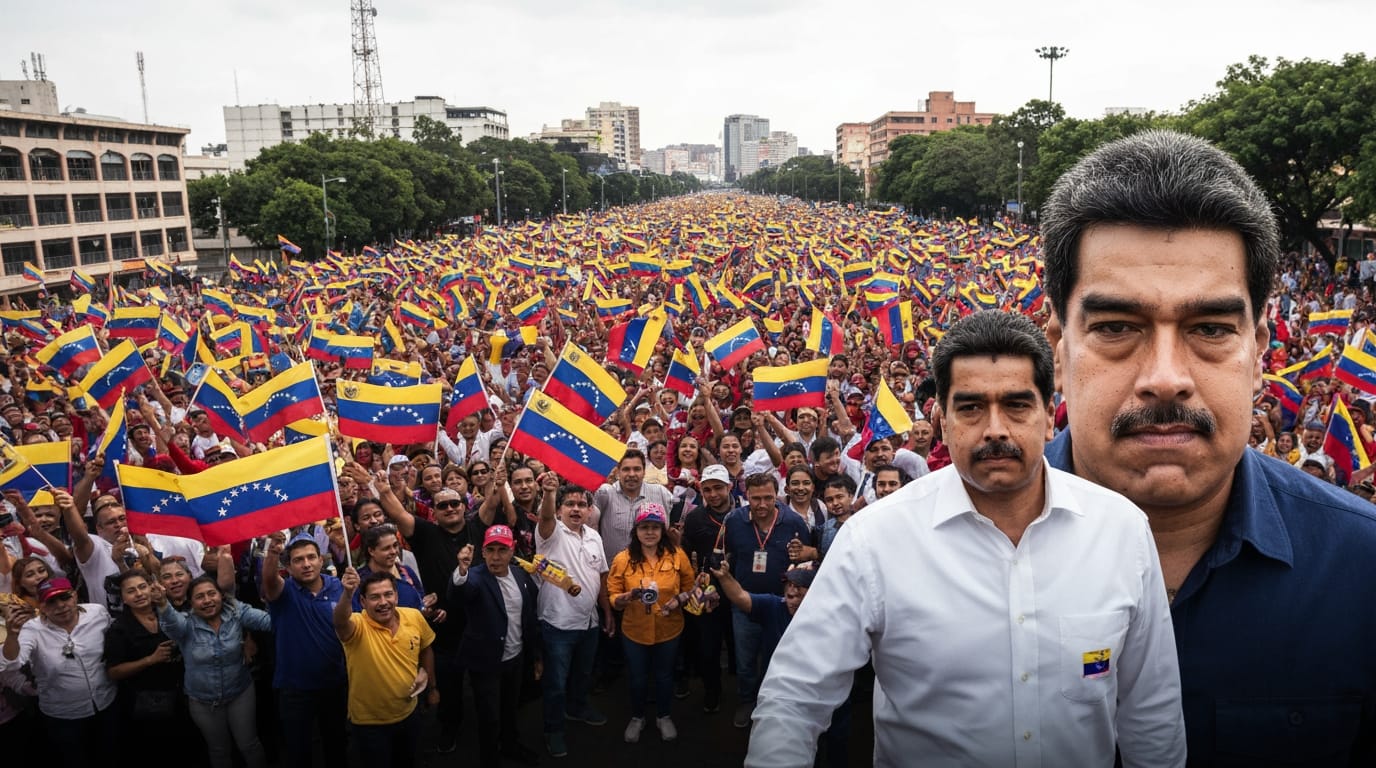
The swift and dramatic removal of Venezuelan President Nicolás Maduro and his wife, Cilia Flores, in a U.S. military operation on January 3, 2026, has sent seismic waves through the complex geopolitical landscape of Latin America. While the United States celebrates the detention of a long-standing adversary, this pivotal event unexpectedly deals China new, albeit complicated, cards in its intensifying rivalry with Washington for influence in the resource-rich region. The vacuum left by Maduro's regime, a long-time Chinese ally, forces Beijing to recalibrate its significant economic and strategic investments, presenting both immediate risks and unforeseen opportunities to solidify its long-term presence in a hemisphere traditionally dominated by the U.S..
Venezuela: A Proxy in the Great Power Competition
Venezuela, boasting the world's largest proven oil reserves—an estimated 303 billion barrels—has long been a critical player in global energy markets and a strategic prize in the broader competition between world powers. Under the Chavista regimes of Hugo Chávez and later Nicolás Maduro, Venezuela cultivated close ties with China, leveraging its vast oil wealth to secure billions in loans and investments, effectively becoming a crucial economic and political partner for Beijing in Latin America.
From 2000 to 2023, Chinese official lenders poured approximately $106 billion into Venezuela, making it the fourth-largest recipient of Chinese loans globally. A significant portion of this came through oil-for-credit programs, notably $60 billion extended by the China Development Bank alone since 2007, which allowed Caracas to bypass the U.S.-dominated petrodollar system. These arrangements solidified China's position as Venezuela's most important oil buyer, importing an estimated 300,000 to 470,000 barrels per day, accounting for roughly 4.5% of China's seaborne crude imports in 2025. Beyond oil, Chinese companies like Huawei and ZTE became deeply embedded in Venezuela's telecommunications infrastructure, further cementing Beijing's economic and technological footprint. Maduro publicly reciprocated this support, elevating bilateral relations to a "strategic partnership under all circumstances" and seeking China's backing for Venezuela's entry into the BRICS bloc.
The United States, meanwhile, viewed Maduro's Venezuela as a symbol of anti-American defiance and a gateway for rival powers into its traditional sphere of influence. U.S. policy, particularly under the Trump administration, aimed to neutralize China's growing presence by destabilizing the Maduro regime through sanctions and diplomatic pressure, ultimately culminating in the recent military operation. The U.S. has explicitly stated its intention to ensure privileged access to Venezuela's energy and critical mineral reserves, including rare earths, and to prevent "hostile foreign incursion or ownership of key assets" in the Western Hemisphere, a policy framework dubbed the "Trump Corollary" to the Monroe Doctrine.
China's Risky Portfolio and Emerging Leverage
Maduro's downfall immediately casts a shadow over China's substantial financial exposure in Venezuela. Estimates of Venezuela's outstanding debt to China vary, ranging from $10 billion in 2024 to $17-19 billion in 2026, within a larger debt burden of $150-170 billion owed to various international creditors. The China National Financial Regulatory Administration reportedly moved swiftly to assess major lenders' exposure to Venezuela, highlighting Beijing's concern over potential losses. A new, potentially pro-U.S. government in Caracas could pivot energy exports towards American markets, severely impacting China's access to Venezuelan crude.
Despite these immediate risks, China may find itself holding unexpected leverage. Venezuela's dire economic state and immense need for reconstruction will compel any new government to seek significant foreign investment and expertise. Given the scale of its existing loans and infrastructure involvement, China remains a critical, unavoidable partner for debt renegotiation and future development. Beijing could parlay its creditor status into equity stakes in revived industries or new infrastructure contracts, ensuring its long-term presence and influence. Furthermore, China's diplomatic response, condemning the U.S. military intervention as a violation of international law, positions Beijing as a defender of national sovereignty and multilateralism – a narrative that could resonate across Latin America, particularly if U.S. actions are perceived as heavy-handed. This contrasts with the U.S. approach, which some observers suggest risks alienating regional allies concerned about sovereign interference.
Washington's Assertive New Era and Regional Repercussions
The U.S. intervention in Venezuela signals a new era of assertive American foreign policy in Latin America, driven by a desire to secure energy resources and counteract perceived threats from rival powers. Officially, the operation was framed around anti-narcotics efforts and promoting democracy. However, U.S. officials, including Secretary of State Marco Rubio, have openly linked the intervention to reducing Chinese oil engagement in Venezuela. President Trump has declared that the U.S. will "run" Venezuela and rebuild its oil infrastructure with American companies, which he expects to invest billions.
This assertive stance, a modern interpretation of the Monroe Doctrine, aims to re-establish unquestioned U.S. preeminence in the Western Hemisphere and curtail the growing influence of non-hemispheric competitors like China. While this could prompt some Latin American nations to reconsider their deepening ties with Beijing, it also risks exacerbating anti-U.S. sentiment and fostering instability in a region already grappling with complex challenges. The precedent set by military intervention in a sovereign state has raised concerns among both U.S. allies and adversaries about the erosion of international norms.
The Debt Dilemma and China's Enduring Play
The enormous debt Venezuela owes to China, much of it oil-backed, represents a complex challenge for any successor government. Under Maduro, oil shipments directly served as repayment. A new administration will face pressure to renegotiate these terms, which could offer China several pathways to maintain influence. If China continues to demand oil, it might need to comply with U.S. demands for transactions in U.S. dollars, a potential concession. Alternatively, Beijing could opt to secure alternative oil suppliers, but this would reduce its energy import diversification.
More strategically, China's long-term approach in Latin America extends beyond a single regime. Its Belt and Road Initiative (BRI) has seen significant expansion across the region, focusing on infrastructure connectivity, trade, and financial integration. China has offered affordable financing for much-needed infrastructure, completing projects at a faster pace than many developing nations are accustomed to. Even if specific projects in Venezuela face disruption, China's broader regional strategy to access commodities, create markets for its exports, and secure long-term partnerships remains intact. This enduring economic presence provides China with a resilient platform to adapt to political changes in individual countries.
In conclusion, Nicolás Maduro's downfall, orchestrated by a decisive U.S. intervention, fundamentally reshapes the dynamics of global power competition in Latin America. While initially appearing as a setback for Beijing's interests in Venezuela, the complex web of debt, infrastructure, and long-term strategic initiatives means China is far from out of the game. Instead, the events in Caracas could compel China to pivot its influence from political patronage to economic necessity, using its role as a major creditor and development partner to navigate the new landscape. The U.S., while achieving its immediate objective, has set a precedent that could paradoxically strengthen China's narrative against unilateral intervention, positioning Beijing to play a potentially even more influential role in shaping the region's future, albeit through different means. The post-Maduro era in Venezuela will therefore become a critical testing ground for the evolving rivalry between the world's two largest economies, with Latin America serving as a crucial chessboard.


