German Bundestag Convenes for First Time Since Election, Coalition Talks Loom
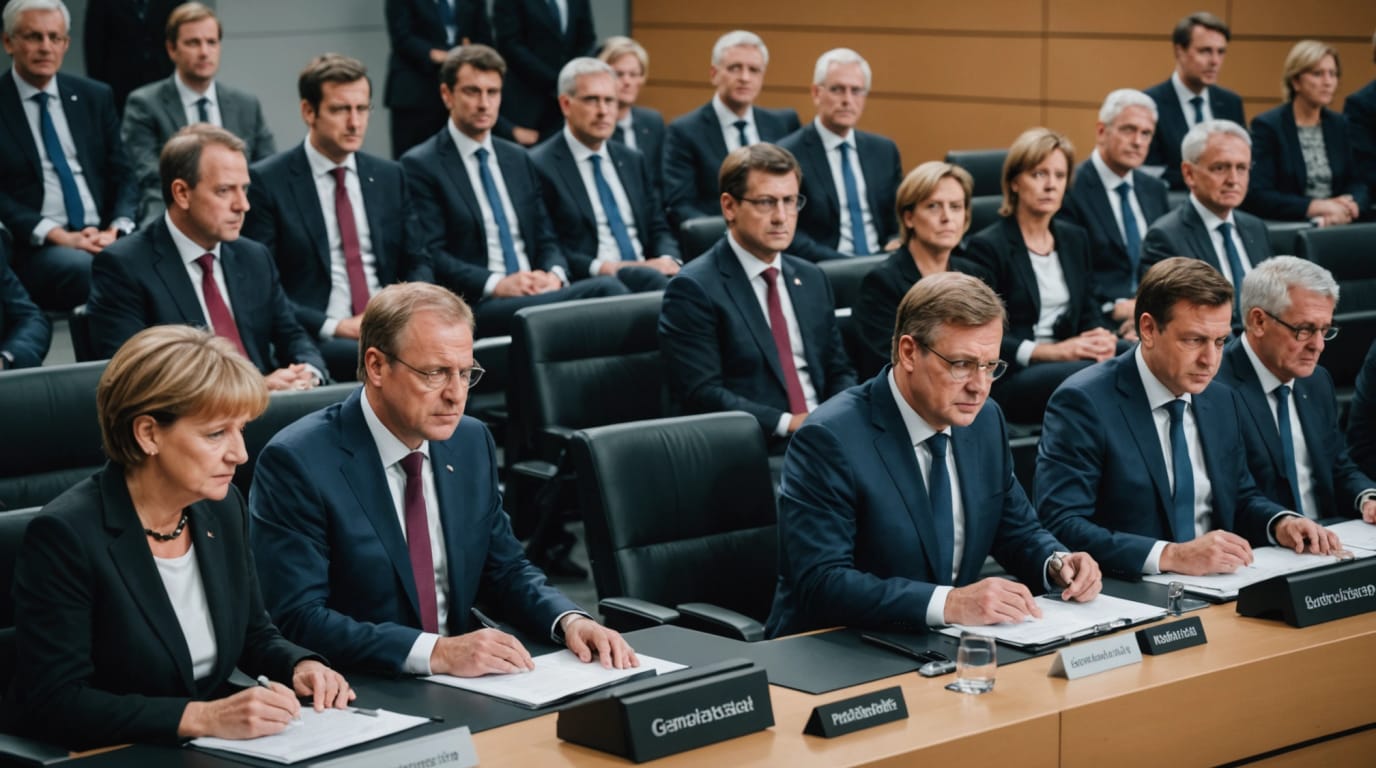
The newly elected German Bundestag met today for its inaugural session following the federal election on February 23, marking the end of Olaf Scholz's center-left government and ushering in a period of coalition negotiations. The conservative bloc, comprised of the Christian Democratic Union (CDU) and Christian Social Union (CSU) led by Friedrich Merz, emerged as the election's strongest force and are now tasked with forming a new government.
Election Results and Parliamentary Composition
The CDU/CSU secured 28.5% of the vote, signaling a shift in the German political landscape. The Social Democrats (SPD), under outgoing Chancellor Scholz, experienced their worst performance in over a century, garnering only 16.4% of the vote, a significant drop of 9.3% from the previous election.
The new Bundestag has 630 members, a reduction of over 100 seats due to recent reforms in election law. To gain parliamentary representation, parties must secure at least 5% of the national vote or win a minimum of three directly elected constituencies. The right-wing Alternative for Germany (AfD) made considerable gains, capturing 20.5% of the vote and becoming the second-largest parliamentary group with 152 seats. The SPD now holds the third-largest bloc with 120 seats. The Green Party, led by Robert Habeck, experienced slight losses and now holds 85 seats. Die Linke, defying pre-election polls, re-emerged with 8.7% of the vote, securing 64 seats.
Coalition Negotiations Begin
Friedrich Merz has expressed his desire to begin coalition talks immediately, primarily with the SPD. He aims to establish a governing coalition by Easter. The election of the next chancellor will occur after a coalition agreement is reached, requiring at least 316 votes from the 630 members of the Bundestag. While there are no formal deadlines for coalition building, the new Bundestag is required to hold its first meeting within 30 days of the election.
Merz has outlined his top priorities for negotiation: curbing migration, strengthening the economy, and solidifying Europe's foreign and security policy. Despite the AfD's increased presence in the Bundestag, Merz has ruled out any possibility of collaboration with the far-right party.
Demographic Shifts in the Bundestag
The new parliamentary session reflects some demographic shifts, although representation remains uneven. The average age of lawmakers is 47, and the percentage of lawmakers under 30 has increased from 6.5% to 7.5%. However, this figure remains below the 12.7% of Germans under 30.
The proportion of lawmakers with a migrant background has also risen, from 5.9% to 11.6%, but still falls short of the approximately 30% of people with a migrant background in the overall German population. The share of women in the Bundestag has decreased, from 36% to 32.5%, partly attributed to the increased number of lawmakers from the AfD and CSU, neither of which have gender quotas. Only 12% of AfD lawmakers are women.
The Role of Outgoing Chancellor and Government
Until a new government is formed, Olaf Scholz will remain in a caretaker capacity at the request of the Federal President. Traditionally, the outgoing government refrains from making significant policy decisions during this transition period. The chancellorship officially ends with the assembly of the new parliament.
Challenges and Opportunities Ahead
Germany's business leaders have voiced concerns about the country's stagnant economy and are urging the new government to take swift action. The election results have raised hopes for a stable two-party coalition between the CDU/CSU and SPD, with Friedrich Merz as chancellor. However, the success of this coalition will depend on the ability of the parties to bridge their differences on key policy issues such as taxation, labor law, social policy, energy, transport, and EU policy.
The new Bundestag faces numerous challenges, including navigating the ongoing war in Ukraine, addressing rising inflation, and managing the energy transition. The composition of the parliament reflects a more fragmented political landscape, requiring compromise and collaboration to address these pressing issues effectively.
Conclusion
The convening of the German Bundestag marks the beginning of a new political era. The coming weeks will be crucial as the CDU/CSU and SPD engage in coalition negotiations to form a stable government. The ability of these parties to find common ground and address the challenges facing Germany will determine the country's trajectory in the years to come. The world will be watching as Germany navigates this transition and works to maintain its role as a leading economic and political power in Europe.


