German Chancellor Merz Faces Activist Backlash Over Memorial and Rhetoric
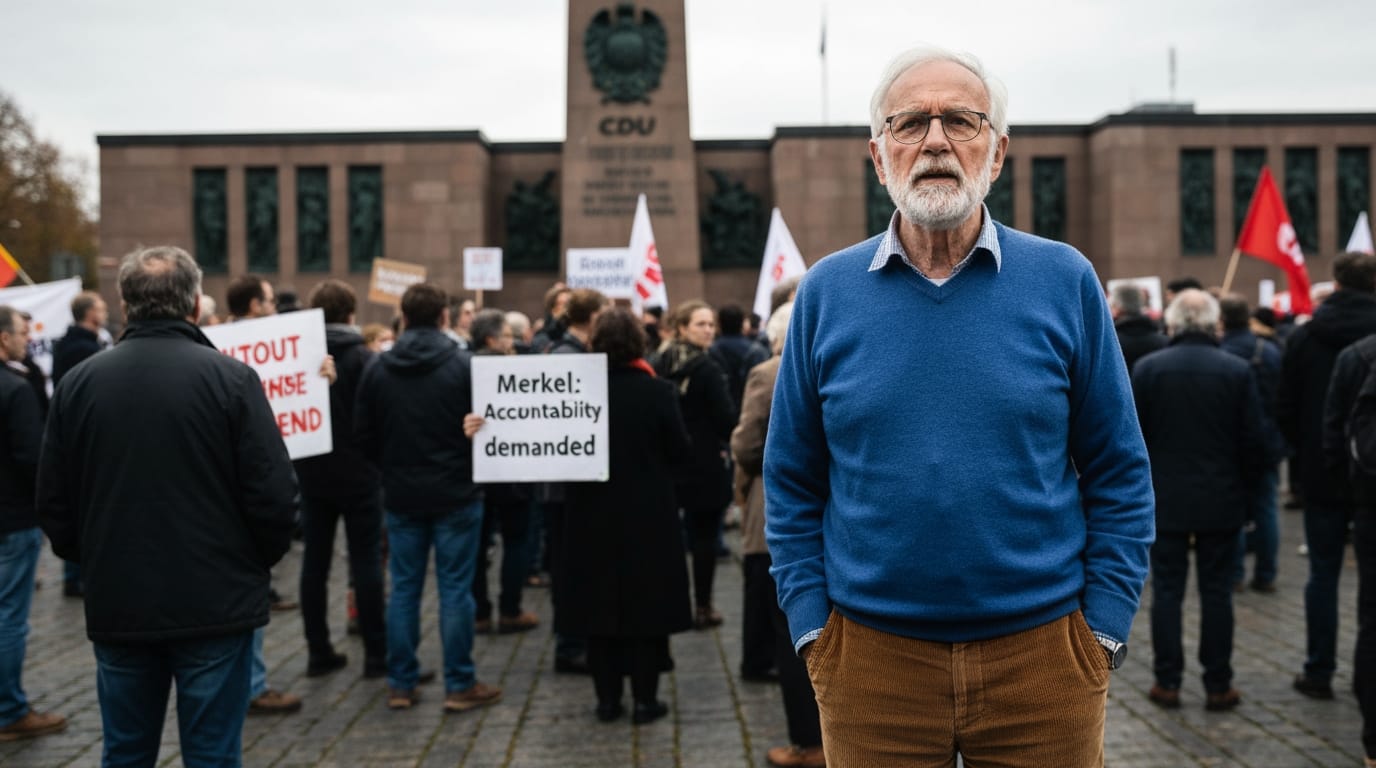
Berlin, Germany – A recent series of controversies has ignited a fervent debate across Germany, pitting various activist groups against Chancellor Friedrich Merz and his Christian Democratic Union (CDU) party. At the heart of the latest friction lies a contentious memorial and the Chancellor's outspoken criticism of it, further exacerbated by his remarks on migration that have fueled widespread protests. The incidents collectively underscore a growing chasm between the government's conservative agenda and a diverse range of civil society movements advocating for different interpretations of public memory, social justice, and political discourse.
The Contentious Lübcke Statue: A Symbol of Division
The most direct flashpoint emerged with the erection of a bronze statue commemorating Walter Lübcke, a CDU politician murdered by a right-wing extremist in 2019. The artist collective "Zentrum für politische Schönheit" (Center for Political Beauty), known for its provocative political art, placed the statue directly in front of the CDU headquarters in Berlin. The memorial, intended to honor Lübcke and draw attention to political extremism, swiftly drew the ire of Chancellor Merz, who publicly denounced the initiative as "absolutely tasteless". This strong condemnation from the nation's leader ignited a fresh round of public discourse regarding the appropriate forms of political commemoration and the role of art in public spaces. The collective's decision to install the statue was seen by many as an activist endeavor to challenge official narratives and ensure that the memory of Lübcke’s politically motivated assassination remains prominent in the public consciousness.
Activist Intentions and the Battle for Public Memory
The "Zentrum für politische Schönheit" operates on the principle that confronting uncomfortable truths is essential for a healthy democracy. Their installation of the Lübcke statue was a deliberate act designed to provoke reflection on the dangers of right-wing extremism and the responsibility of political parties in fostering a robust democratic culture. While Chancellor Merz viewed the statue as "tasteless," a green district mayor, in contrast, found it "very worthy" and had reportedly approved its presence for two years, highlighting the divergent perspectives on the memorial's artistic and political value. The controversy surrounding the statue underscored the ongoing struggle in Germany over Vergangenheitsbewältigung – the process of coming to terms with the past – particularly concerning politically charged historical events. Activists often seek to ensure that memorials serve not just as static symbols, but as dynamic sites of engagement and critical reflection, pushing against what they perceive as sanitized or overlooked aspects of national memory.
The Unforeseen Removal: Reconciliation or Erasure?
Adding another layer of complexity to the narrative, the Walter Lübcke statue was subsequently removed, not by state authorities, but by a coalition of what were described as "anti-activist groups". These groups cited a desire to foster "unity and understanding" and move "beyond divisive symbols," arguing that monuments referencing contentious political figures can deepen societal divides rather than foster understanding. The removal process was reportedly carried out over several weeks, involving community discussions and municipal approval, and was conducted without disruption. Following its dismantling, the statue was transported to a cultural center where it is intended to become part of an educational exhibit on the evolution of democracy and the importance of unity. While framed by its proponents as a step towards reconciliation, this action also raises questions among some observers about the potential for such moves to inadvertently suppress certain forms of critical remembrance or activist expression.
Broader Tensions: Merz, Migration, and the "Cityscape" Controversy
Beyond the memorial dispute, Chancellor Merz has recently faced significant opposition from activists over his comments regarding migration. In remarks that swiftly became known as the "cityscape" (Stadtbild) controversy, Merz stated that migrants and refugees had a negative impact on the physical appearance of German towns and that there was a problem with "how our cities look". He controversially suggested, "Ask your daughters what I might have meant," implying that immigrant men were linked to safety concerns. These statements were widely criticized as racist, discriminatory, and divisive, drawing parallels to rhetoric often used by the far-right Alternative for Germany (AfD) party.
Thousands of protesters, many of them young women, gathered outside the CDU headquarters in Berlin and across other German cities, chanting slogans like "We are the daughters" and "We are the cityscape". Renowned climate activist Luisa Neubauer, who helped organize the Berlin rally, stated that she would not allow Merz to use "daughters" as an excuse for what she termed "racist and unacceptable statements". Even within his own party, Merz's remarks met with unease, and members of his coalition partners accused him of using divisive language. This episode highlighted a recurring pattern of friction between Chancellor Merz's conservative political positions and the progressive, often intersectional, demands of various activist movements.
Conclusion: Navigating a Fractured Public Sphere
The controversies surrounding the Walter Lübcke memorial and Chancellor Merz's "cityscape" remarks reflect a fractured public sphere in Germany, where debates over historical interpretation, national identity, and social policy are intensely contested. From artistic interventions challenging political memory to mass protests against perceived discriminatory rhetoric, activist groups continue to hold the government accountable and shape public discourse. Chancellor Merz, while firm in his positions, faces the complex task of leading a nation through these deeply held differences, as the demand for inclusivity, nuanced historical engagement, and an open society continues to be a driving force for many German citizens. The ongoing dialogue, punctuated by these highly visible disputes, underscores the dynamic and often challenging nature of democratic engagement in contemporary Germany.


