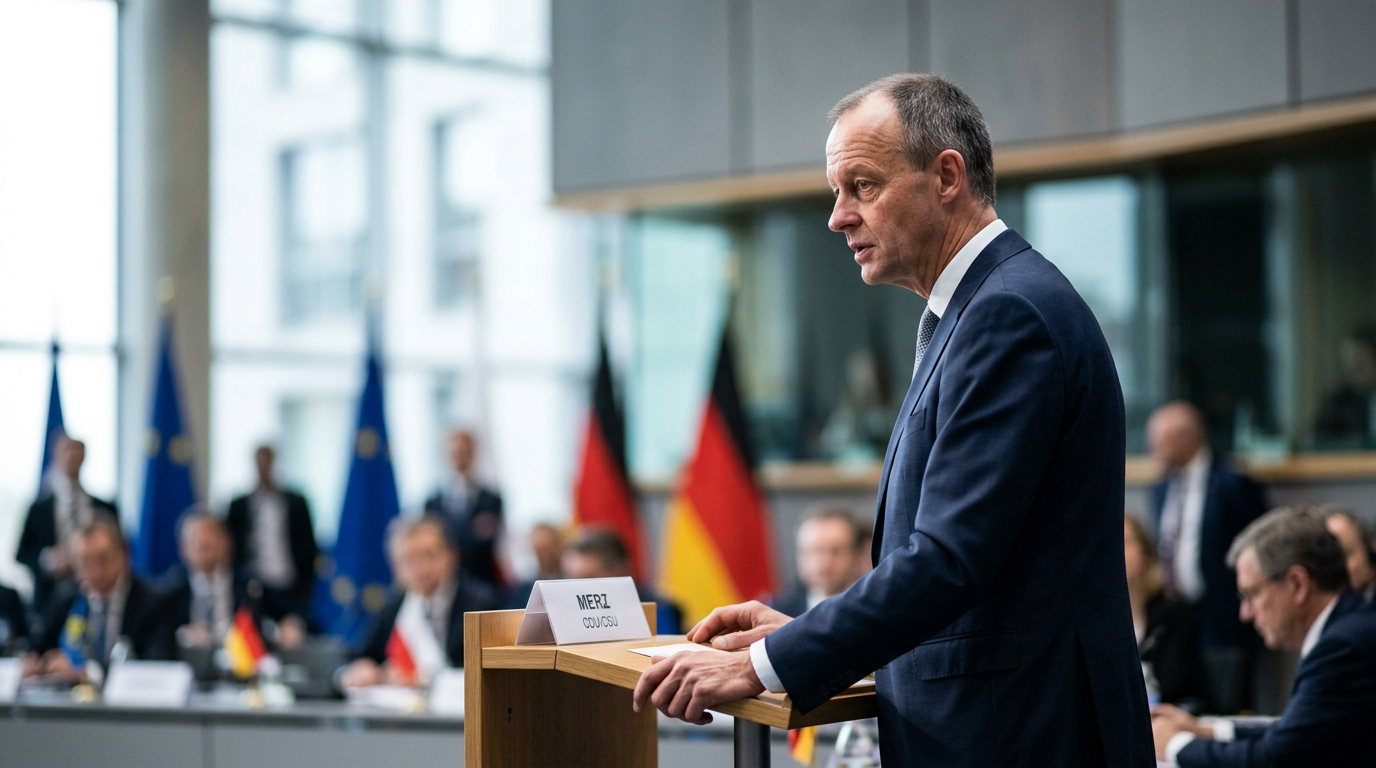
German Chancellor Merz Sounds Economic 'SOS' to Allies Amid Deepening Crisis
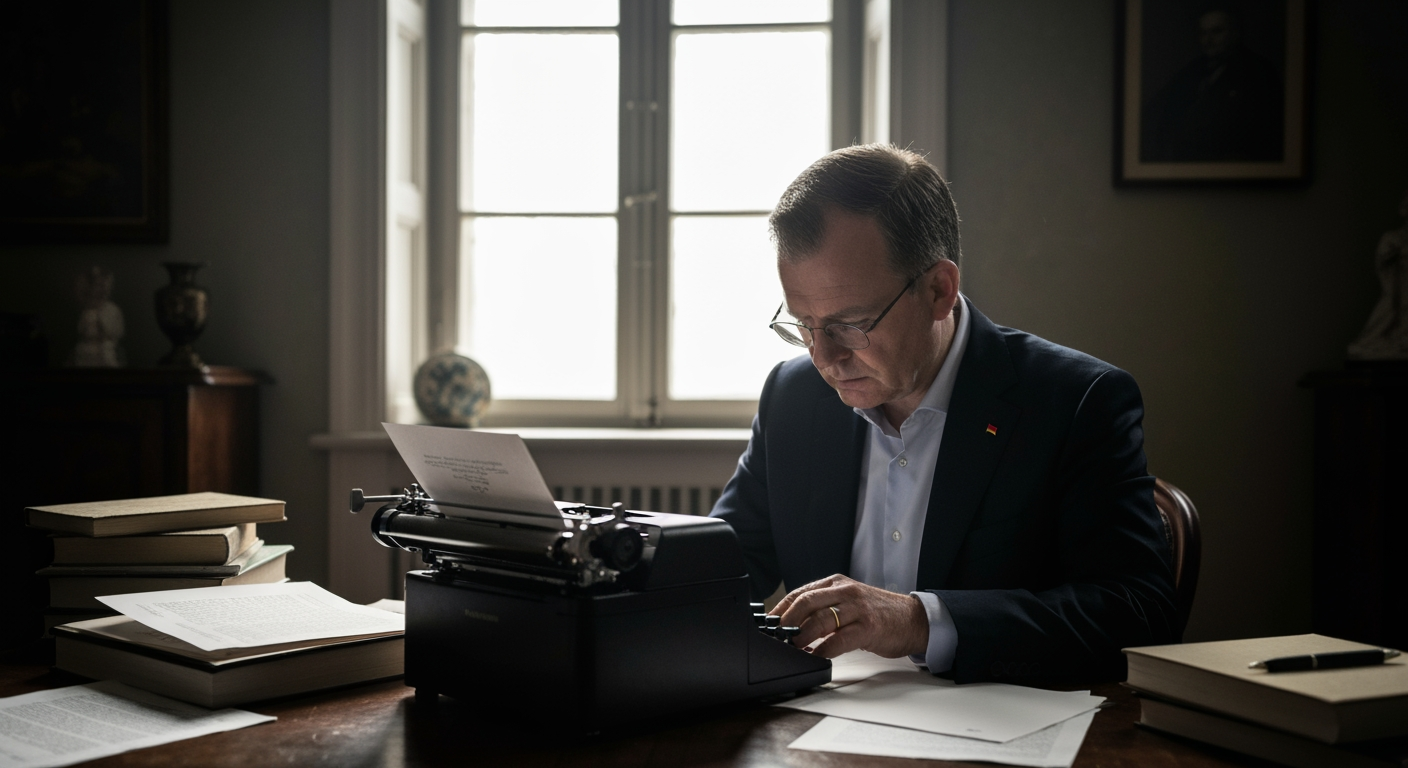
BERLIN – German Chancellor Friedrich Merz has issued a stark warning to his governing coalition, declaring the nation's economic situation "very critical in some areas" and calling for urgent, decisive action to avert further decline. In a four-page letter sent at the dawn of 2026 to members of his governing coalition, Merz underscored that previous measures have failed to restore competitiveness, placing the burden on lawmakers to enact fundamental changes to improve the business environment and guide Europe's largest economy back to growth.
Merz, who took office as Chancellor in May 2025, emphasized that 2026 must be a year of decisive political and legislative action to substantially improve conditions for businesses. His candid assessment acknowledges that his administration, in its initial eight months, has not yet achieved sufficient progress in bolstering Germany's economic competitiveness.
The Urgent Call to Action
The letter, described as a "business SOS," highlights the gravity of the challenges confronting Germany. Directed at his coalition partners, the document signals a renewed push for reforms that Merz believes are essential for the country's economic survival and future prosperity. He stressed that only through such bold steps can Germany emerge from its current crisis and return to a path of sustained growth. This urgent communication comes as business sentiment in Germany remains cautious, with industry leaders pressing for concrete policy changes.
Germany's Lingering Economic Malaise
The Chancellor's warning is set against a backdrop of persistent economic difficulties. Germany, traditionally Europe's economic engine, experienced a contraction in its economy in both 2023 and 2024. Forecasts for 2025 indicated only marginal growth, projected between 0.1% and 0.2%, signifying a continued struggle for momentum. This period of stagnation has been characterized by many as a "structural crisis" rather than mere economic weakness.
Several factors contribute to this challenging landscape. High energy costs, largely a repercussion of geopolitical events, continue to burden industries. Weak global demand and slow-paced structural reforms within the country have further exacerbated the situation. Germany's fiscal framework has also faced significant hurdles, notably a Constitutional Court ruling in November 2023 that rejected the reallocation of €60 billion in COVID-19 funds, leading to substantial budget cuts and heightened uncertainty. The country's constitutional "debt brake" further limits new borrowing, constraining the government's financial maneuverability.
Beyond these immediate pressures, long-term structural issues persist. Germany's aging population poses demographic challenges, potentially leading to skilled labor shortages and increased social security burdens. Underinvestment in public infrastructure and excessive bureaucracy are also cited as impediments to growth and innovation. Key industrial sectors, such as the automotive industry with global brands like Volkswagen and BMW, are struggling with slumping sales and international competition, impacting a significant portion of the German economy. The steel and machinery sectors are similarly reporting low production levels, rising bankruptcies, and increasing unemployment. Externally, the German export-oriented economy is grappling with a rise in global protectionism, the impact of U.S. trade tariffs, and a notable reliance on China for various products and raw materials, factors that complicate international trade dynamics.
Policy Prescriptions and Political Undercurrents
In response to these multifaceted challenges, Chancellor Merz has outlined a clear agenda focused on revitalizing the economy. Central to his proposals are efforts to significantly cut red tape and bureaucratic hurdles that often hinder businesses. His government has pledged substantial investment in modernizing infrastructure and stimulating domestic demand, including an announced €500 billion infrastructure investment package aimed at long-term economic growth. This package, a key component of Merz's administration, also includes investments in defense, signaling a broader strategy for national resilience. Tax cuts and other reforms have been rolled out, though business groups argue the pace of change remains too slow.
A notable shift under Merz's leadership involves a more pragmatic approach to energy policy. This includes considering an expansion of gas power and potentially adjusting subsidies for renewable energy, with the stated aim of protecting industrial competitiveness while pursuing climate goals "without ideology." His administration also seeks to reduce Germany's economic reliance on China and foster greater European strategic autonomy in trade and industrial policy, recognizing the evolving global economic landscape.
However, the path to reform is not without its political complexities. Merz's push for significant changes, such as pension reform, tax benefits for companies, and cuts to the social sector, has created tensions within his CDU-SPD governing coalition. Internally, the Chancellor has also initiated personnel changes, replacing his Chief of Staff with an individual known for strong ties to the business community, underscoring his commitment to his economic agenda. The political environment is further complicated by the rising support for opposition parties like the Alternative for Germany (AfD) and upcoming state elections in 2026, which could impact the stability and direction of the government.
The Path Forward: Balancing Challenges and Ambitions
Chancellor Merz's "business SOS" letter is a direct appeal for a united and determined political response to secure Germany's economic future. The challenges confronting Europe's largest economy are deep-seated, encompassing structural inefficiencies, high costs, and a shifting global trade order. The efforts to overcome these hurdles will require not only legislative action but also a fundamental reevaluation of Germany's economic model and its place in an increasingly volatile world.
Merz's vision extends beyond domestic recovery, advocating for Europe to assert its interests more strongly to safeguard peace and prosperity amidst global protectionism and changing transatlantic relations. The severe economic situation in Germany poses significant regional implications, given its central role in the European Union. The Chancellor's call for decisive action aims to restore confidence and demonstrate Germany's capacity to navigate these complex times, ultimately striving to reconnect with decades of peace, freedom, and prosperity. The effectiveness of his urgent appeal and the subsequent political actions will be closely watched, both within Germany and across the continent.
Related Articles

Ratko Mladić, "Butcher of Bosnia" and Convicted War Criminal, Dies at 84
THE HAGUE, Netherlands – Ratko Mladić, the former Bosnian Serb military commander known as the "Butcher of Bosnia" and convicted of genocide, war crimes, and crimes against humanity, has died at the age of 84. Serbian...

Long-Awaited 9/11 Mastermind Trial Set for 2028, Decades After Attacks
GUANTANAMO BAY, Cuba – Nearly a quarter-century after the devastating terror attacks of September 11, 2001, a military judge has finally set a trial date for Khalid Sheikh Mohammed, the alleged mastermind behind the...