German Chancellor Merz Vows Steadfastness Amidst Transatlantic Tensions
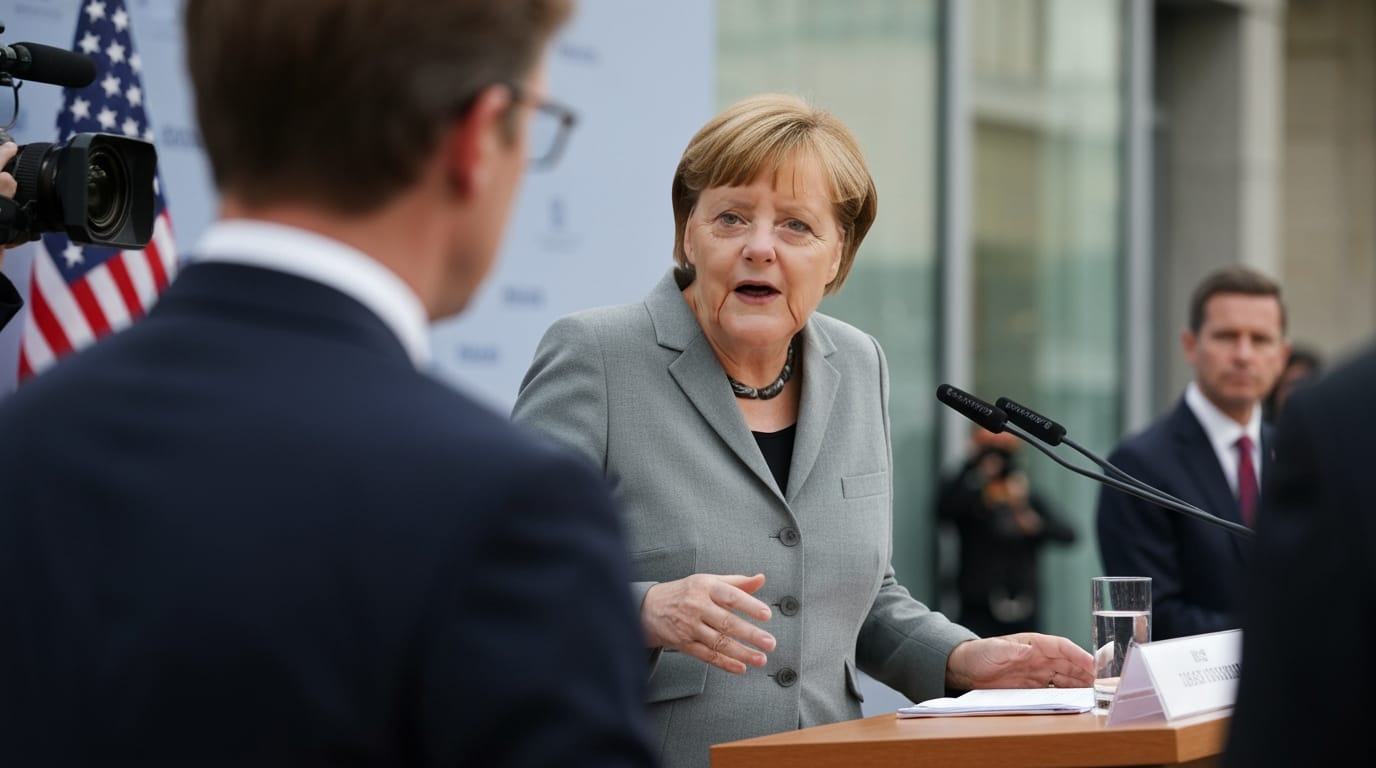
BERLIN — German Chancellor Friedrich Merz has publicly affirmed his commitment to maintaining and strengthening Germany's relationship with the United States, even as recent diplomatic friction and military posture adjustments underscore a period of strain in the transatlantic alliance. Merz, speaking amidst a backdrop of pointed exchanges with US President Donald Trump, emphasized that he is "not giving up" on the crucial partnership, signaling a pragmatic resolve to navigate complex geopolitical realities.
The declaration comes at a critical juncture for German-American ties, which have faced increasing pressure from differing foreign policy approaches and the United States' evolving strategic priorities. Despite a recent spat involving the ongoing war in Iran and a consequential US troop withdrawal announcement, Merz has sought to temper the narrative, insisting on the fundamental importance of the alliance.
Navigating a Strained Alliance
The latest episode of transatlantic turbulence erupted following Chancellor Merz's recent comments regarding the US-Israeli war against Iran. On April 27, Merz stated that Iran was "humiliating" Washington at the negotiating table, also criticizing what he perceived as a lack of strategic exit from the conflict by the United States. These remarks elicited a sharp rebuke from President Trump, who publicly labeled Merz an "ineffectual" leader and suggested he should focus on "fixing his broken country" instead of "interfering" in Iran.
Adding to the diplomatic tension, the Pentagon subsequently announced a planned reduction of 5,000 US troops stationed in Germany, its largest European base. This move, occurring just days after the public exchange, was widely perceived by some as a direct consequence of the deteriorating relations. Trump had previously threatened similar troop withdrawals during his first term and intensified this threat following Merz's criticism. This also marked a reversal of plans under the former US President Joe Biden's administration to deploy a US battalion with long-range Tomahawk missiles to Germany, a move Berlin had advocated for as a deterrent against Russia.
Merz's Unwavering Commitment
Despite the pointed criticism and the military adjustments, Chancellor Merz has adopted a measured and conciliatory tone, asserting his determination to work with President Trump and preserve the transatlantic bond. In an interview, Merz stated, "I am not giving up on working on the transatlantic relationship. Nor am I giving up on working with Donald Trump." He acknowledged that he must accept differing views from the American president but reiterated his conviction that the United States remains Germany's "most important partners in the North Atlantic alliance."
Merz also downplayed any direct retaliatory link between his comments and the troop withdrawal, suggesting that such announcements were not entirely new and might be "exaggerated a bit." He offered an alternative explanation for the US decision to reduce its military footprint and postpone missile deployments, citing depleted American arsenals due to ongoing conflicts in Iran and Ukraine. "The Americans themselves don't have enough at the moment," Merz noted, adding that "objectively speaking, there is hardly any possibility from the US of relinquishing weapons systems of this kind." This perspective suggests a recognition of broader US strategic pressures and resource allocation challenges impacting its global military posture.
The Broader Context of Transatlantic Ties
The current tensions are not isolated incidents but reflect a more profound shift in the US-German relationship that has been unfolding for years. Historically, the post-World War II era saw the formation of a robust partnership, though not without its own disagreements, such as those between Adenauer and Kennedy, or Schmidt and Carter. However, the second Trump presidency, which began in 2025, has been described by some analysts as entering "a class of its own" in terms of the damage inflicted on German-American relations.
Public sentiment in Germany echoes this growing disquiet. A Pew Research Center poll conducted in November 2025 indicated that nearly three-quarters of German adults perceive relations with the United States as "bad." This negative perception contrasts sharply with American views on Germany but highlights a growing apprehension among Germans, who increasingly view the US as a potential economic threat. Merz himself, who has a long history of promoting transatlantic cooperation, including a past role as chairman of Atlantik-Brücke, recognizes that the "Europe of yesterday," confident in solitary US leadership, is a thing of the past.
European Self-Reliance in a New Era
In response to the evolving geopolitical landscape and the perceived "unpredictability" of transatlantic relations, Merz has increasingly championed the need for Europe to bolster its own defense capabilities and strategic autonomy. He has emphasized that "what counts is strength – military as well as economic" in a "tougher world," asserting that "security is the pre-condition for freedom."
This perspective suggests a shift towards a more balanced partnership, where Europe takes on a greater share of responsibility for its own security. Merz has indicated that European NATO powers must be capable of deterring threats, such as Russia, even without certain US missile systems or troop presences. This push for self-reliance is also partly a recognition that US fiscal deterioration and populist political trends will likely continue to constrain American global commitments, regardless of who occupies the White House. Europe, therefore, must proactively design security architecture that can function effectively with a potentially reduced or even absent US role.
Conclusion
Chancellor Friedrich Merz's determined stance on the US-German relationship reflects a complex blend of traditional Atlanticism and pragmatic adaptation. While publicly committed to working with a challenging US administration and safeguarding the enduring alliance, Merz also clearly signals Germany's and Europe's need to prepare for a new era of greater self-reliance. His efforts to de-escalate tensions while simultaneously advocating for European strength underscore a nuanced approach to preserving vital partnerships amidst profound global shifts. The future of the transatlantic bond, as articulated by Merz, hinges not just on historical ties, but on a realistic assessment of contemporary challenges and a shared, albeit rebalanced, commitment to collective security.


