German Conservatives Dig In Against Cannabis Law as Reports Undermine Repeal Arguments
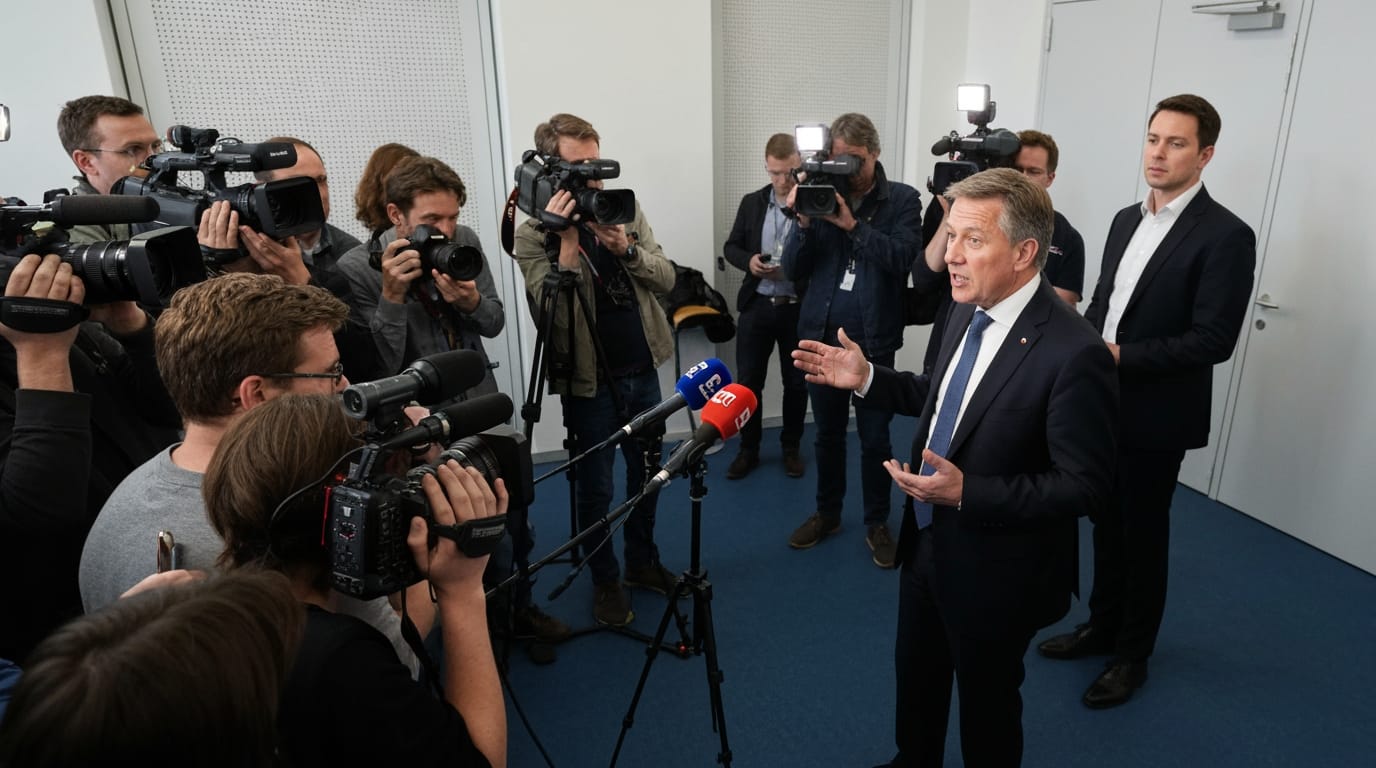
Berlin, Germany – As Germany approaches the two-year mark since partially legalizing cannabis for adult use, a deep political chasm persists, with conservative factions maintaining their staunch opposition despite emerging governmental and independent reports that largely contradict their dire predictions. While the Christian Democratic Union (CDU) and its Bavarian sister party, the Christian Social Union (CSU), continue to label the legislation a "nonstarter" and advocate for its reversal, comprehensive analyses indicate a significant reduction in cannabis-related offenses and no observable surge in youth consumption or traffic incidents. This divergence between political rhetoric and empirical data sets the stage for an ongoing, high-stakes debate over the future of cannabis policy in the heart of Europe.
Conservative Censure Amidst Legalization's Early Days
Germany’s conservative parties, primarily the CDU/CSU, have been unwavering in their condemnation of the country's partial cannabis legalization, which took effect in April 2024. They have consistently pledged to overturn the law should they gain full power, viewing the current legislation as a failure that neither limits consumption nor curbs the illicit black market. This firm stance has been echoed by prominent conservative figures, including various interior ministers, who argue that the law has not only fallen short of its intended goals but has also exacerbated problems for law enforcement.
Brandenburg Interior Minister Jan Redmann (CDU) concluded negatively, suggesting that cultivation associations had failed to push back the black market, leading illegal structures to profit from legalization and strengthen distribution channels for more dangerous drugs. Hessian Interior Minister Roman Poseck (CDU) went further, labeling partial legalization a "lasting mistake" and claiming that it yielded "hardly any winners, but many losers". Federal Interior Minister Alexander Dobrindt (CSU) famously referred to the law as a "proper piece-of-shit law" in October 2025. These criticisms underscore a deeply ingrained ideological opposition within the conservative ranks, which view the current policy as fundamentally flawed and detrimental to public safety.
The Data Speaks: Reports Challenge Opposition Claims
Contrary to the persistent conservative narrative, a series of comprehensive evaluations, including reports from the German Institute for Economic Research (DIW Berlin) and studies conducted by the University Medical Center Hamburg-Eppendorf (UKE) as part of the official EKOCAN evaluation, paint a different picture of the law's initial impact. These studies indicate that the dire predictions made by opponents regarding increased youth usage, traffic accidents, and overall consumption have largely proven unfounded.
One of the most striking findings highlights a dramatic decrease in cannabis-related offenses. Official police statistics for 2024 show a remarkable 53% reduction in such cases, dropping from 215,865 in 2023 to just 101,345, representing over 100,000 fewer criminal proceedings. Researchers have characterized this as "the most significant decriminalization in the history of the Federal Republic of Germany," effectively freeing up substantial police and judicial resources.
Furthermore, data on public health and consumption patterns offer reassurances. Youth marijuana use has not surged; instead, it has continued a downward trend observed since 2019, with the average age of first cannabis use remaining stable at approximately 15 years. This suggests that easier adult access has not led to earlier experimentation among minors. Adult cannabis consumption patterns have also remained relatively stable, with slight increases continuing a trend observed since 2011, and no "discernible structural change" directly attributable to the 2024 reform. Wastewater monitoring in eleven German cities further corroborates these findings, revealing no abrupt spike in cannabis use post-legalization.
On the critical issue of traffic safety, reports found no significant short-term increase in driving under the influence of cannabis. While some data suggests an increase in accidents involving cannabis and other intoxicating substances, researchers note this trend predates legalization and does not appear to be a direct consequence of the policy change. These findings directly counter a central argument of the conservative opposition, which frequently cited public health and safety concerns as reasons to oppose the law.
The Persistent Black Market and Unfulfilled Promises
While the reports largely dismiss many of the conservatives' key concerns regarding public health and safety, they do acknowledge a lingering challenge: the illicit market for cannabis has not significantly decreased. This persistence is primarily attributed to the current, limited legal regulatory model, which initially relies heavily on non-commercial cannabis cultivation associations (known as "social clubs") rather than a comprehensive commercial industry.
The first "pillar" of Germany's legalization model, implemented in April 2024, focused on personal possession and cultivation, and the establishment of these cultivation associations. However, the second "pillar," which envisions regional adult-use cannabis commerce pilot trials designed to provide a regulated retail market and gather data for future policy, has not yet been fully implemented. As a result, the cultivation associations have so far made "no relevant contribution" to reducing the illegal market, as was initially intended. Conservative critics, such as Jan Redmann, have leveraged this point, arguing that the demand generated by partial legalization is not being met by legal channels, thereby strengthening the black market. This aspect of the current policy offers some ground for conservative critique, albeit against a backdrop of data that otherwise supports the limited impacts of the law.
Political Crossroads: The Future of German Cannabis Policy
The recent political landscape in Germany, marked by early elections in February 2025 following the collapse of the "traffic light coalition," has seen the conservative CDU/CSU emerge as the leading party. This victory has emboldened their calls for repealing the cannabis law. However, the intricacies of German coalition politics suggest that a complete reversal of the law might be more challenging than conservative leaders portend.
Germany's government formation typically requires a coalition, and if the CDU/CSU forms an alliance with center-left parties like the Social Democrats (SPD) or the Greens, which were instrumental in passing the initial legislation, repealing the cannabis law entirely would be difficult. These parties remain supportive of the current law and even advocate for its expansion, such as establishing licensed specialist shops. While stricter regulations, particularly for the recreational sector, might be introduced, a full rollback appears improbable under such a scenario. The final coalition agreement between the CDU/CSU and SPD, notably, did not include any clause to dismantle cannabis legalization, instead committing to an "objective evaluation" of the law's social and economic impacts slated for late 2025.
Despite the federal stance, localized resistance persists. Bavaria, a state traditionally dominated by the CSU, has taken a particularly hardline approach, refusing to authorize any cannabis cultivation clubs, making it the only state without legal cultivation beyond private, personal use. Bavarian Health Minister Judith Gerlach has consistently called for an immediate and total reversal of recreational cannabis legalization, stating, "This experiment must end".
An Enduring Impasse
Germany's journey with cannabis legalization remains a complex interplay of evolving policy, emerging scientific evidence, and entrenched political ideologies. While reports from various institutions largely de-escalate many of the public safety and health concerns voiced by conservative opponents, the persistence of the black market due to incomplete implementation of the legal framework provides ongoing fodder for criticism. The future of cannabis policy in Germany will likely be shaped by the ability of political forces to reconcile conservative principles with empirical data, and to navigate the complexities of coalition governance while potentially exploring further expansions of the regulated market to truly displace illicit trade. The debate is far from settled, and its outcome will have significant implications for public health, law enforcement, and the burgeoning European cannabis industry.


