President's Unprecedented Supreme Court Visit Ignites High-Stakes Citizenship Debate
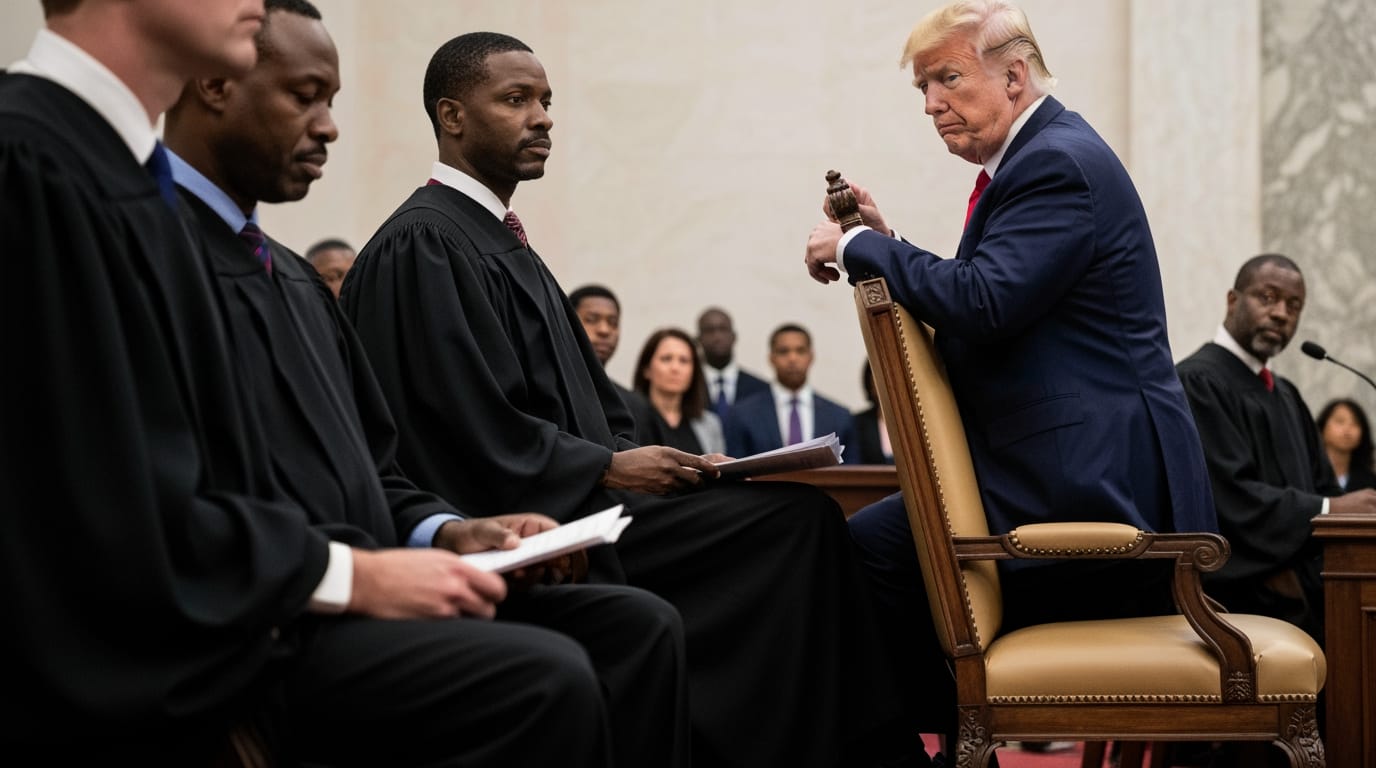
Washington, D.C. – In a historic and highly unusual move, President Donald Trump attended oral arguments at the U.S. Supreme Court on Wednesday, injecting a potent political dynamic into a critical debate over the future of birthright citizenship in the United States. The President's presence marked the first time a sitting commander-in-chief has observed the nation's highest court in session for oral arguments, underscoring the profound constitutional and social implications of the case challenging his administration's efforts to redefine who qualifies as an American citizen.
The Supreme Court heard arguments in a case that directly questions the long-standing interpretation of the 14th Amendment, which has for 160 years guaranteed citizenship to nearly everyone born on U.S. soil. President Trump's executive order, signed on his first day of his second term on January 20, 2025, aims to deny citizenship to children born in the United States if their parents are in the country unlawfully or temporarily. This order, which has been blocked by every lower court that has reviewed it, sets the stage for a landmark decision expected by early summer that could reshape immigration policy and redefine American identity.
A President in the Courtroom: An Unprecedented Spectacle
President Trump's arrival at the Supreme Court building on Wednesday morning, escorted by limousine, was an extraordinary sight, drawing immediate attention to a case already brimming with national significance. He took a seat in the front row of the public section, just rows behind the lectern where Solicitor General John Sauer presented the administration's arguments. While other presidents have attended ceremonial court events, none have ever observed oral arguments, making Trump's visit a unique moment in American legal history. The President remained in the courtroom for just over an hour, departing shortly after the defense began its presentation.
The timing and nature of the President's attendance immediately fueled speculation regarding his intentions. Constitutional law professor Adam Winkler of UCLA noted that Trump's presence highlights the high stakes he perceives in the case. While some theorized it might be an attempt to influence or intimidate the justices, Winkler suggested that such a move was unlikely to sway the independent bench, though it certainly contributed to a "circus-like" atmosphere. Prior to the hearing, the President had publicly expressed frustration with certain judicial rulings, emphasizing the political intensity surrounding this constitutional challenge.
The Heart of the Matter: The 14th Amendment and Birthright Citizenship
At the core of the legal battle is the interpretation of the 14th Amendment's citizenship clause, which states, "All persons born or naturalized in the United States and subject to the jurisdiction thereof, are citizens of the United States and of the State wherein they reside." For more than a century and a half, this clause has been widely understood to confer citizenship upon virtually anyone born within U.S. borders, regardless of their parents' immigration status.
The Trump administration, however, argues that this common understanding is erroneous. They contend that the phrase "subject to the jurisdiction thereof" implies a full allegiance to the United States and that children of non-citizens, particularly those whose parents are in the country illegally or temporarily, do not meet this standard. Solicitor General Sauer, representing the administration, asserted that the Supreme Court should use this case to rectify what he described as "long-enduring misconceptions about the Constitution's meaning." The historical context of the 14th Amendment's adoption, which was primarily to grant citizenship to Black people, including freed slaves, also formed part of the complex arguments presented.
Justices Express Broad Skepticism
During the oral arguments, both conservative and liberal justices appeared to cast doubt on the administration's position, challenging the historical, textual, and practical foundations of its arguments. Chief Justice John Roberts and Justices Neil Gorsuch, Brett Kavanaugh, and Amy Coney Barrett, all considered conservative members of the court, openly questioned Solicitor General Sauer. Justice Roberts, for instance, pressed the administration on the legal basis for its interpretation, particularly regarding the phrase "subject to the jurisdiction thereof," and asked for examples of individuals in U.S. territory not considered under its jurisdiction.
Practical implications were also a key concern. Justice Ketanji Brown Jackson highlighted the logistical complexities of implementing such an order, inquiring, "Is this happening in the delivery room?" as she drilled down into how the government would determine citizenship status at birth. While Justice Clarence Thomas was perceived as the justice most likely to side with the administration, questioning the extent to which the 14th Amendment's debates initially addressed immigration, the overall tenor of the questioning suggested a challenging path forward for the administration's stance.
Far-Reaching Implications of a Landmark Decision
The Supreme Court's impending decision carries immense weight, promising to have far-reaching implications for millions of individuals and the very fabric of American society. A ruling in favor of the administration could fundamentally alter the legal status of countless children born in the United States, creating a new class of individuals with uncertain legal standing within the country. It would also dramatically reshape immigration law and policy, departing from decades of established practice.
Conversely, a decision upholding the traditional interpretation of birthright citizenship would reaffirm a foundational principle of American law and potentially constrain future attempts to unilaterally alter constitutional rights through executive action. The fact that every lower court has thus far found the executive order illegal and prevented its implementation underscores the established legal consensus the administration seeks to overturn.
As the nation awaits the Supreme Court's definitive ruling, expected by early summer, the debate over birthright citizenship remains one of the most critical legal and political challenges of the era. The outcome will not only determine the citizenship status of future generations but also set a powerful precedent for presidential authority and the interpretation of the Constitution.


