German Engineer Shatters Barriers, Becomes First Wheelchair User in Space
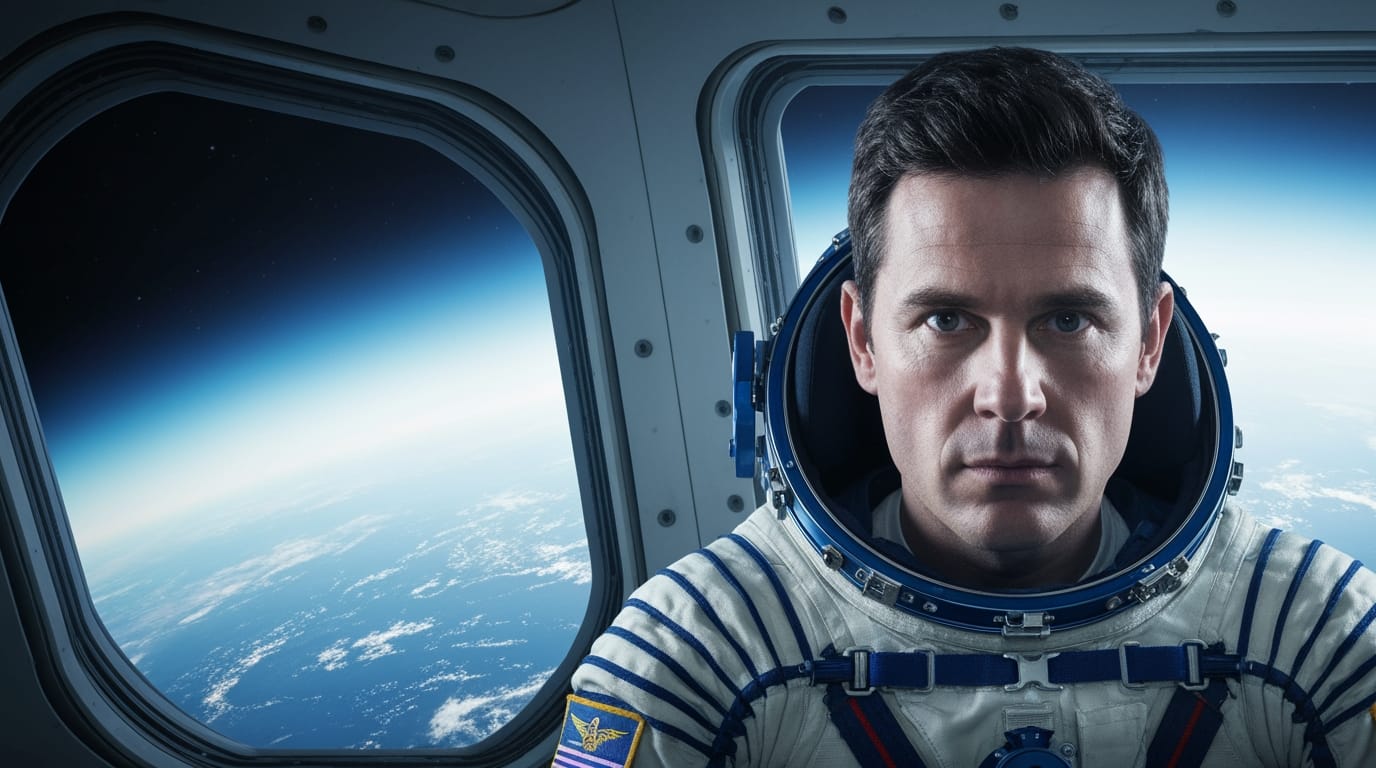
VAN HORN, Texas – In a historic moment for space exploration and disability inclusion, German aerospace engineer Michaela "Michi" Benthaus made history on Saturday, December 20, 2025, becoming the first person using a wheelchair to journey into space. Aboard Blue Origin's New Shepard NS-37 mission, Benthaus, 33, transcended Earth's atmosphere during a suborbital flight from West Texas, marking a significant milestone in expanding the horizons of human spaceflight. Her pioneering journey is celebrated globally as a testament to perseverance and a powerful statement that physical disabilities do not preclude humanity from reaching for the stars.
A Historic Leap for Accessibility
The launch, originally scheduled for December 18 but delayed by technical checks and high winds, saw the New Shepard rocket lift off from Blue Origin's Launch Site One, carrying Benthaus and five other private passengers on a brief, yet profound, expedition. The fully reusable rocket-capsule system ascended past the Kármán line, the internationally recognized boundary of space at 62 miles above Earth, on a roughly 10- to 12-minute journey from liftoff to touchdown. During this fleeting but impactful experience, the crew enjoyed several minutes of microgravity, offering unparalleled views of Earth against the vast blackness of space.
Benthaus, who works as a graduate trainee with the European Space Agency, was accompanied by a diverse group of space enthusiasts, including investors Joey Hyde and Adonis Pouroulis, former SpaceX executive and aerospace engineer Hans Koenigsmann, entrepreneur Neal Milch, and computer scientist Jason Stansell. Koenigsmann played a crucial role, not only helping to organize and sponsor Benthaus's trip but also serving as her designated emergency helper for the flight. Upon landing, an ecstatic Benthaus described the experience as "the coolest" and urged, "You should never give up on your dreams, right?" This mission, the 37th New Shepard flight and the 16th to carry humans above the Kármán line, brings Blue Origin's total number of space travelers to 86 individuals.
The Path to the Stars: Michaela Benthaus's Journey
Michaela Benthaus's path to space was one forged in adversity and fueled by unwavering determination. Her life took an unexpected turn in 2018 when a mountain-biking accident resulted in a spinal cord injury, leading to her use of a wheelchair. Despite this profound personal challenge, her passion for space exploration, which began at an early age, never waned. Instead, it ignited a new purpose: to champion accessibility in STEM fields and space exploration.
Benthaus actively pursued opportunities to make space more inclusive. In 2022, she participated in parabolic flights, often referred to as "vomit comets," to experience zero-gravity conditions firsthand. These flights allowed her to test and understand the nuances of movement and anchoring in microgravity. She also completed analog astronaut missions, simulating space activities on Earth, further preparing her for the realities of spaceflight. As an ambassador for AstroAccess, an organization dedicated to advancing disability inclusion in space, Benthaus has been at the forefront of efforts to redesign spacecraft and habitats for universal accessibility. Her message has been consistent and clear: "If we want to be an inclusive society, we should be inclusive in every part of life, not just the parts we like."
Engineering Inclusion: Adapting for Space
The successful integration of Benthaus into the NS-37 mission underscores a growing commitment within the commercial space sector to inclusive design. Blue Origin made several key adjustments to accommodate Benthaus, demonstrating that with thoughtful engineering, space travel can be made accessible to a broader population. These modifications included the addition of a patient transfer board, allowing her to easily move between the capsule's hatch and her seat. An elevator was already in place at the launch pad, providing seamless access to the capsule seven stories above.
Upon the capsule's return to Earth, the recovery team ensured immediate access to her wheelchair by unrolling a carpet on the desert floor. Blue Origin engineers, including Jake Mills, who trained the crew, noted that the autonomous New Shepard capsule was inherently designed with accessibility in mind, making it more adaptable for individuals with varying needs than traditional spacecraft. These "minor adjustments" represent a significant conceptual shift, moving beyond the traditional image of the able-bodied astronaut to embrace a future where physical differences are not barriers to space.
Beyond the Kármán Line: The Future of Accessible Space
Michaela Benthaus's flight is more than just a personal triumph; it is a monumental step toward a more inclusive future for space exploration. Her journey sends a powerful message to disability advocates and space professionals alike, challenging the long-held assumption that physical disabilities are an insurmountable obstacle to experiencing spaceflight. As Benthaus herself articulated, "I hope it sparks a shift in thinking within the space industry opening doors for more people like me. I might be the first but I won't be the last."
This achievement builds on a broader movement towards accessibility in space. The European Space Agency (ESA) has been actively exploring the feasibility of sending astronauts with disabilities on long-duration missions to the International Space Station (ISS). In a related development earlier this year, British Paralympian and surgeon John McFall was cleared to become the first person with a physical disability to participate in an ISS mission. While McFall's mission represents a different facet of space travel—a long-duration scientific mission compared to Benthaus's suborbital tourist flight—both endeavors collectively push the boundaries of who can access and contribute to humanity's presence in space. These pioneering efforts underscore that the push for inclusive spaceflight is not merely about fairness, but also about fostering innovation and expanding the collective human potential in the cosmos.
Benthaus's journey is a vivid demonstration that dreams are not limited by physical challenges. Her achievement serves as an immense source of inspiration, particularly for people with disabilities, proving that the final frontier is within reach for everyone. This shift in mindset promises to unlock new perspectives and capabilities, enriching future space missions with a broader range of human experience and talent.