German High Court Reopens Battle for Holocaust-Era Jehovah's Witness Archive
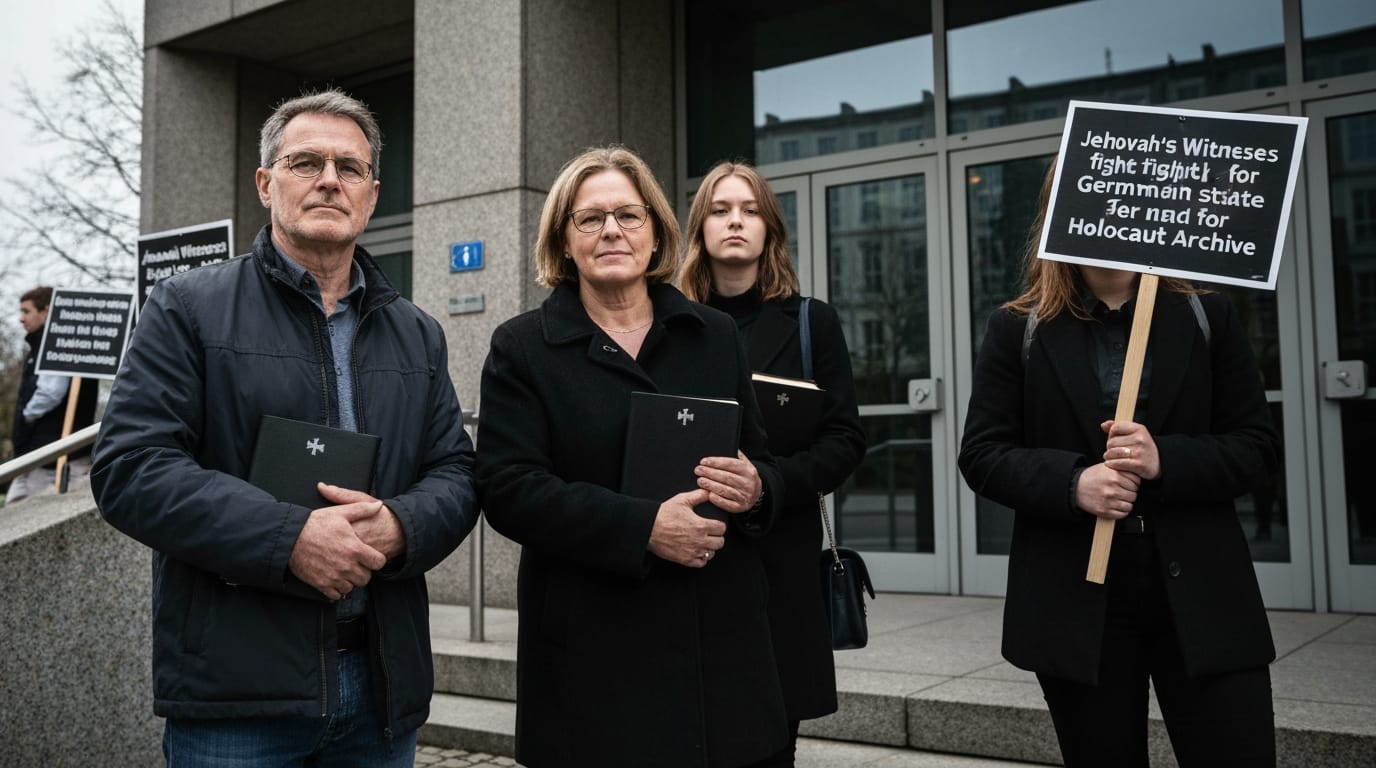
Karlsruhe, Germany – A protracted legal dispute over a significant Holocaust-era archive belonging to the Kusserow family, Jehovah's Witnesses persecuted by the Nazi regime, has been reignited in Germany. The nation's Federal Court of Justice (BGH) recently overturned a lower court's decision, sending the case back for a new hearing and potentially paving the way for the Jehovah's Witnesses in Germany to reclaim the extensive collection currently held by the Bundeswehr Military History Museum in Dresden. This development marks a pivotal moment in a nearly seven-year struggle for what the religious community considers a moral and historical injustice.
The Heart of the Contention: A Family's Legacy in a Military Museum
At the core of the legal battle is the Kusserow family archive, a poignant collection of over 1,000 items that meticulously document the persecution of a Jehovah's Witness family during World War II. The archive includes photographs, drawings, deeply personal pre-execution farewell letters, official death penalty pronouncements, and classified Gestapo reports. These documents bear witness to the profound suffering endured by the Kusserows, 13 members of whom faced severe persecution due to their religious identity and pacifist convictions under the Nazi regime.
The Jehovah's Witnesses in Germany (Jehovas Zeugen in Deutschland) assert that they are the rightful legal heirs to this archive. They claim that Annemarie Kusserow, the eldest sibling who painstakingly compiled the collection, bequeathed it to them before her death in 2005. However, the Bundeswehr Military History Museum in Dresden, a federal institution, maintains that it acquired the archive in good faith from another Kusserow family member who had reportedly disaffiliated from the Jehovah's Witnesses and has since passed away. The clash over ownership and the circumstances of the archive's transfer has fueled the ongoing legal proceedings.
For the Jehovah's Witnesses, the location of the archive within a military museum represents a "gross moral injustice," particularly given their steadfast anti-war stance and the fact that two Kusserow brothers, Wilhelm and Wolfgang, were executed for their conscientious objection to military service. Paul-Gerhard Kusserow, the youngest and sole surviving sibling, has publicly voiced his distress, stating, "My brothers died for refusing to participate in military service. I don't find it proper that this inheritance is stored, of all places, in a military museum". Should the Jehovah's Witnesses succeed in their claim, they intend to make the archive freely accessible to the public at their Central Europe office's museum in Selters, Germany.
A History of Unwavering Resistance: Jehovah's Witnesses Under Nazism
The dispute gains significant weight when viewed through the lens of the unique persecution faced by Jehovah's Witnesses during the Nazi era. Unlike other groups targeted by the regime primarily for racial or ethnic reasons, Jehovah's Witnesses were persecuted solely for their religious beliefs and their unwavering refusal to conform to Nazi ideology. They were the first Christian denomination banned by the Nazi government, with their activities outlawed as early as 1933.
Their refusal to swear allegiance to Hitler, participate in Nazi organizations, or perform military service marked them as an existential threat to the "national community" envisioned by the Nazis. Despite being racially categorized as "Aryan," their principled stand made them "outsiders" in the eyes of the regime. An estimated 10,000 Jehovah's Witnesses were sent to Nazi concentration camps, where they were identifiable by a unique purple triangle badge. Between 2,000 and 5,000 are believed to have died in custody, with approximately 250 executed.
A distinctive and often cited aspect of their persecution was the "choice" offered to them: they could escape imprisonment and harm by simply signing a document renouncing their faith and pledging support for the German military. The vast majority steadfastly refused, enduring torture, beatings, and even death rather than compromising their convictions. This remarkable resilience and defiance in the face of immense pressure underscores their unique place among Holocaust victims, a history that the Kusserow archive profoundly illuminates.
The German State's Stance and Judicial Reassessment
The Bundeswehr Military History Museum's initial defense centered on the legality of its acquisition of the archive. While the details of the lower court's original ruling are not fully detailed, the Federal Court of Justice's recent intervention suggests significant questions have been raised regarding the museum's claims. The BGH's decision to quash the previous ruling and refer the case back to the Cologne court for reconsideration indicates that the higher judicial body sees merit in re-evaluating two key aspects: whether Annemarie Kusserow was indeed the sole owner of the archive, and critically, whether the Federal Republic of Germany acted in "good faith" when the museum acquired the documents.
This judicial scrutiny highlights the complex ethical and legal considerations surrounding historical artifacts, particularly those intimately tied to victims of state-sponsored persecution. The German legal system, through its highest court, is signaling a thorough re-examination of how such sensitive historical materials are handled and whose claims to them hold precedence. The implication is that even if a transaction was legally structured, the moral and historical context, along with the victims' explicit wishes, may carry significant weight.
Broader Implications for Historical Memory and Justice
The ongoing legal battle for the Kusserow archive extends beyond a simple ownership dispute; it carries broader implications for historical memory, victim recognition, and the accessibility of crucial Holocaust documentation. For the Jehovah's Witnesses, securing the archive is not merely about possession, but about honoring the memory of those who suffered and ensuring that their unique story of principled resistance is preserved and presented in a manner consistent with their beliefs and sacrifices. By housing the archive in their own museum, they aim to facilitate free public access and education, ensuring that future generations can learn directly from these powerful testaments of faith and courage.
The Federal Court of Justice's decision to reopen the case also sends a powerful message about Germany's continued commitment to confronting its past and upholding principles of justice, even decades after the Holocaust. It underscores the responsibility of state institutions to handle historical legacies with sensitivity and to consider the moral dimensions alongside legal technicalities. The outcome of this re-litigation could set a precedent for how similar archives and artifacts, particularly those related to marginalized victim groups, are handled in the future, reinforcing the importance of victims' voices and their designated heirs in shaping historical narratives.
As the case returns to the lower court, all eyes will be on Cologne, where the renewed proceedings are expected to unfold. The decade-long legal struggle for the Kusserow family archive is not just a fight over documents; it is a profound quest for justice, respect, and the rightful stewardship of a deeply human testament to resilience in the face of unimaginable oppression. Its resolution will undoubtedly contribute to the broader tapestry of Holocaust remembrance and the ongoing effort to learn from history's darkest chapters.


