German Police Raid Properties Targeting Eritrean Terror Group
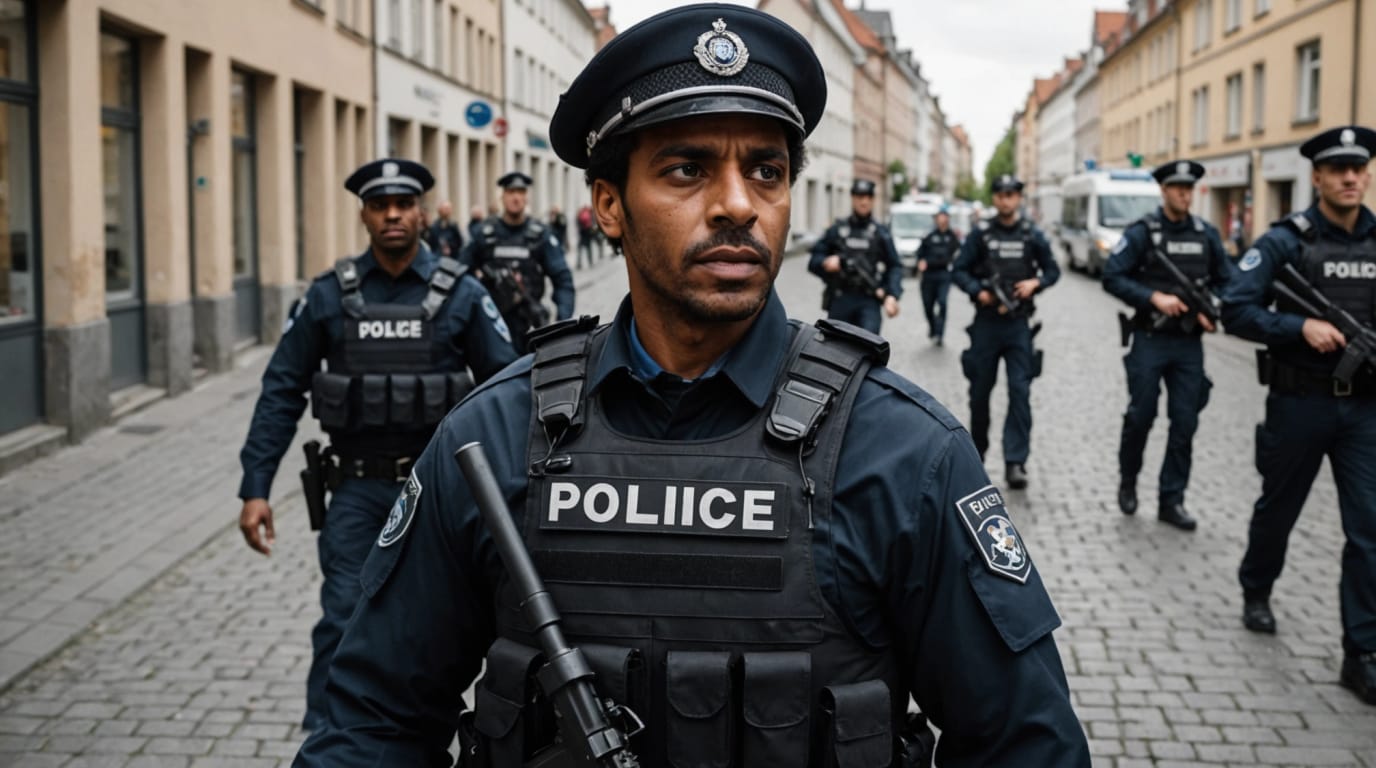
German authorities conducted raids across six states early Wednesday targeting a group suspected of being part of an international network seeking to overthrow the Eritrean government. The operation, involving over 200 federal and state police officers, focused on members of the German branch of Brigade N'Hamedu, which is classified as a terrorist organization by German prosecutors.
The raids, executed in Hesse, North Rhine-Westphalia, Bavaria, Baden-Württemberg, Mecklenburg-Western Pomerania, and Rhineland-Palatinate, aimed to gather evidence against 17 suspects accused of founding or belonging to the organization. Simultaneously, a search was carried out in Denmark, according to reports. No arrests were made during the operation.
Brigade N'Hamedu: A History of Violence
According to the German federal prosecutor's office, Brigade N'Hamedu's German offshoot has been active since at least 2022. The group is accused of orchestrating violent riots at Eritrean government-linked events, including festivals in Giessen in August 2022 and August 2023, and a seminar in Stuttgart in September 2023. These clashes resulted in injuries to numerous police officers, some of them serious. Prosecutors allege that some members considered violence against German state institutions and police officers as a legitimate means.
The prosecutor's office stated that investigations suggest the suspects held senior positions within the group. While the identities of the accused have not been released in accordance with German privacy laws, authorities noted that another individual suspected of holding a leadership role within Brigade N'Hamedu in both the Netherlands and Germany was recently sentenced to a prison term in the Netherlands for involvement in riots in The Hague in February 2024.
Eritrea: A Nation in Crisis
Eritrea, located in the Horn of Africa, is one of the world's most repressive countries. Ruled by President Isaias Afwerki since its independence in 1993, the nation has never held democratic elections. Freedom House consistently ranks Eritrea as "Not Free," citing the government's tight control over all aspects of life, including the media, religion, and freedom of movement.
The Eritrean government's human rights record has drawn condemnation from international organizations. Reports of arbitrary arrests, torture, and indefinite military conscription are common. The lack of political and economic opportunities has led many Eritreans to flee the country, seeking asylum in Europe and elsewhere.
Diaspora Divisions and Violent Clashes
The Eritrean diaspora is deeply divided, with supporters and opponents of the Afwerki regime often clashing at cultural and political events. These tensions have spilled over into violence in several European countries, including Germany, where Eritrean festivals have become flashpoints for conflict.
In recent years, several European countries have witnessed clashes between pro- and anti-government Eritrean groups. These incidents have raised concerns about the potential for further violence and the need for law enforcement to maintain order at Eritrean community events. The German government has faced increasing pressure to address the issue of political violence within the Eritrean diaspora.
Germany's Counterterrorism Efforts
Germany has stepped up its counterterrorism efforts in recent years, focusing on both Islamist extremism and right-wing extremism. The German government considers right-wing extremists to be the greatest threat to domestic security. However, authorities are also concerned about the potential for violence from other extremist groups, including those linked to foreign conflicts.
In 2023, the Federal Prosecutor's Office opened 744 new terrorism investigations. Significant law enforcement actions have included arrests of suspected members of Islamist terrorist organizations and individuals accused of planning attacks on Jewish institutions. Germany has also banned several associations linked to terrorist groups, including Hamas and Hezbollah.
Implications and Future Outlook
The raids targeting Brigade N'Hamedu highlight the challenges faced by European countries in dealing with political violence within diaspora communities. The Eritrean government's repressive policies and the deep divisions within the Eritrean diaspora have created a volatile situation that requires careful monitoring and proactive law enforcement.
The German government is likely to face continued pressure to address the issue of Eritrean political violence and to ensure the safety and security of all residents. The investigation into Brigade N'Hamedu is ongoing, and further arrests and prosecutions may follow. The case also raises broader questions about the role of diaspora communities in international conflicts and the responsibility of host countries to prevent political violence.


