Germany Decries Russian Resistance to Peace, Citing Unwavering Aggression Amid Stalled Diplomacy
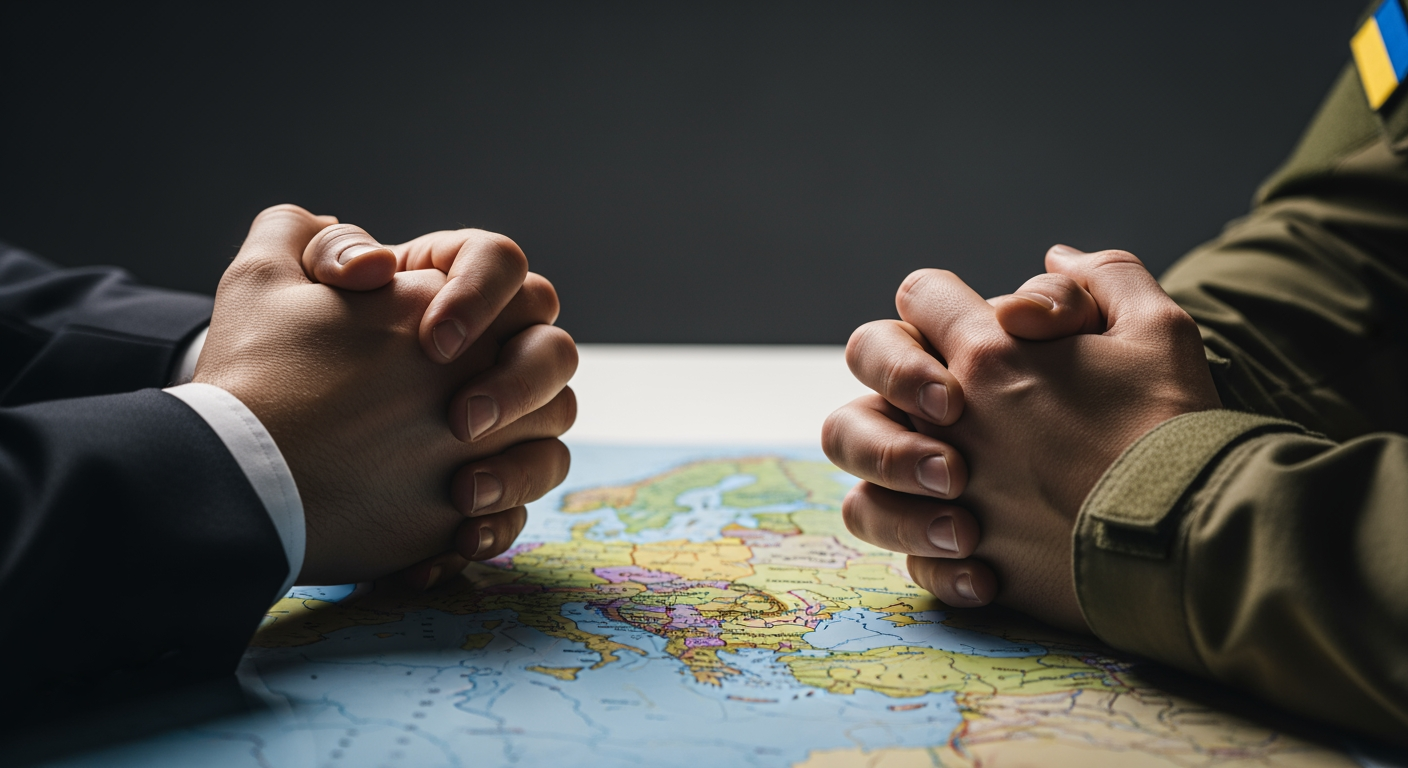
BERLIN, Germany – As the conflict in Ukraine approaches its fourth year, Germany and its European partners are sounding a stark warning: Russia demonstrates no genuine willingness to negotiate a lasting peace, instead doubling down on its military objectives and engaging in a broader "hybrid war" against Europe. This assessment comes as international diplomatic efforts, particularly those spearheaded by the United States, encounter consistent roadblocks in Moscow, leaving the path to an end to hostilities increasingly obscured. German officials emphasize that while they welcome all attempts at dialogue, Moscow's actions and maximalist demands reveal a fundamental disinterest in a resolution that respects Ukraine's sovereignty and international law.
Germany's Unwavering Assessment of Moscow's Intentions
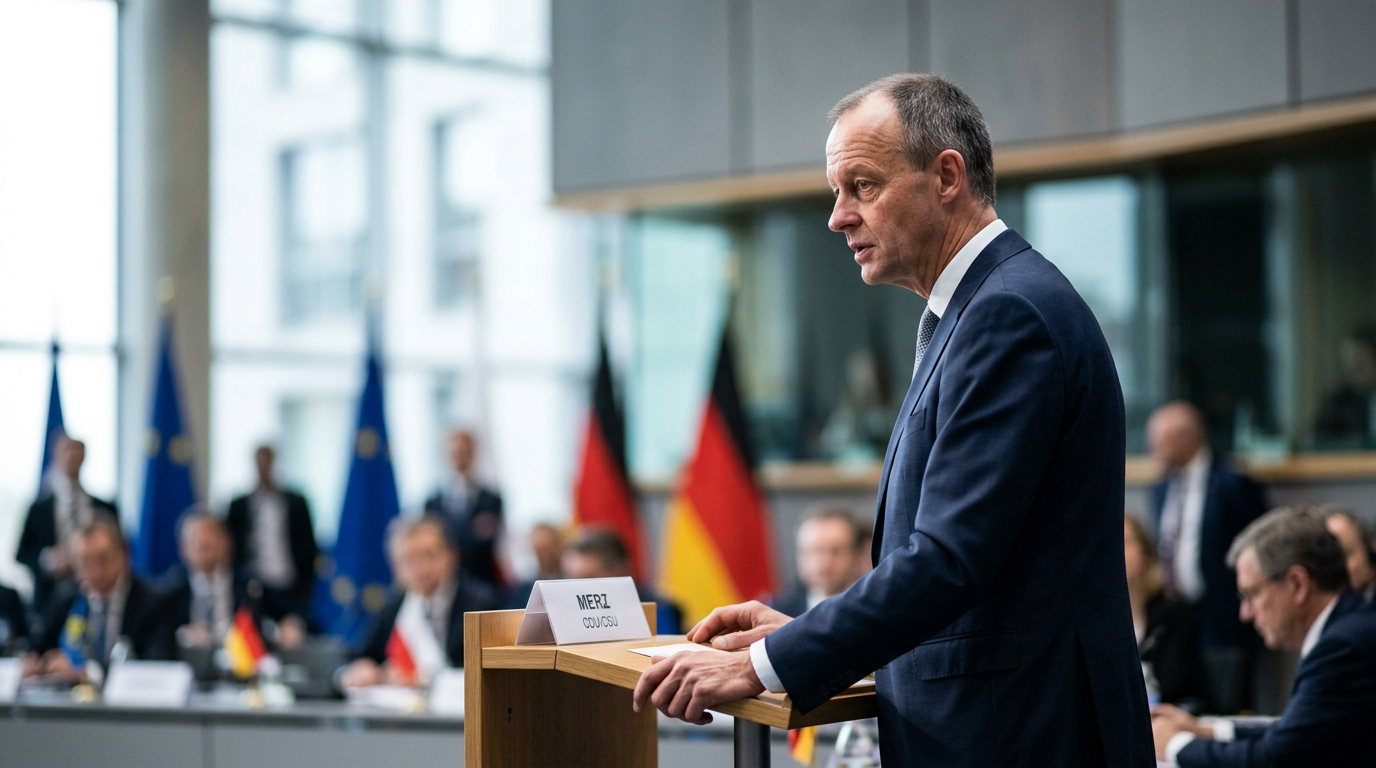
German Chancellor Friedrich Merz has been unequivocal in his statements, asserting that Russian President Vladimir Putin is "not ready for peace talks" and "wants to bomb" rather than negotiate. This hardline view is echoed across Berlin, with the German Foreign Ministry noting a profound absence of signs that Russia is "shifting into negotiating mode" despite recent high-level discussions. This conviction is not merely rhetorical; it is rooted in Russia's continued military offensives and what German officials describe as a "hybrid war" targeting not only Ukraine but also Germany and the broader European region. This hybrid warfare reportedly encompasses information campaigns, cyberattacks, and even drone activity over German airspace, which Chancellor Merz implicitly linked to Moscow, though Russia denies involvement.
The German government's stance is built on the premise that any durable peace must safeguard Ukraine's territorial integrity and future security. German Defense Minister Boris Pistorius recently underscored that Ukraine must not be coerced into "unilateral territorial concessions" and requires robust security guarantees, particularly from allies like the United States. This position highlights a growing European skepticism about approaches that might inadvertently pressure Kyiv into accepting unfavorable terms. Berlin’s commitment extends to long-term military and financial support for Ukraine, with Chancellor Merz advocating for the strategic utilization of frozen Russian assets in Europe to bolster Ukraine's defense capabilities and stabilize its economy. Merz insists these assets are a "European matter" and must directly benefit Ukraine, not other global players.
Russia's Unyielding Stance and the Futility of Recent Peace Overtures
Recent diplomatic initiatives, including a U.S.-led peace plan, have brought little change to Russia's position. Initially, a 28-point proposal, reportedly drafted by U.S. Special Envoy Steve Witkoff and Russian envoy Kirill Dmitriev, surfaced, drawing widespread criticism for its perceived bias towards Moscow. Key provisions within this plan reportedly included substantial territorial concessions from Ukraine, such as recognizing Russian sovereignty over Crimea, Donetsk, and Luhansk, and implicitly over parts of Kherson and Zaporizhzhia, alongside demands for Ukrainian neutrality and limitations on its armed forces.
Following a series of intense consultations, including U.S., Ukrainian, and European delegations in Geneva in late November, a revised, 19-point plan emerged, aiming to be less favorable to Russia. However, a subsequent meeting between U.S. envoys Witkoff and Jared Kushner and Russian President Putin in Moscow on December 2 yielded no significant breakthroughs. Russian officials confirmed that "no compromise had been reached," signaling that Moscow had not substantially altered its conditions for peace. Putin himself, in an interview, maintained his hard-line position, indicating that some proposals in the U.S. plan remained "unacceptable" to the Kremlin. He reiterated Russia's commitment to achieving its war aims, including the full capture of the eastern Donetsk region, by military force if necessary. This consistent stance underscores the deep chasm separating the warring parties and international mediators.
European Concerns and Ukraine's Enduring Resolve
The U.S.-led diplomatic efforts have, paradoxically, sparked some apprehension among European allies. Reports indicate that French President Emmanuel Macron and German Chancellor Merz privately voiced concerns to Ukrainian President Volodymyr Zelenskyy that the U.S. approach might inadvertently push Ukraine towards territorial concessions without adequate security guarantees against future Russian aggression. Merz reportedly cautioned Zelenskyy to be "very careful" with U.S. negotiators, suggesting they might be "playing games." Such anxieties highlight the complex and sometimes divergent interests within the international coalition supporting Ukraine.
For Ukraine, the conditions for peace remain clear: any resolution must be "just" and fully respect its national interests. President Zelenskyy has consistently advocated for increased pressure on Russia, emphasizing that true peace requires justice and security. Ukrainian officials continue to engage in diplomatic discussions, with Rustem Umerov, Ukraine's lead negotiator, and Chief of the General Staff Major General Andriy Hnatov participating in talks in Brussels and Florida this week. Despite the relentless pressure of nearly four years of full-scale war, many Ukrainians understand that a "bad peace" – one born of haste or unfavorable concessions – risks setting the stage for a future, larger conflict. They see their struggle not only as a defense of their land but as a fight for justice and the foundational principles of the international order.
Strategic Financial Levers and the Road Ahead
In response to Russia's unyielding posture, Europe is intensifying efforts to provide Ukraine with the means to negotiate from a position of strength. The European Commission, led by Ursula von der Leyen, is exploring options to raise tens of billions of euros to cover Ukraine's financial needs for 2026 and 2027. A central element of this strategy involves leveraging frozen Russian assets, primarily held in Belgium, to back loans for Ukraine. This initiative faces complex legal and political hurdles, with some member states hesitant about common borrowing, but Germany strongly supports the use of these assets to empower Ukraine. EU foreign policy chief Kaja Kallas recently reiterated that any peace deal must extract "concrete concessions" from Russia, arguing that only sustained pressure can pave the way for a "just and lasting peace."
The current diplomatic landscape is characterized by a stark impasse. Germany and its European allies remain steadfast in their assessment that Russia is not genuinely seeking a negotiated end to the conflict, opting instead to pursue its objectives through military force and hybrid tactics. While international efforts continue to seek a pathway to peace, Moscow's consistent demands for territorial concessions and Ukrainian neutrality clash fundamentally with Kyiv's unwavering commitment to sovereignty and a secure future. The coming months will test the resolve of Ukraine's international partners to maintain unity and apply sufficient pressure to shift Russia's calculus, as the continent grapples with the protracted implications of a war that shows no immediate signs of de-escalation.
Related Articles

Ratko Mladić, "Butcher of Bosnia" and Convicted War Criminal, Dies at 84
THE HAGUE, Netherlands – Ratko Mladić, the former Bosnian Serb military commander known as the "Butcher of Bosnia" and convicted of genocide, war crimes, and crimes against humanity, has died at the age of 84. Serbian...

Long-Awaited 9/11 Mastermind Trial Set for 2028, Decades After Attacks
GUANTANAMO BAY, Cuba – Nearly a quarter-century after the devastating terror attacks of September 11, 2001, a military judge has finally set a trial date for Khalid Sheikh Mohammed, the alleged mastermind behind the...