Germany Downplays Imminent Greenland Takeover Amidst Escalating US Rhetoric
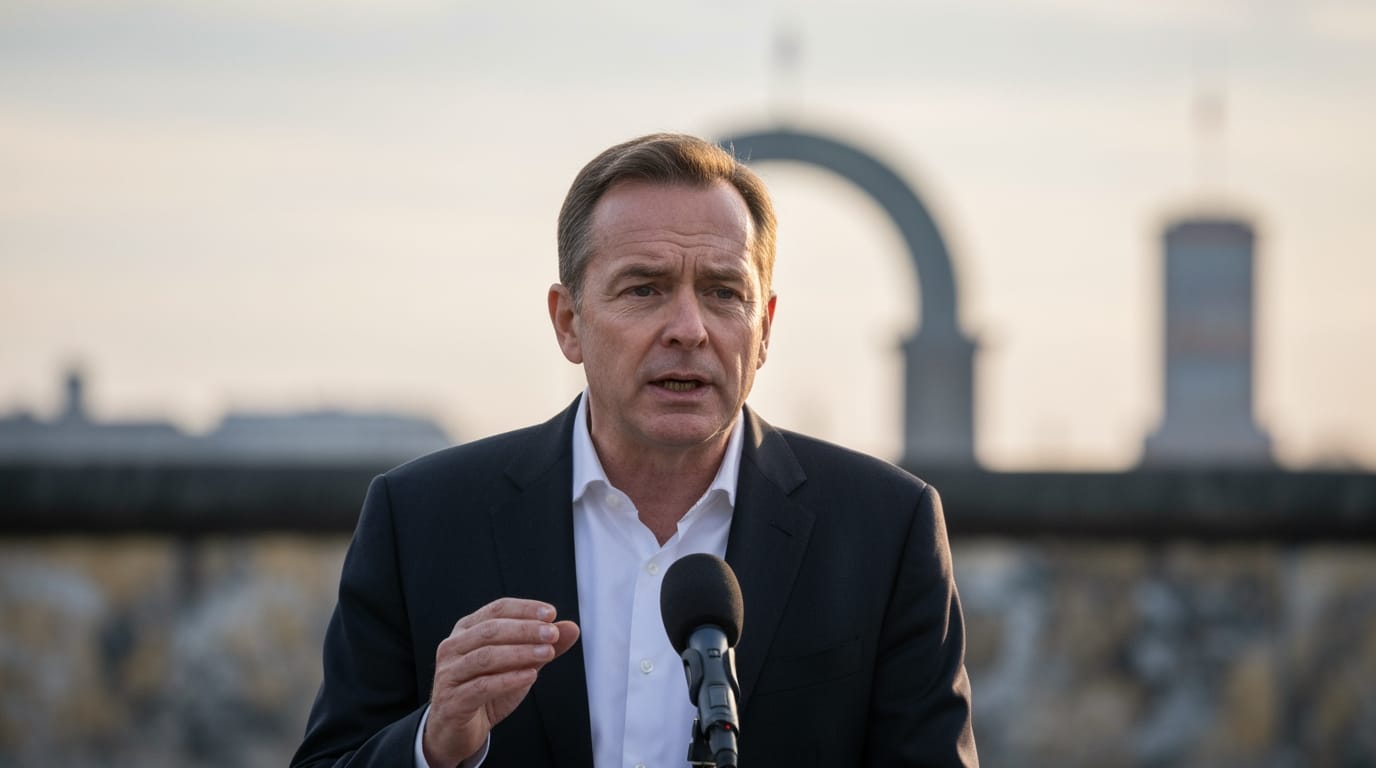
WASHINGTON – Germany's top diplomat moved to temper international concerns Monday regarding escalating US rhetoric around Greenland, asserting there was no indication of an imminent American military takeover of the autonomous Danish territory. The measured statement from German Foreign Minister Johann Wadephul came after a meeting with US Secretary of State Marco Rubio in Washington, aiming to de-escalate tensions fueled by President Donald Trump's repeated declarations of intent to acquire the Arctic island.
Wadephul's remarks underscored a broader European effort to navigate the delicate diplomatic landscape surrounding Greenland, a region of increasing geopolitical significance. His visit to Washington, preceding scheduled talks between US officials and top diplomats from Denmark and Greenland, highlights the international community's close watch on the situation. The German stance emphasizes diplomatic cooperation within NATO to address Arctic security, rather than unilateral actions that could destabilize transatlantic alliances.
Germany's Call for Collaborative Arctic Security
Following his discussions with Secretary Rubio, Foreign Minister Wadephul conveyed that he had no evidence suggesting a US military move on Greenland was under serious consideration. He stressed a shared interest among allies in collaboratively addressing the complex security challenges emerging in the Arctic region. Wadephul highlighted that NATO is actively developing concrete plans for Arctic security, which are intended for joint discussion with US partners. He also reaffirmed the principle that decisions affecting Greenland and Denmark ultimately rest with those sovereign entities.
This German perspective aligns with a broader European consensus advocating for a diplomatic and cooperative approach to Arctic affairs. German Chancellor Friedrich Merz echoed this sentiment, expressing optimism that NATO members could achieve a unified solution to enhance Greenland's security, with an expectation of US participation. The emphasis from Berlin is on strengthening collective defense within established frameworks, rather than pursuing actions perceived as infringements on sovereignty.
Trump's Unwavering Pursuit of Greenland
The diplomatic flurry stems from President Trump's persistent and vocal interest in acquiring Greenland, an idea he has championed for years. The US President has reiterated his commitment to obtaining the territory, suggesting the US would take it "one way or the other," employing phrases like "the nice way or the more difficult way." The White House has indicated that while purchasing the island would be preferable, it has not explicitly ruled out the use of military force.
President Trump has consistently framed his desire for Greenland as a matter of national security, citing increased Arctic activity by Russia and China as a primary concern. He contends that the existing US military presence, which includes the Pituffik Space Base (formerly Thule Air Base), is insufficient, asserting the US needs outright ownership of the island to counter perceived threats and secure its strategic interests in the mineral-rich region. This strategic rationale, however, has been met with skepticism and firm resistance from those directly impacted.
Greenland's Resolute Rejection and Denmark's Sovereignty
Greenland's government has unequivocally rejected any notion of a US takeover, stating that it would not accept such a move "under any circumstance." The autonomous territory firmly identifies as an integral part of the Kingdom of Denmark and a member of NATO. Greenland has emphasized its commitment to developing its defense capabilities within the established NATO framework, underscoring its place within the Western defense alliance.
The robust opposition from Greenland highlights the complexities of territorial integrity and self-determination. The concept of a sovereign territory being acquired against the will of its people and its administering state has stirred considerable debate, particularly among US allies. The upcoming talks in Washington between Secretary Rubio and top Danish and Greenlandic diplomats are expected to address these sensitivities directly, with a US Congressional delegation also planning a visit to Copenhagen to discuss Arctic security and trade.
Broader European and NATO Concerns
The proposed acquisition of Greenland has ignited broader alarm across Europe and within NATO. Several European countries have coalesced in support of Denmark and Greenland, issuing a joint statement asserting that "Greenland belongs to its people." While acknowledging the US as an essential partner in Arctic security, the unified message underscores a rejection of any unilateral action that could undermine international norms.
NATO Secretary-General Mark Rutte has acknowledged the consensus among allies regarding the critical importance of Arctic security, particularly in light of expanding sea lanes and increased activity by Russia and China. Rutte indicated that the alliance is working on "next steps" to collectively protect interests in the region. However, the prospect of a US military move has drawn sharp warnings from European officials. Andrius Kubilius, the EU's defense commissioner, cautioned that any US military attempt to seize Greenland would fundamentally threaten the existence of NATO and could trigger the EU's mutual assistance clause, obligating member states to come to Denmark's aid. These strong reactions highlight the potential for President Trump's Greenland aspirations to strain transatlantic relations and challenge the foundational principles of collective security.
The unfolding diplomatic discourse surrounding Greenland underscores a pivotal moment for international relations, testing the boundaries of sovereignty, alliance solidarity, and Arctic strategic interests. As key stakeholders prepare for further dialogue, the focus remains on finding a consensual path forward that respects international law and preserves the integrity of established partnerships.


