Germany Embarks on Ambitious Military Overhaul as "Zeitenwende" Drives Unprecedented Spending
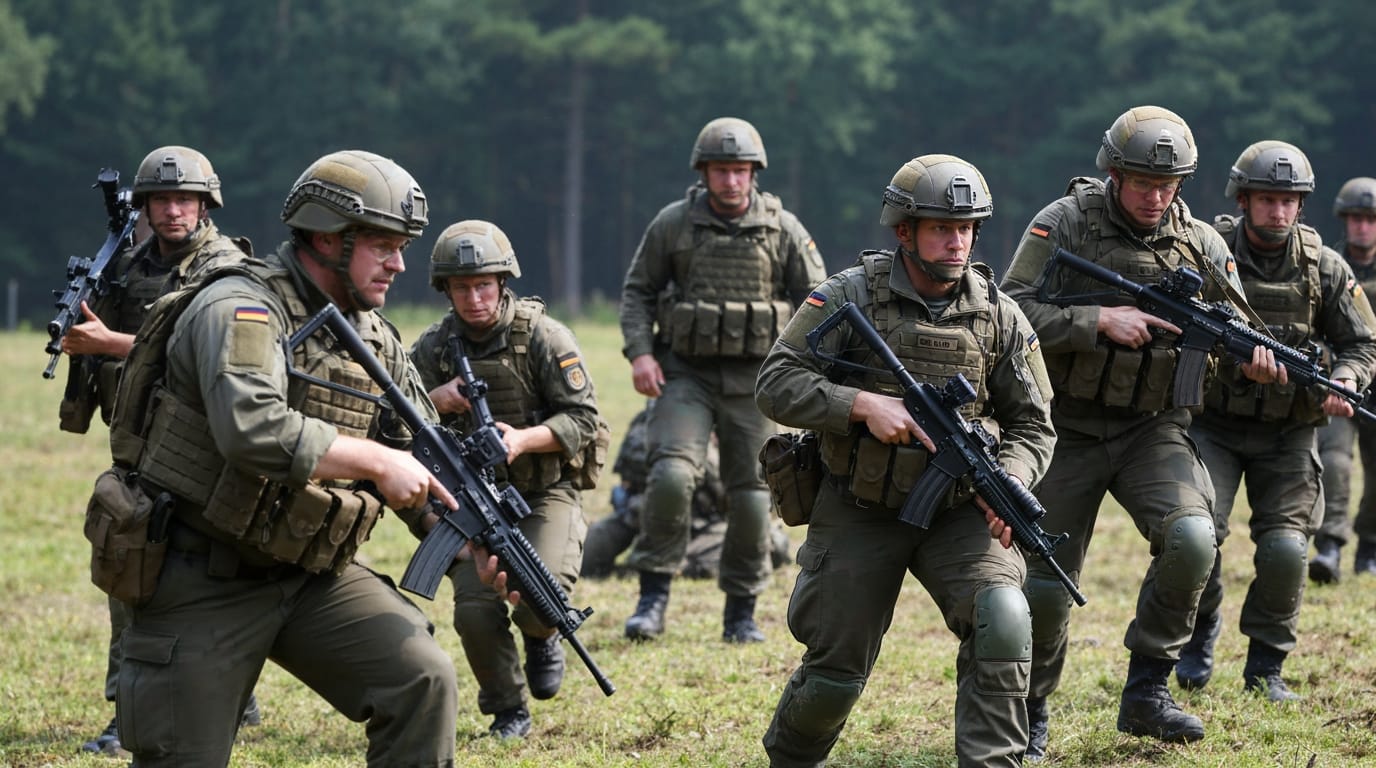
Germany is in the midst of its most significant military modernization effort in decades, a sweeping transformation triggered by Chancellor Olaf Scholz's declaration of a "Zeitenwende" or "turning point" following Russia's 2022 invasion of Ukraine. This strategic pivot has set in motion an unprecedented wave of defense spending, anchored by a €100 billion special fund and long-term procurement plans that aim to reshape the Bundeswehr into Europe's strongest conventional army. The vast shopping list encompasses advanced weaponry and systems across land, air, sea, space, and cyber domains, signaling a profound shift in Germany's defense posture and its role within NATO.
The Dawn of the "Zeitenwende": A New Era of Defense Investment
The "Zeitenwende," announced in February 2022, marked a decisive break from decades of a more restrained military policy, which had seen the Bundeswehr chronically underfunded and facing significant equipment shortfalls. The immediate catalyst was the war in Ukraine, which underscored the urgent need for a fully equipped and combat-ready German military capable of national and collective defense within NATO.
Central to this revitalization is the €100 billion special fund, approved by the German Bundesrat in June 2022. This fund is intended to supplement the regular defense budget over several years, primarily for the acquisition of complex, multi-year equipment projects and to address long-standing capability gaps. While initially set at €100 billion, the effective amount available for procurement has been adjusted to €87-€92 billion due to interest burdens, and a significant portion of these funds has already been allocated or committed. Beyond this initial injection, Germany has unveiled long-term procurement plans extending through 2041, with total investments projected to reach an astounding €377 billion to €409 billion. This multi-decade framework outlines around 320 projects, aiming to consistently meet NATO's target of spending at least 2% of its gross domestic product on defense.
Reshaping the Arsenal: Major Acquisitions Across All Branches
The Bundeswehr's extensive shopping list reflects a comprehensive overhaul, targeting modernization across its air force, army, and navy. Each branch is slated to receive significant upgrades designed to enhance operational capabilities and interoperability with NATO allies.
In the air domain, the German Air Force is undergoing a pivotal transformation. A centerpiece of this effort is the acquisition of 35 Lockheed Martin F-35A Lightning II fighter jets, costing approximately €10 billion ($10.5 billion to $10.89 billion). These advanced stealth aircraft are set to replace Germany's aging Tornado fleet by 2030 and are crucial for the country's nuclear sharing commitments within NATO. The first eight F-35s are anticipated for delivery in 2026. Additionally, Germany plans to procure up to 20 new Eurofighter jets, with 20 ordered in October 2025 for about €3.75 billion, to be utilized for roles such as electronic warfare and escort missions. The air force also intends to replace its 50-year-old CH-53 heavy transport helicopters and enhance its missile capabilities with the acquisition of Meteor air-to-air missiles. Expanding its unmanned aerial systems, plans include new munitions for Heron TP drones, 12 LUNA NG tactical drones, and four uMAWS maritime drones.
The German Army is set for a substantial upgrade of its ground combat systems. Negotiations are underway to acquire between 6,000 and 7,000 combat vehicles from Rheinmetall, a deal that could be worth up to €70 billion for the defense contractor. This massive procurement includes core armored platforms such as Leopard 2 main battle tanks, Puma infantry fighting vehicles (IFVs), and Boxer armored personnel carriers (APCs). The Bundeswehr plans to acquire 687 Puma IFVs by 2035, with an additional 200 IFVs already being reinforced for €4.2 billion. The tank fleet will see the addition of 105 new Leopard 2A8 tanks, complementing upgrades to existing Leopard tanks to the 2A7V standard. Up to 3,000 Boxer armored vehicles are projected, alongside 3,500 Patria infantry fighting vehicles. Artillery capabilities are being bolstered with the PULS rocket artillery system and 22 self-propelled howitzers. Significant investments are also earmarked for ground-based air defense, including 561 Skyranger 30 short-range air defense systems, upgraded Patriot missile systems, and the IRIS-T missile family, in addition to the Arrow 3 system from Israel. A substantial €70.3 billion is allocated for munitions, including millions of grenades and rifle rounds, addressing critical shortages.
For the German Navy, modernization efforts include expanding its fleet of frigates and submarines. Two additional F126 frigates are planned, bringing the total to six, with procurement initiated for the F127 class. These F126 frigates are designed with modular capabilities to adapt to various operational requirements and will integrate unmanned systems. Four U212CD submarines are also on order, a collaborative project with Norway. Naval missile capabilities will be enhanced through the development and procurement of the Future Naval Strike Missile, the IDAS anti-submarine missile, and the SONIX underwater detection system. Further acquisitions include more K130 corvettes and significant investment in naval vessels and equipment totaling €36.6 billion.
Beyond conventional arms, Germany is also investing heavily in advanced technological capabilities. This includes €13.3 billion for satellite communications, with a €1.7 billion contract with Rheinmetall for access to space-based reconnaissance data from SAR satellites, ensuring precise imagery even in adverse conditions. Digitalization of communications systems across all services is also a priority.
Strategic Implications and Persistent Challenges
Germany's extensive rearmament program has significant strategic implications, positioning the nation to become a leading military power within Europe. This commitment aims to solidify its role as a "cornerstone of conventional defense in Europe" and fulfill its responsibilities within NATO. The emphasis on procuring advanced systems is expected to strengthen collective security, particularly in the face of ongoing geopolitical instability. German defense industries, notably Rheinmetall and Diehl Defence, are significant beneficiaries, securing a large portion of the procurement projects and anchoring the defense revival within the domestic industrial base.
Despite the ambitious scope, the modernization effort faces considerable challenges. Bureaucratic hurdles and historically slow procurement processes have long plagued the Bundeswehr, leading to concerns about efficiently deploying the allocated funds. Issues such as rising costs, inflation, and currency fluctuations could further impact the budget and timelines, as observed with the F-35 deal. Significant personnel shortages persist, with the Bundeswehr struggling to meet its active personnel targets and facing high attrition rates for new recruits, sparking debates about reintroducing conscription. The operational readiness of existing equipment has also been a concern, with reports highlighting low combat readiness for some systems and a lack of spare parts. Furthermore, the Bundeswehr's infrastructure requires substantial investment, with an estimated €67 billion needed for modernization. Critics point out that while the special fund provides a crucial boost, it alone cannot resolve these deep-seated structural and logistical shortfalls.
A Long-Term Vision for European Security
The "Zeitenwende" represents a fundamental reorientation of German defense policy, transforming the Bundeswehr from a post-Cold War force primarily focused on international crisis management to one squarely aimed at national and alliance defense. The sheer scale of the procurement plans underscores Germany's long-term commitment to these goals, with efforts to rebuild and modernize its military extending well into the next two decades. While significant investments are underway and capabilities are being rapidly enhanced, the success of this monumental undertaking will ultimately depend on overcoming persistent structural challenges, ensuring efficient execution, and addressing the critical aspects of personnel, training, and infrastructure that underpin any modern military force. This ongoing transformation is poised to redefine Germany's strategic weight and its contribution to European security for years to come.


