Germany Faces Backlash Over Sweeping Reforms Threatening Core Transparency Law
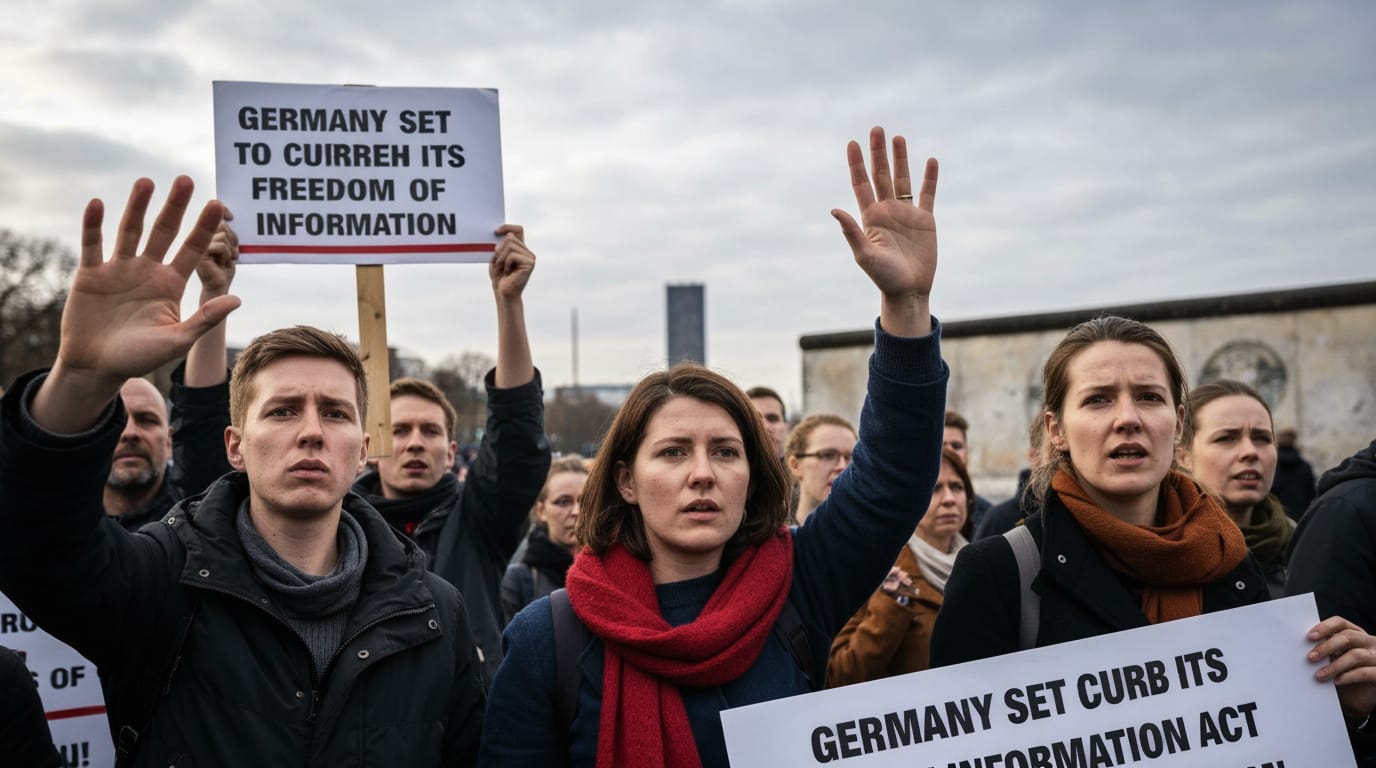
Berlin, Germany – The German government is confronting a formidable wave of criticism following its recent decision to significantly curtail the nation's 20-year-old Freedom of Information Act (IFG), a move that critics contend would severely undermine public accountability and democratic oversight. Announced as part of a broader economic reform package, the proposed amendments, agreed upon by the ruling coalition of the Christian Democratic Union/Christian Social Union (CDU/CSU) and the Social Democratic Party (SPD) on July 2, 2026, are poised to make access to federal government documents harder, more expensive, and potentially out of reach for a broad segment of the public and civil society organizations. Transparency advocates, journalists, and human rights groups across Germany and beyond have swiftly condemned the changes, branding them a severe assault on fundamental principles of openness and press freedom.
Redefining Access: The Proposed Curbs on Information
The heart of the controversy lies in several key amendments that would fundamentally alter who can request information and under what conditions. Foremost among these is the introduction of a "legitimate interest" requirement, demanding that applicants justify their need for official information. This departs significantly from the current framework, where anyone can request documents without providing a reason, granting authorities broad discretion to reject requests based on an undefined standard.
Adding to these restrictions, the reforms would limit the right to submit FOIA requests solely to "natural persons," effectively excluding legal entities such as media organizations, non-governmental organizations (NGOs), and civil society groups from making direct inquiries. This shift is seen as a critical blow to collective investigative journalism and advocacy efforts. Furthermore, the proposed changes contemplate restricting access based on nationality and residency, with discussions underway to limit the right to German nationals and EU citizens residing in Germany. Non-EU citizens not living in the country would be explicitly barred from obtaining public records, raising concerns about discrimination and reduced scrutiny of governmental actions by international observers.
Financial barriers are also slated to rise dramatically. The current €500 cap on fees for information requests would be removed, allowing agencies to charge full cost-recovery fees. Critics warn that this could lead to prohibitively expensive requests, potentially costing thousands of euros and creating a significant deterrent for individuals and smaller organizations seeking public records. Lastly, the proposed amendments would mandate the routine redaction of names of government employees from released documents. While proponents argue this protects personal data, opponents assert it would obscure individual responsibility for governmental decisions and actions, hindering accountability. Beyond these, tighter access rules are also envisioned for sensitive areas such as critical infrastructure, counter-terrorism, counter-intelligence, and scientific research.
Government's Stated Rationale: Efficiency and Security
The federal government maintains that the proposed reforms are necessary to reduce administrative burdens on public authorities and to streamline the information access process. Federal Interior Minister Alexander Dobrindt (CSU) and other proponents argue that the changes are intended to make information access "more understandable and transparent," despite critics finding this justification contradictory given the proposed restrictions. The government also cites the need for heightened operational security, particularly in sensitive domains like critical infrastructure and national security, as a rationale for broader exemptions.
According to the government, the aim is to balance transparency with the efficient functioning of the administration and the protection of sensitive state interests. Paradoxically, the current ruling coalition had, in its foundational agreement last year, pledged to reform the Freedom of Information Act to provide "added value for citizens and the administration." Critics highlight that the current proposals appear to directly contradict this stated commitment.
A Deluge of Criticism: Threats to Democracy and Press Freedom
The backlash against the proposed amendments has been immediate and widespread, uniting a diverse coalition of civil society, media organizations, and legal experts. Human Rights Watch characterized the plans as an attempt to "gut Germany's Freedom of Information Act," arguing that they "threaten core human rights essential to transparency and public participation in a democracy based on the rule of law." The organization noted that the proposals would breach both the government's own commitments and international and European human rights law, which protect the right to seek and receive information as part of freedom of expression.
Journalist associations, including the European Federation of Journalists (EFJ) and the German Journalists' Association (DJV), have voiced strong opposition, warning that the changes would severely hinder journalistic research and weaken the media's crucial oversight function. They emphasize that the IFG is a vital tool for uncovering grievances and ensuring administrative decisions are transparent, underscoring that without it, journalists will find it significantly harder to monitor politicians and authorities. FragDenStaat, a German civil society platform, labeled the government's plans "the most serious attack on state transparency in the history of the Federal Republic," particularly in light of the potential for exorbitant fees.
Louisa Specht-Riemenschneider, Germany's Federal Commissioner for Data Protection and Freedom of Information, warned that the broad scope of these proposals amounts to "the total abolition of governmental transparency," fostering an "undemocratic system of restricted access." She also cautioned that geographic and national limitations would discriminate against numerous domestic residents and expatriate voters, and that implementing such eligibility tests could paradoxically inflate bureaucratic workloads. Critics point out that the FOIA has historically been instrumental in exposing political and corruption scandals, some of which reportedly involved allegations linked to officials within the current government now pushing for these amendments.
A Retreat from Transparency? The Broader Implications
Germany's Freedom of Information Act, though relatively young compared to those in some other democracies, has served as a critical mechanism for ensuring accountability since its inception. It provides a means for the public, journalists, and researchers to scrutinize governmental decisions, regulatory choices, and policy impacts. The proposed reforms risk transforming this proactive tool for public insight into a bureaucratic hurdle, accessible only to a select few with "legitimate interest" and financial means.
The European Court of Human Rights has long recognized the critical importance of access to information for journalists, civil society organizations, and other public watchdogs in informing public debate. Restrictive measures must be lawful, necessary, and proportionate to a legitimate aim. Critics argue that blanket exclusions, routine redactions of officials' names, and arbitrary eligibility rules as proposed are inconsistent with the tenets of transparent governance and risk chilling journalism and civic participation—key pillars of a functioning democracy.
Conclusion: High Stakes for German Democratic Oversight
The debate surrounding the proposed amendments to Germany's Freedom of Information Act highlights a fundamental tension between the government's stated objectives of administrative efficiency and national security, and the public's right to information and governmental transparency. As various organizations and watchdogs unite in opposition, the future of Germany's democratic oversight mechanisms hangs in the balance. The outcome of this legislative push will not only redefine the relationship between citizens and their government in Germany but will also send a significant signal about the value placed on transparency and accountability within one of Europe's leading democracies. The coming months will be crucial as the proposals move through the legislative process, with observers keenly watching whether the government will heed the calls to preserve, rather than curtail, the vital arteries of public information.


