North Korea Intensifies DMZ Fortifications, Raising Alarms in Seoul
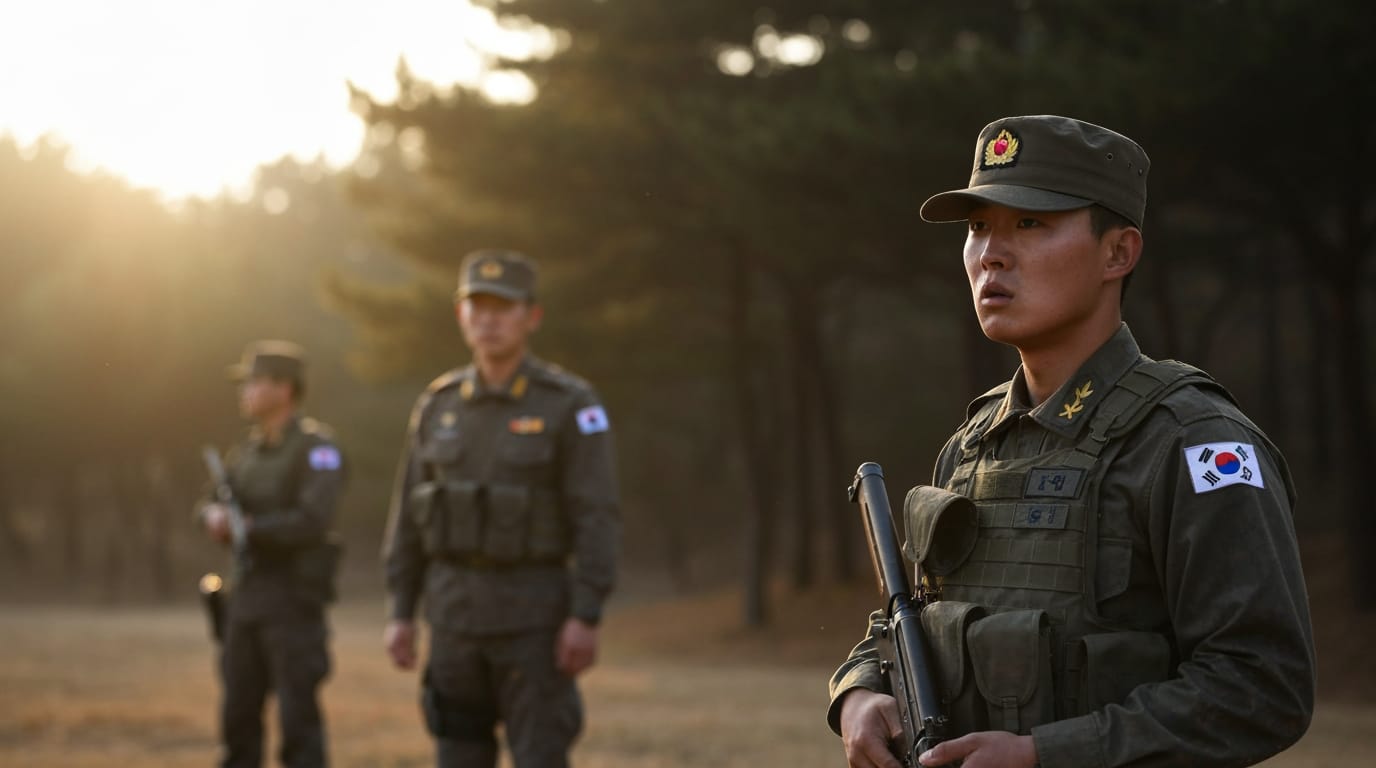
Seoul, South Korea – North Korea has significantly escalated its military activities along the Demilitarized Zone (DMZ), transforming the long-standing buffer into an increasingly militarized border and sparking profound concerns in South Korea. Recent months have seen Pyongyang deploy thousands of troops to construct formidable fortifications, lay extensive minefields, and build tactical roads precariously close to the Military Demarcation Line (MDL), the de facto border dividing the two Koreas. These actions, which South Korea views as direct violations of the 1953 Armistice Agreement, are deepening tensions on the peninsula and challenging the fragile peace that has endured for decades.
Pyongyang's Accelerated Border Militarization
Since April 2024, North Korea has rapidly expanded its border fortification efforts, deploying an estimated 5,000 personnel in the first half of 2026, a fivefold increase from the previous year. South Korean military intelligence indicates that North Korean troops have installed barbed-wire fences within 80 to 90 meters of the MDL and conducted land-clearing operations for mine-laying as close as 5 to 10 meters from the demarcation line. These efforts also include the construction of up to 70 kilometers of tactical roads and approximately 90 kilometers of fencing along the MDL. Observers note that some North Korean soldiers involved in these construction activities have reportedly been killed or wounded by mine explosions.
The intensified construction follows North Korean leader Kim Jong Un's December 2023 declaration defining inter-Korean relations as those between "two hostile states" and an October 2024 statement announcing plans to permanently seal its "southern border." This dramatic shift in rhetoric and policy underscores Pyongyang's apparent intent to fully militarize the DMZ and treat the armistice line as a permanent national border. In addition to physical barriers, North Korea has been rebuilding guard posts within the DMZ and removing streetlights along once-symbolic inter-Korean roads.
The motivation behind this rapid militarization appears multi-faceted. Pyongyang seeks to strengthen its defensive positions against potential South Korea-U.S. counterattacks while concurrently bolstering its front-line conventional capabilities, complementing its advancing nuclear and missile programs. Furthermore, the extensive minefields being laid are believed to serve an internal function, aiming to curb defections by North Korean soldiers and residents to the South.
Seoul's Growing Alarm and Diplomatic Overtures
South Korea has unequivocally condemned North Korea's recent actions, with its Defense Ministry asserting that the installation of obstacles near the MDL constitutes a "clear violation" of the 1953 Armistice Agreement. Seoul argues that these activities are effectively neutralizing the DMZ's foundational purpose as a buffer zone, established to prevent incidents that could reignite hostilities.
In response, the South Korean Defense Ministry has formally conveyed its concerns to the United Nations Command (UNC), urging a "more active and substantive response" to North Korea's fortification work. This comes amidst growing sentiment within the South Korean government that the UNC has been more stringent in its oversight of South Korean activities within the DMZ, while appearing more hesitant to address North Korean provocations.
Beyond diplomatic channels, South Korean forces have taken direct action when North Korean soldiers have crossed the MDL, issuing warning broadcasts and firing warning shots. Such crossings have occurred repeatedly, with some instances attributed to overgrown foliage obscuring the demarcation line. The heightened alert was further underscored by a recent incident where a North Korean soldier crossed the heavily guarded border and was taken into custody by South Korea, in what is suspected to be a defection.
In an attempt to de-escalate tensions, South Korea's Ministry of Unification recently proposed military talks with North Korea, aiming to minimize friction and establish a mutually recognized baseline for the MDL. The ministry emphasized the importance of easing military tensions and preventing incidents, urging Pyongyang to respond positively to the proposal. Separately, due to inactive communication lines, South Korea used a text message to request North Korea's assistance in locating a missing seaman near the maritime border. The South Korean Joint Chiefs of Staff has also issued public warnings to civilians regarding the potential for North Korean landmines to be washed into border rivers due to heavy rainfall, urging extreme caution.
The Contested Buffer Zone: A History of Volatility
The Demilitarized Zone, a 4-kilometer-wide (2.5-mile) strip of land stretching 250 kilometers (155 miles) across the Korean Peninsula, was established as a buffer following the 1950-1953 Korean War. Despite its name, the DMZ remains one of the most heavily fortified and volatile borders globally, bristling with barbed wire, landmines, and a substantial military presence from both nations. The armistice agreement that halted hostilities did not culminate in a peace treaty, leaving the two Koreas technically in a state of war.
Historically, the DMZ has been a consistent flashpoint for conflict. The period between 1966 and 1969, known as the Korean DMZ Conflict or the "Quiet War," saw intense incursions and skirmishes, resulting in hundreds of casualties on both sides. Notable incidents include the 1968 Blue House raid, an attempt to assassinate the South Korean president, and the 1976 axe murder incident in the Joint Security Area (JSA), where North Korean troops attacked American soldiers. Throughout decades, both sides have engaged in various forms of provocation, from underground tunnels dug for infiltration to naval skirmishes along the Northern Limit Line.
South Korea's current concern stems from North Korea's actions extending into the two-kilometer zone north of the Military Demarcation Line, which is explicitly designated as part of the DMZ under the armistice. Pyongyang's new fortifications, particularly those within meters of the MDL, are perceived by Seoul as a direct affront to the spirit and letter of the agreement, undermining the very concept of a demilitarized buffer.
Divergent Interpretations and Regional Instability
A significant point of contention lies in the differing interpretations of the 1953 Armistice Agreement by South Korea and the United Nations Command. While Seoul views North Korea's construction of fences, roads, and suspected mine-laying near the MDL as clear violations, the UNC has adopted a more cautious stance. The UNC maintains that such activities do not automatically constitute a breach if they are defensive in nature, remain north of the MDL, and do not involve heavy weapons or offensive capabilities. This divergence in assessment has fueled friction, with some South Korean officials expressing concern that the UNC's position may inadvertently embolden North Korean actions.
Beyond the immediate border, these escalating tensions are viewed within a broader geopolitical context. North Korea's actions align with its deepening ties with China and Russia. Recent reports indicate combined aerial and naval incursions by these three nations near South Korea's air defense identification zone and the Northern Limit Line. Furthermore, there has been an increase in North Korean vessels transporting minerals, particularly coal, to Russia and China, raising concerns about potential sanction evasion following Russia's veto that terminated the UN Panel of Experts.
The cumulative effect of these developments is a heightened state of unease on the Korean Peninsula. South Korea's military actions, such as suspending parts of the 2018 Panmunjom Declaration in response to North Korean provocations, indicate a willingness to respond firmly. The constant provocations and counter-responses risk an inadvertent escalation into a larger military clash, threatening regional stability and posing a significant challenge to international efforts aimed at denuclearizing the peninsula. The precarious nature of the armistice, coupled with North Korea's assertive militarization, ensures that the DMZ remains a critical barometer of inter-Korean relations and a persistent source of global concern.


